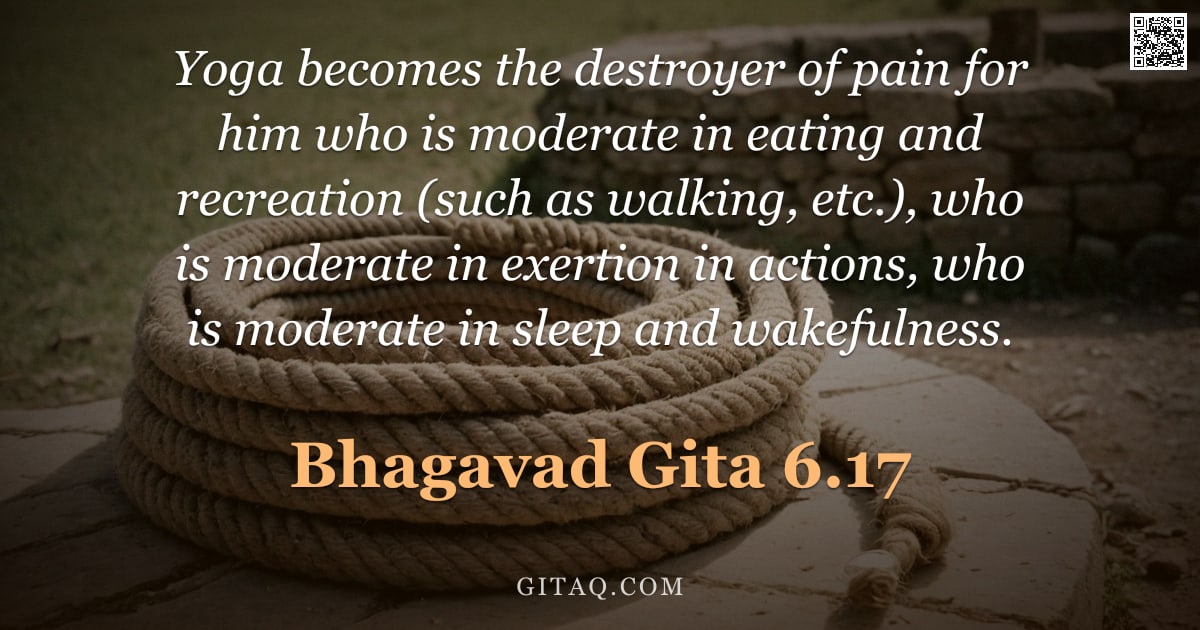
Bhagavad Gita 6.17
Dhyana Yoga · English Translation
युक्ताहारविहारस्य युक्तचेष्टस्य कर्मसु | युक्तस्वप्नावबोधस्य योगो भवति दुःखहा ||६-१७||
yuktāhāravihārasya yuktaceṣṭasya karmasu . yuktasvapnāvabodhasya yogo bhavati duḥkhahā ||6-17||
What Does This Verse Mean?
In this verse, Lord Krishna explains to Arjuna that the practice of Yoga is most effective when one maintains balance in daily life. He specifically highlights moderation in eating, physical activity, work efforts, and sleep patterns as essential for success. By avoiding extremes of indulgence or deprivation in these areas, a person can transform their lifestyle into a powerful tool that removes mental suffering.
The Teaching Behind It
This verse belongs specifically to Dhyana Yoga (Chapter 6) within the broader framework of Karma Yoga, where action is performed with a balanced mind. It develops the concept of 'Upeksha' or equanimity through physical regulation, positing that mental peace cannot exist without physiological harmony.
Word by Word
Classical Commentary
Where This Happens
This teaching occurs during the critical moment in Chapter 6 when Krishna is guiding Arjuna through the practical steps of Dhyana Yoga (the yoga of meditation). Just prior to this verse, Krishna had described how a yogi controls their mind and senses but warned that without proper discipline, even spiritual practices can fail. Arjuna, overwhelmed by his duty as a warrior and confused about the path ahead, needs reassurance on how to integrate these high ideals into his chaotic life.
Living It Out Today
Consider a professional facing burnout from working late nights while skipping meals; they are suffering because their 'exertion' is unbalanced. Applying this verse means consciously scheduling regular breaks, eating nutritious food at set times, and ensuring seven hours of sleep to restore mental clarity. This structured moderation reduces anxiety and prevents the physical and emotional pain that comes from an erratic lifestyle.
Explained for Children
Imagine your mind is like a garden; if you water it too much with stress or not enough with rest, the plants (your thoughts) get sick. Lord Krishna teaches us to find the 'Goldilocks' zone for eating, playing, working, and sleeping—just right, neither too little nor too much. When we take care of our bodies this way, our minds become strong and happy, making it easy to focus on good things without feeling sad or worried.
Daily Reflection
You carry so much burden because you often push yourself beyond what is natural for this day. The Lord gently reminds you that true strength comes not from extremes but from a balanced rhythm in how you eat, move, and rest. When you align these daily habits with moderation, the sharp pains of struggle begin to dissolve into a steady peace.
A Practice for Today
Begin by observing your current rhythm of eating and sleeping without judgment, noticing where you might be overindulging or neglecting the body's needs. Take a moment to vow today that every meal, action, and rest period will be taken with moderation as an act of honoring the vessel that carries your spiritual practice.
Key Teachings
- Moderation as Spiritual Discipline
The verse defines yoga not just as sitting in silence but as regulating one's fundamental biological rhythms. By mastering the appetite for food and sleep, you transform basic survival into a tool for mental clarity. - Eliminating the Roots of Suffering
Pain (duḥkhahā) often stems from the agitation caused by excess or deprivation in physical activities. This balanced approach calms the mind, removing the internal friction that creates suffering. - Integration of Action and Rest
True yoga requires balance across all states: wakefulness, sleep, work, and recreation are equally important for stability. Neglecting any single area disrupts the harmony required to sustain deep meditation.
Themes
Related Verses
Read This Next
- 2.47 — This verse complements the focus on action by teaching you to perform duties without attachment, extending the concept of 'moderate exertion' discussed here.
- 3.30 — It reinforces the practice of offering all actions and their results to the Divine, deepening the spiritual context of moderate engagement in work.
- 12.15 — Krishna describes the qualities of a devotee who is not disturbed by others and brings peace to them, which is the natural fruit of a balanced mind described in this verse.
Recommended Reading
GitaQ earns from qualifying purchases as an Amazon Associate.