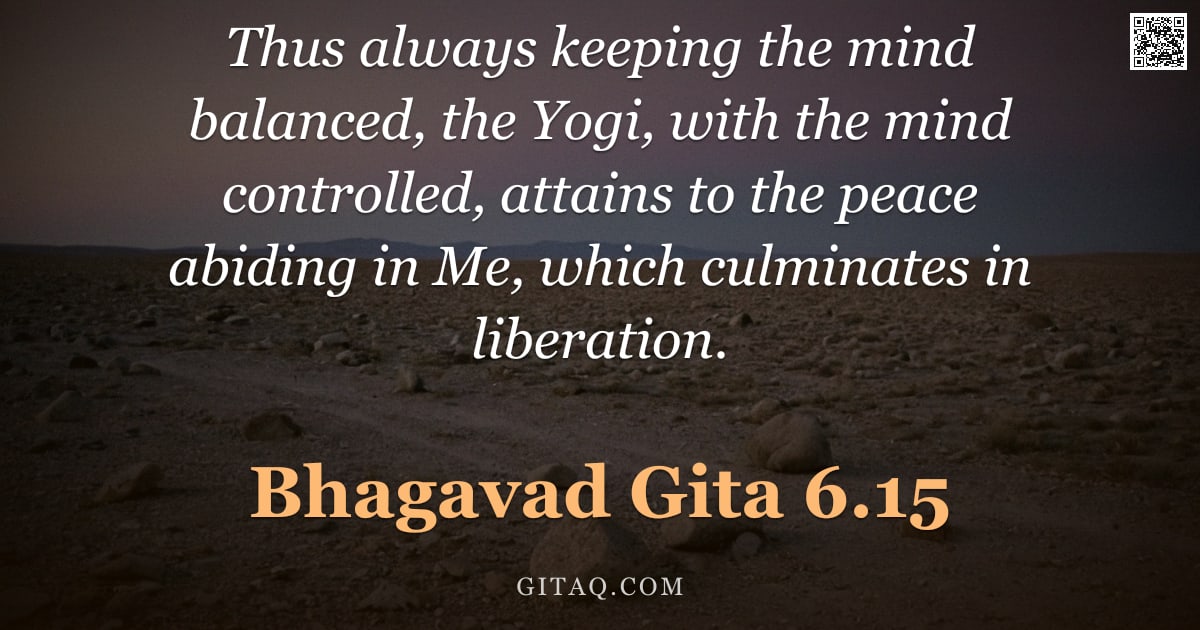
Bhagavad Gita 6.15
Dhyana Yoga · English Translation
युञ्जन्नेवं सदात्मानं योगी नियतमानसः | शान्तिं निर्वाणपरमां मत्संस्थामधिगच्छति ||६-१५||
yuñjannevaṃ sadātmānaṃ yogī niyatamānasaḥ . śāntiṃ nirvāṇaparamāṃ matsaṃsthāmadhigacchati ||6-15||
What Does This Verse Mean?
In this verse, Lord Krishna is speaking to Arjuna about the ultimate result of consistent meditation practice. He explains that when a seeker constantly balances their mind and controls their thoughts through disciplined yoga, they naturally attain supreme peace. This state of inner tranquility is not just emotional calmness but a profound liberation (Nirvana) found in union with the Divine.
The Teaching Behind It
This verse is central to Dhyana Yoga (the Path of Meditation) and integrates elements of Jnana Yoga (knowledge of the self). It develops the concept that mental equilibrium (Samata) achieved through disciplined practice leads directly to Sthita-prajna (steady wisdom), which culminates in Moksha or liberation. The teaching emphasizes that true peace is not an external achievement but a state of being established within the Self and ultimately in God.
Word by Word
Classical Commentary
Where This Happens
This teaching occurs on the battlefield of Kurukshetra during the Mahabharata, where Lord Krishna is instructing his devotee Arjuna after explaining various forms of yoga. Just prior to this verse (in verses 12-14), Krishna has detailed how a yogi should sit and control their breath and senses for meditation. He speaks to an Arjuna who is still struggling with the confusion between action and renunciation, offering him a specific technique to achieve mental stability.
Living It Out Today
Consider a modern professional facing a high-stakes presentation where they feel overwhelmed by anxiety or fear of failure. Instead of letting their mind race with 'what-if' scenarios that cause panic, they practice Krishna's instruction: bringing the mind back to the present task and maintaining balance regardless of external chaos. By consistently applying this focus during stressful moments, they move from a state of frantic reactivity to one of calm clarity, allowing them to perform at their best without being consumed by fear.
Explained for Children
Imagine you are trying to balance on one foot; if your body wobbles too much because you are scared or distracted, you fall down. But if you focus hard and keep your center steady for as long as possible, you become calm and strong! This verse tells us that when we practice keeping our minds steady like a quiet lake, without getting upset by big feelings, we find the deepest kind of happiness and peace inside ourselves.
Daily Reflection
You do not need to wait for perfect conditions to find peace; that tranquility is already waiting within the rhythm of your own disciplined awareness. As you navigate today's challenges, remember that a controlled mind acts as the bridge between your current struggles and the quiet sanctuary where true freedom resides. Let this verse remind you that every moment of balance brings you closer to the divine stillness that never wavers.
A Practice for Today
Close your eyes and bring your attention to the breath, gently steadying it as you would steady a boat on calm waters. Silently repeat that you are balancing mind and spirit in this very moment, anchoring yourself in stillness rather than reaction.
Key Teachings
- The Discipline of Consistency
Krishna emphasizes 'sadā' (always), teaching that spiritual progress relies on unbroken, daily practice rather than sporadic effort. The yogi must maintain this balance regardless of external circumstances to truly steady the mind. - The Nature of Equanimity
A 'niyatamānasaḥ' (controlled and regulated mind) is not about suppression, but about harmonizing thoughts so they do not drift into distraction. This internal equilibrium allows the seeker to remain steady amidst life's dualities. - The Destination of Peace
When mental fluctuations cease through constant practice, one attains 'śānti' (peace) which is not merely emotional calm but a state rooted in the Divine. This peace culminates in liberation, where the soul rests forever in its source.
Themes
Related Verses
Read This Next
- 2.47 — Read this to understand Krishna's instruction on performing duty without attachment, which is the practical application of keeping a balanced mind.
- 3.30 — This verse expands on offering all actions to God, deepening your understanding of how devotion supports mental control and peace.
- 12.15 — Read this next to hear the description of a devotee who is dear to Krishna precisely because they are free from agitation and full of compassion, mirroring the state of liberation described in verse 6.15.
Recommended Reading
GitaQ earns from qualifying purchases as an Amazon Associate.