Bhagavad Gita 18.5
Moksha Sanyasa Yoga · English Translation
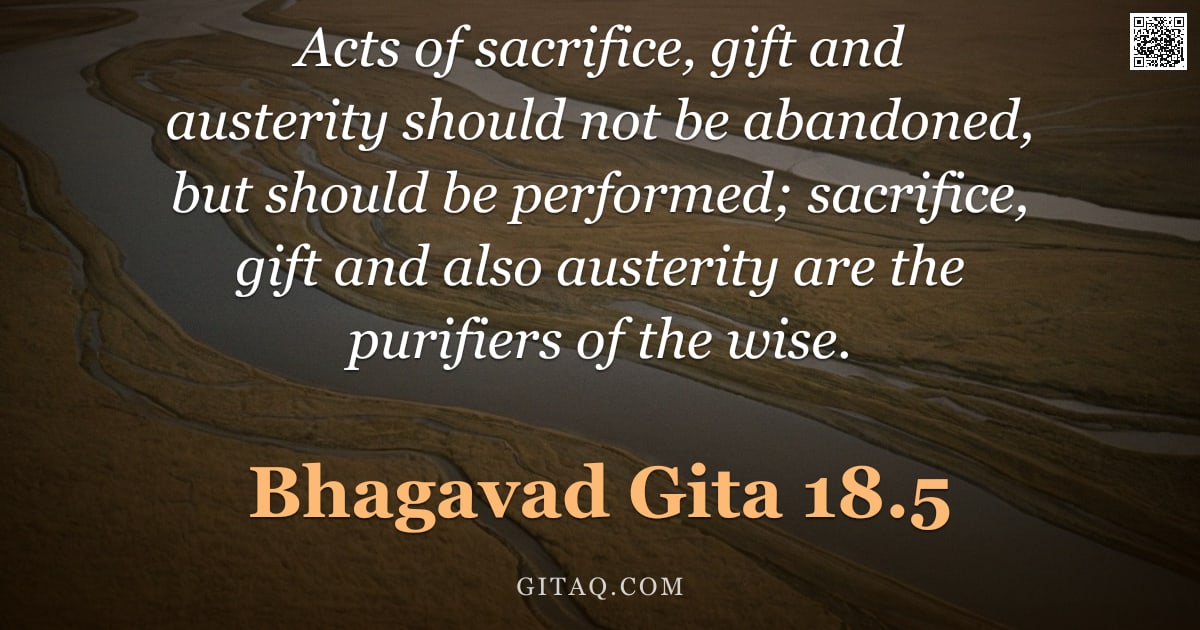
यज्ञदानतपःकर्म न त्याज्यं कार्यमेव तत् | यज्ञो दानं तपश्चैव पावनानि मनीषिणाम् ||१८-५||
yajñadānatapaḥkarma na tyājyaṃ kāryameva tat . yajño dānaṃ tapaścaiva pāvanāni manīṣiṇām ||18-5||
What Does This Verse Mean?
In this verse, Lord Krishna advises Arjuna that acts of sacrifice (yajna), charity (dana), and self-discipline (tapas) are essential duties that must never be abandoned. He clarifies that these three actions serve as powerful purifiers for the mind and soul of wise individuals. The core teaching is that even spiritual practices should not be rejected; instead, they form the foundation of a disciplined life leading to liberation.
The Teaching Behind It
This verse is central to Karma Yoga (the yoga of selfless action) within Vedanta philosophy. It develops the concept that spiritual purification does not come from abandoning duty, but from performing necessary actions with an attitude of sacrifice and detachment. By viewing obligatory duties as purifying agents rather than obstacles, one transcends the bondage of karma while remaining engaged in the world.
Word by Word
Classical Commentary
Where This Happens
This verse appears in the final chapter of the Bhagavad Gita on the battlefield of Kurukshetra, where Krishna is concluding his teachings to Prince Arjuna. After explaining various paths to liberation, including renunciation (sanyasa), Krishna addresses a potential misunderstanding that all action must be stopped for spiritual progress. He speaks directly to Arjuna's hesitation and confusion about whether he should abandon his kingly duties entirely or continue them with the right mindset.
Living It Out Today
Consider a professional facing burnout who considers quitting their job immediately; this verse suggests they reframe their current challenges as 'tapas' (austerity) and view their work projects as acts of service ('yajna') rather than burdens. Instead of abandoning responsibilities when stress peaks, one should approach the difficult task with detachment, offering the results to a higher purpose while maintaining ethical standards. This shift in perspective transforms a draining routine into a meaningful practice that purifies anxiety and builds character.
Explained for Children
Imagine your heart is like a dirty window covered in dust; acts of giving help, doing good deeds without expecting rewards, and practicing self-control are like cleaning cloths. Lord Krishna tells us that we should never throw away these special 'cleaning' actions because they make our hearts shine bright again. Just as brushing your teeth keeps you healthy, doing these three things keeps a wise person's mind pure and happy.
Daily Reflection
Today, you might feel tempted to skip that difficult task or avoid giving something precious because it feels like a loss; remember instead that true freedom comes from embracing duty as purification. When you approach sacrifice, gift-giving, and self-discipline with wisdom, they become the very tools that cleanse your heart of ego and attachment. By performing these actions without expectation of reward, you align yourself with the path of the wise.
A Practice for Today
Take three deep breaths and visualize your daily duties not as burdens, but as a sacred fire of sacrifice (yajna) burning away impurities. Offer the results of these actions to the Divine while maintaining an inner attitude of giving (dana), allowing this focus to purify your intent.
Key Teachings
- The Imperishable Duty
Krishna clarifies that specific spiritual acts are not to be abandoned even by those seeking renunciation. These actions remain essential because they act as a necessary foundation for inner growth rather than obstacles. - Purification through Action
Sacrifice, charity, and austerity function collectively as cleansing agents that wash away the accumulated dust of selfishness. They transform ordinary work into a means of spiritual elevation for those who possess wisdom (manishinam). - Renunciation of Attachment
The verse distinguishes between abandoning the action itself and abandoning the attachment to its fruits. True renunciation involves performing these duties with dedication while letting go of personal gain.
Themes
Related Verses
Read This Next
Recommended Reading
GitaQ earns from qualifying purchases as an Amazon Associate.