Bhagavad Gita 18.25
Moksha Sanyasa Yoga · English Translation
अनुबन्धं क्षयं हिंसामनपेक्ष्य च पौरुषम् | मोहादारभ्यते कर्म यत्तत्तामसमुच्यते ||१८-२५||
anubandhaṃ kṣayaṃ hiṃsāmanapekṣya ca pauruṣam . mohādārabhyate karma yattattāmasamucyate ||18-25||
What Does This Verse Mean?
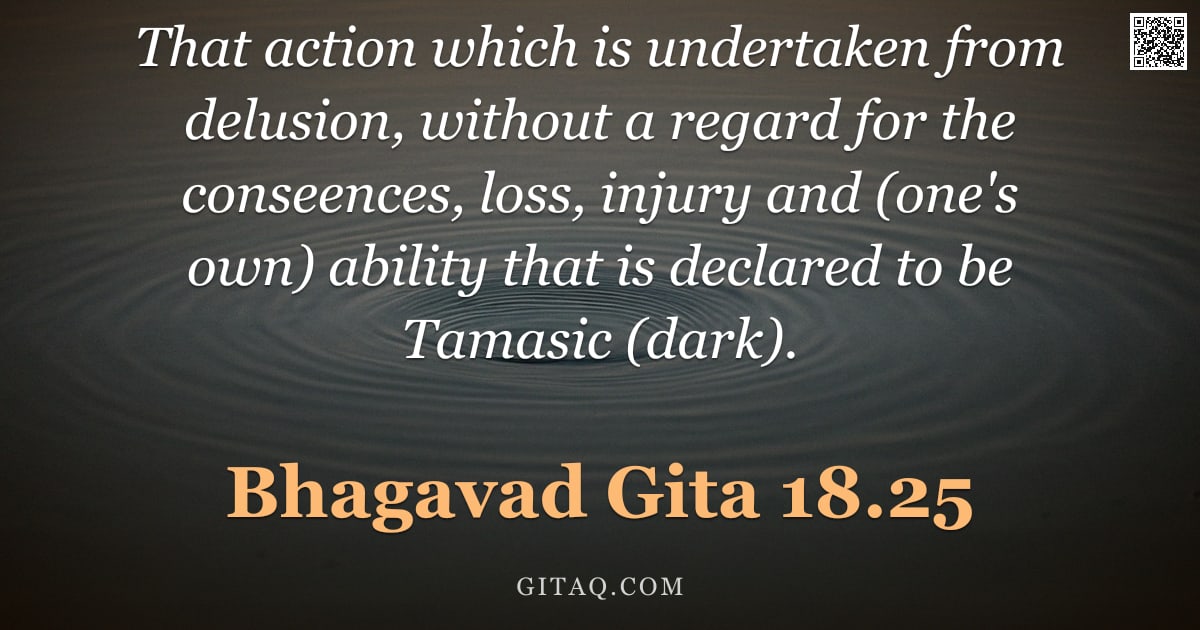
Lord Krishna tells Arjuna that actions driven by delusion, ignoring consequences like loss or harm to others and disregarding one's own capabilities, are classified as Tamasic (dark). This type of action stems from a clouded mind that fails to see the reality of cause and effect. Such deeds lead to further ignorance rather than liberation. The key teaching is that true spiritual progress requires clear vision before undertaking any task.
The Teaching Behind It
This verse belongs to the framework of Karma Yoga within the Sankhya philosophy of the Gita, specifically detailing how qualities (Gunas) influence action. It develops the concept that actions rooted in Tamas are blind to reality and binding, contrasting them with actions performed with wisdom and detachment.
Word by Word
Classical Commentary
Where This Happens
This verse appears in the final chapter where Lord Krishna is concluding his discourse to Arjuna on the battlefield of Kurukshetra after a long day of debate. Having just explained the three types of knowledge, action, and intellect (Sattvic, Rajasic, Tamasic), Krishna now defines the nature of actions rooted in ignorance as he urges Arjuna to awaken from his delusion. The listener, Arjuna, is still struggling with the moral weight of fighting his own kin, needing clarity on how to distinguish right action from harmful impulsiveness.
Living It Out Today
Consider a manager at work who launches a new product strategy without checking market research (consequences), ignoring potential harm to customer trust or company finances (injury/loss), and pushing forward despite lacking the team's resources (ability). This impulsive move, driven by overconfidence or confusion rather than data, often leads to failure and wasted effort. A better approach is to pause, assess risks, ensure ethical alignment, and match actions with available skills before proceeding.
Explained for Children
Imagine you decide to run into traffic without looking at cars or thinking about how dangerous it might be; doing something because you are confused and not caring if someone gets hurt is like a 'Tamasic' action. Krishna says we should think carefully, check if our actions will cause trouble, and make sure we can actually do them before starting. When we act with care and clear eyes instead of confusion, we grow smarter and kinder.
Daily Reflection
Today, notice where you act out of a foggy 'I must do this now' rather than clear wisdom. When we ignore consequences or our actual limits, we often create more suffering for ourselves and others later on. True strength comes from pausing to align your actions with reality before they unfold.
A Practice for Today
Pause to examine your next action and ask if it springs from clarity or confusion. Notice whether you are ignoring the potential for harm, loss, or your own true capacity before moving forward.
Key Teachings
- The Trap of Delusion
Tamasic action begins in ignorance, where the mind clouds judgment about what is right or wrong. This delusion blinds us to the true nature of our choices before we even begin. - Disregard for Consequences and Harm
A hallmark of darkness in action is a complete lack of regard for future outcomes, including injury or loss. The doer acts without considering the ripple effects on themselves or others. - Ignoring One's Own Capacity
True wisdom requires an honest assessment of one's own abilities and resources before undertaking a task. Acting beyond one's limits out of delusion leads to failure and further entanglement in suffering.
Themes
Related Verses
Read This Next
- 2.47 — Contrast this verse with the teaching to perform duty without attachment to results or delusion.
- 3.30 — See how dedicating actions to the Divine transforms work from Tamasic inertia into a path of liberation.
- 12.15 — Discover the qualities of those who are dear to Krishna, contrasting them with the deluded doer described here.
Recommended Reading
GitaQ earns from qualifying purchases as an Amazon Associate.