Bhagavad Gita 16.16
Daivasura Sampad Vibhaga Yoga · English Translation
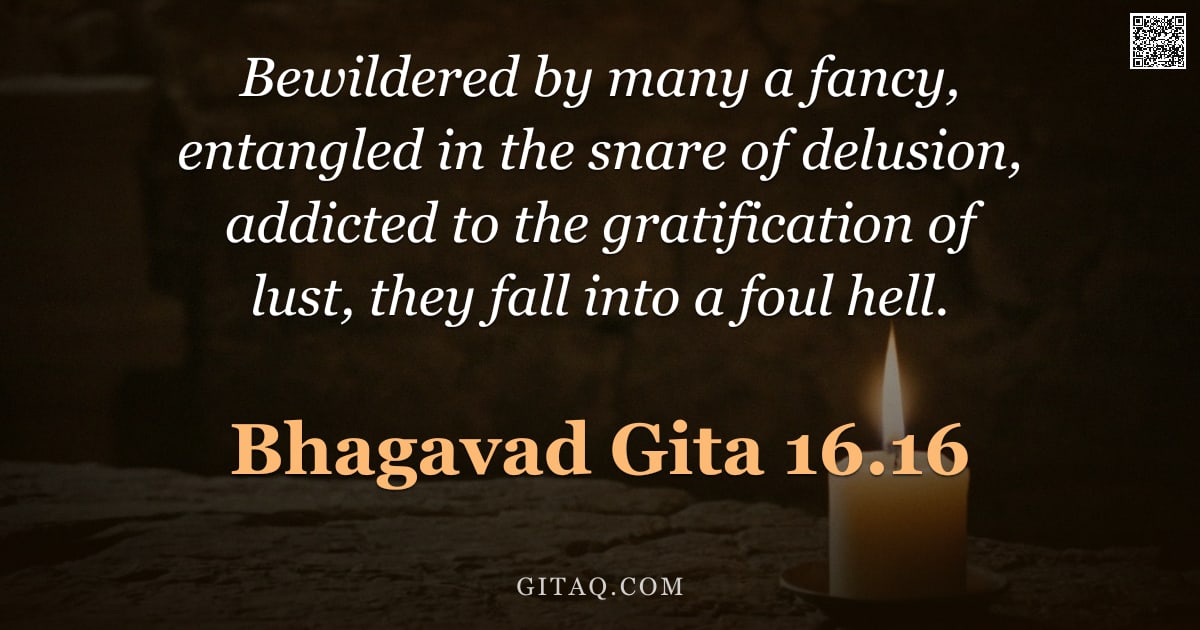
अनेकचित्तविभ्रान्ता मोहजालसमावृताः | प्रसक्ताः कामभोगेषु पतन्ति नरकेऽशुचौ ||१६-१६||
anekacittavibhrāntā mohajālasamāvṛtāḥ . prasaktāḥ kāmabhogeṣu patanti narake.aśucau ||16-16||
What Does This Verse Mean?
In this verse, Lord Krishna describes the tragic fate of those overwhelmed by endless desires and delusions. He explains that when a person becomes obsessed with satisfying their lust for sense objects without any higher purpose, they lose their discernment and spiritual footing. This state of being trapped in an illusion leads them away from liberation and into a condition akin to hell. The teaching warns that unchecked greed is not just a moral failing but a self-destructive path.
The Teaching Behind It
This verse belongs to the framework of Sankhya philosophy as presented in the Gita, which analyzes human nature through the lens of gunas (modes of material energy). It specifically develops the concept that excessive attachment to the senses and delusion (moha) are the primary causes of spiritual degradation and bondage.
Word by Word
Classical Commentary
Where This Happens
This shloka is spoken by Lord Krishna to Arjuna on the battlefield of Kurukshetra during the Mahabharata war. It occurs after Krishna has finished describing the qualities of divine and demonic natures, specifically detailing how the demoniac personality functions. At this moment, Arjuna is listening intently as Krishna clarifies that those who reject duty for selfish gain are not just sinners but beings trapped in their own mental illusions.
Living It Out Today
Consider a professional manager who ignores ethical standards and company policy to chase short-term profits or personal bonuses at the expense of employee well-being. This single-minded addiction to 'gratification' blinds them to the long-term consequences, leading to legal trouble, loss of reputation, and internal chaos that feels like their own personal hell. The lesson is to pause before acting on an impulse-driven desire for immediate gain.
Explained for Children
Imagine you are playing a video game where the only goal is to collect as many coins as possible, ignoring all the warning signs on the screen. If you keep grabbing every shiny coin without thinking about safety or your mission, eventually, you will crash and lose everything. This verse teaches us that if we let our desires for toys, food, or fun take over completely, we might make bad choices that hurt us in the end.
Daily Reflection
You may find yourself today tangled in a web of distractions where every new desire feels like an urgent necessity. It is easy to lose your way when we mistake temporary pleasure for lasting fulfillment, leading us down paths that leave us feeling hollow rather than free. By recognizing these snares as mere illusions, you reclaim the clarity needed to choose actions rooted in peace instead of impulse.
A Practice for Today
Sit quietly and observe how many of your daily thoughts are merely 'fancies' or fleeting desires rather than true needs. Notice the subtle snare of delusion that convinces you happiness lies in endless gratification, and gently release one attachment to lust for the day.
Key Teachings
- The Trap of Delusion
Delusion acts as a dense net that obscures our true nature, trapping us in endless cycles of confusion and false priorities. When we are enveloped by this ignorance, even our best intentions can lead to spiritual downfall. - The Misdirection of Desire
Unchecked craving for sensory gratification turns the mind into a chaotic sea of conflicting impulses rather than focused wisdom. This addiction blinds us to the consequences of our actions, drawing us toward environments that are spiritually harmful. - The Consequence of Attachment
Falling into spiritual darkness is not an external punishment but a natural result of identifying with base instincts over divine qualities. True liberation requires breaking the chains of these addictive tendencies to find our inherent purity and peace.
Themes
Related Verses
Read This Next
- 2.47 — To understand how to act without attachment, which is the antidote to the bondage described in this verse.
- 3.30 — This teaching on offering actions to God helps dissolve the ego-driven delusion that fuels obsessive desire.
- 12.15 — To see the contrast between those bound by lust and a devotee who is dear to Krishna for their equanimity and lack of malice.
Recommended Reading
GitaQ earns from qualifying purchases as an Amazon Associate.