Bhagavad Gita 16.15
Daivasura Sampad Vibhaga Yoga · English Translation
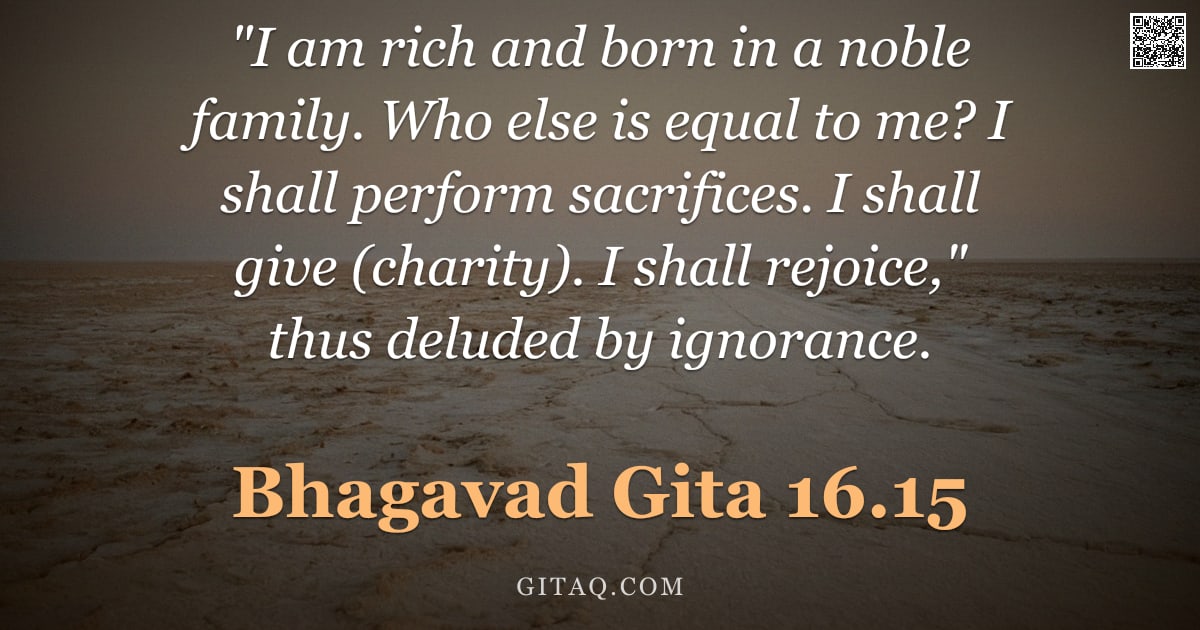
आढ्योऽभिजनवानस्मि कोऽन्योऽस्ति सदृशो मया | यक्ष्ये दास्यामि मोदिष्य इत्यज्ञानविमोहिताः ||१६-१५||
āḍhyo.abhijanavānasmi ko.anyo.asti sadṛśo mayā . yakṣye dāsyāmi modiṣya ityajñānavimohitāḥ ||16-15||
What Does This Verse Mean?
In this verse, the speaker describes a person overwhelmed by ego who believes they are rich, noble, and superior to everyone else. This arrogant individual plans to perform grand sacrifices and give charity solely for self-aggrandizement rather than spiritual growth. Krishna speaks these words on the battlefield of Kurukshetra as part of his description of demonic nature (asura) versus divine nature. The core teaching is that ignorance creates a delusion where external achievements like wealth or status are mistaken for true identity and superiority.
The Teaching Behind It
This verse belongs to the strand of Jnana Yoga (the yoga of knowledge) by highlighting how ignorance (avidya) distorts one's understanding of reality. It develops the concept that material wealth, lineage, or social status are temporary external attributes that do not constitute the true Self (Atman). The teaching illustrates that without spiritual wisdom, these qualities become sources of delusion rather than opportunities for growth.
Word by Word
Classical Commentary
Where This Happens
This verse occurs in Chapter 16 during the discourse on the battlefield of Kurukshetra, where Lord Krishna is instructing Arjuna. It follows a detailed list of divine qualities (daivi sampad) that Krishna urges Arjuna to cultivate before contrasting them with demonic traits (asuri sampad). The speaker describes the mindset of an arrogant soul who has lost touch with spiritual reality due to ignorance and attachment to material status. This section serves as a warning to the warrior prince about the psychological state that leads one away from duty, righteousness, and ultimately liberation.
Living It Out Today
Consider a professional in your workplace who believes their high salary or title makes them superior to colleagues and refuses to listen to feedback or collaborate equally. They might think they deserve special treatment because of past successes and plan to use their influence for personal gain rather than team growth. This verse helps identify that moment when you feel entitled, reminding you that such arrogance clouds your judgment and damages relationships just like it did in the ancient text. Recognizing this ego-driven mindset allows you to shift focus from 'what I have' to 'how I can serve,' leading to better leadership and inner peace.
Explained for Children
Imagine you have so many toys that you think you are the best kid in the whole world, and everyone else must be less special than you because they don't have your stuff. This verse is about a person who thinks being rich makes them better than anyone else, saying things like 'I am the richest and I will show off by giving gifts.' But just like thinking having more candy means you are smarter or kinder isn't true, this kind of pride comes from not seeing clearly. It teaches us that real happiness doesn't come from bragging about what we have, but from being humble and knowing who we really are.
Daily Reflection
You may find yourself feeling a sense of entitlement based on your wealth or background, believing you are superior to others. This verse gently reminds us that such pride is an illusion born of spiritual forgetfulness rather than reality. True freedom comes when we release the need to prove our worth through external status and instead rest in our shared divine essence.
A Practice for Today
Sit quietly and observe any subtle thoughts of superiority or comparison arising from your own achievements or lineage. Acknowledge these feelings not as facts, but as the fog of ignorance clouding your true nature.
Key Teachings
- The Illusion of Superiority
Pride arising from material wealth or noble birth creates a false sense of individual uniqueness that separates one from the universal Self. This delusion convinces the mind that it stands apart, ignoring its fundamental equality with all beings. - Performative Righteousness
The demonic nature often disguises itself as religious activity, where sacrifices and charity are performed for egoistic satisfaction rather than pure devotion. When done without humility, these actions become chains that bind the soul to further ignorance. - Ignorance as the Root
The specific delusion described here is not merely a lack of knowledge but an active mental fog that distorts self-perception. This state prevents one from seeing their true spiritual identity, replacing it with a temporary and fragile social status.
Themes
Related Verses
Read This Next
- 2.47 — This verse establishes the principle of performing duty without attachment to results, directly countering the ego-driven desire for recognition found in Gita 16.15.
- 3.30 — It teaches the practice of offering all actions and their fruits to the Divine, which is the antidote to performing sacrifices merely for personal glory or social display.
- 12.15 — Krishna describes the qualities of a devotee who does not provoke others nor cause disturbance, contrasting sharply with the arrogant and self-centered nature described in 16.15.
Recommended Reading
GitaQ earns from qualifying purchases as an Amazon Associate.