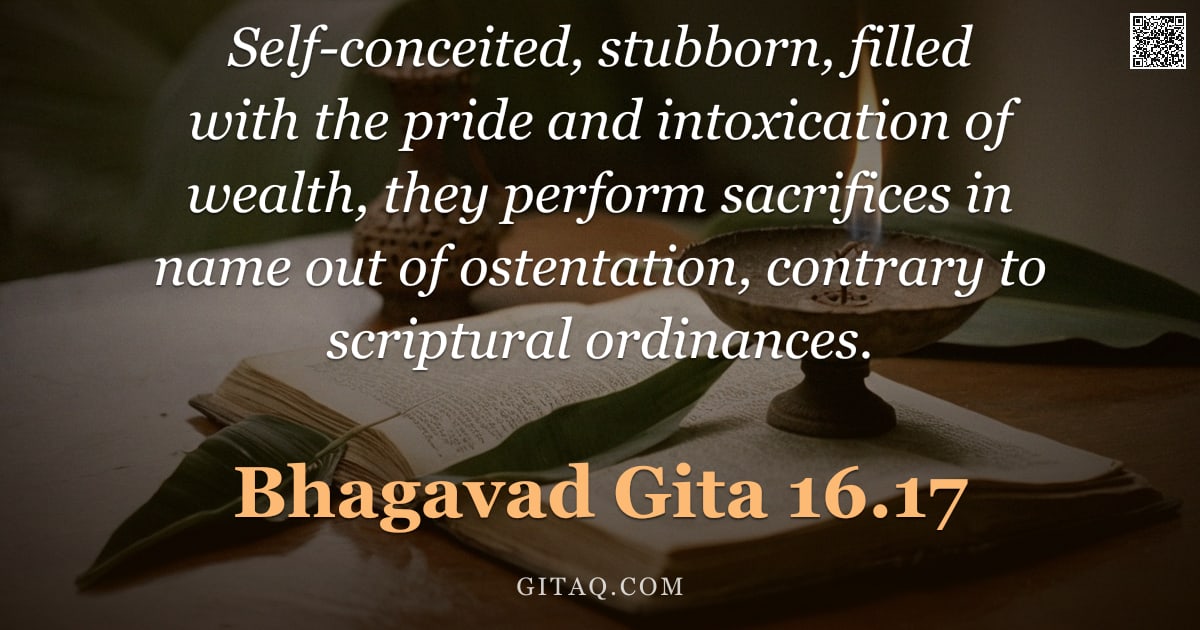
Bhagavad Gita 16.17
Daivasura Sampad Vibhaga Yoga · English Translation
आत्मसम्भाविताः स्तब्धा धनमानमदान्विताः | यजन्ते नामयज्ञैस्ते दम्भेनाविधिपूर्वकम् ||१६-१७||
ātmasambhāvitāḥ stabdhā dhanamānamadānvitāḥ . yajante nāmayajñaiste dambhenāvidhipūrvakam ||16-17||
What Does This Verse Mean?
In this verse, Lord Krishna describes the mindset of those with demonic qualities who have become arrogant due to their own self-importance and wealth. He explains that these individuals perform religious rituals or charity solely for show, ignoring the spiritual rules laid down in ancient scriptures. The core teaching is that external acts without internal purity and humility are merely empty performances driven by ego rather than true devotion.
The Teaching Behind It
This teaching belongs to the synthesis of Karma Yoga (the yoga of action) and Sankhya philosophy regarding the distinction between pure and impure motivation. It develops the concept that the spiritual value of an action is determined by the internal state (bhava) and humility of the doer, rather than the external magnitude of the ritual itself.
Word by Word
Classical Commentary
Where This Happens
This verse appears in Chapter 16 of the Bhagavad Gita during Krishna's discourse on the battlefield of Kurukshetra, where he is explaining the 'Daivasura Sampad' (divine and demonic natures) to Arjuna. At this point in the conversation, Krishna has just finished describing the divine qualities that lead to liberation and is now contrasting them with the three gates to hell: lust, anger, and greed which characterize those of demonic nature. The listener, Arjuna, who was initially confused by his duty to fight family members, is being guided toward a deeper understanding of character traits rather than just physical action.
Living It Out Today
Consider a corporate leader who organizes an elaborate charity gala for their company solely to secure a tax write-off and boost their personal brand image while ignoring the actual suffering of the beneficiaries. This behavior mirrors the verse because the 'sacrifice' is performed with ostentation (dambha) rather than genuine compassion, violating the spirit of ethical duty. Instead of focusing on public relations wins, true leadership in this scenario would involve discreetly addressing needs and ensuring resources actually reach those who require them without seeking credit.
Explained for Children
Imagine someone who buys a very expensive toy just to brag about it at school instead of playing with it nicely or sharing it; they only care about looking cool, not the fun itself. This verse tells us that when people do good things like helping others or praying just so everyone claps for them and because they feel rich is better than being humble, their hearts are empty inside. True goodness comes from a kind heart that wants to help without expecting applause, not from showing off our toys.
Daily Reflection
You may find that your mind often tries to justify prideful actions by wrapping them in religious titles, believing that grand gestures erase inner emptiness. True spiritual growth begins when you gently strip away this 'name-only' performance and look at the purity of your own intent without seeking recognition. When you let go of the need to be seen as a saint or a giver, you discover a freedom where service becomes its own reward.
A Practice for Today
Pause to observe where your sense of self-worth relies on external achievements, wealth, or the admiration of others rather than an inner stillness. Ask yourself today: 'Am I acting from a place of genuine devotion and humility, or am I performing these acts for the applause of the world?'
Key Teachings
- The Trap of Spiritual Ostentation
Even religious acts can become vehicles for ego if performed solely to display wealth or status rather than out of sincere devotion. The verse warns that when sacrifice is driven by the desire for fame, it loses its spiritual essence and becomes mere theater. - The Illusion of Self-Sufficiency
Those consumed by pride often believe they are self-created or entirely independent of divine grace, leading to a stubborn refusal to learn from scripture. This arrogance blinds the individual to their true nature and prevents them from recognizing the need for surrender. - Scripture as an Anchor vs. Ego's Flight
The verse highlights that demonic behavior involves disregarding established scriptural ordinances in favor of personal whims designed to impress others. Authentic spirituality requires adhering to timeless wisdom, whereas ego-driven religion creates its own arbitrary rules for show.
Themes
Related Verses
Read This Next
- 2.47 — To understand how to perform duty without attachment to results, countering the desire for recognition.
- 3.30 — To learn the practice of surrendering all actions to the Divine as a remedy for ego-driven pride.
- 12.15 — To discover the qualities of one who is dear to Krishna, contrasting the ostentatious with the truly humble devotee.
Recommended Reading
GitaQ earns from qualifying purchases as an Amazon Associate.