Bhagavad Gita 18.9
Moksha Sanyasa Yoga · English Translation
कार्यमित्येव यत्कर्म नियतं क्रियतेऽर्जुन | सङ्गं त्यक्त्वा फलं चैव स त्यागः सात्त्विको मतः ||१८-९||
kāryamityeva yatkarma niyataṃ kriyate.arjuna . saṅgaṃ tyaktvā phalaṃ caiva sa tyāgaḥ sāttviko mataḥ ||18-9||
What Does This Verse Mean?
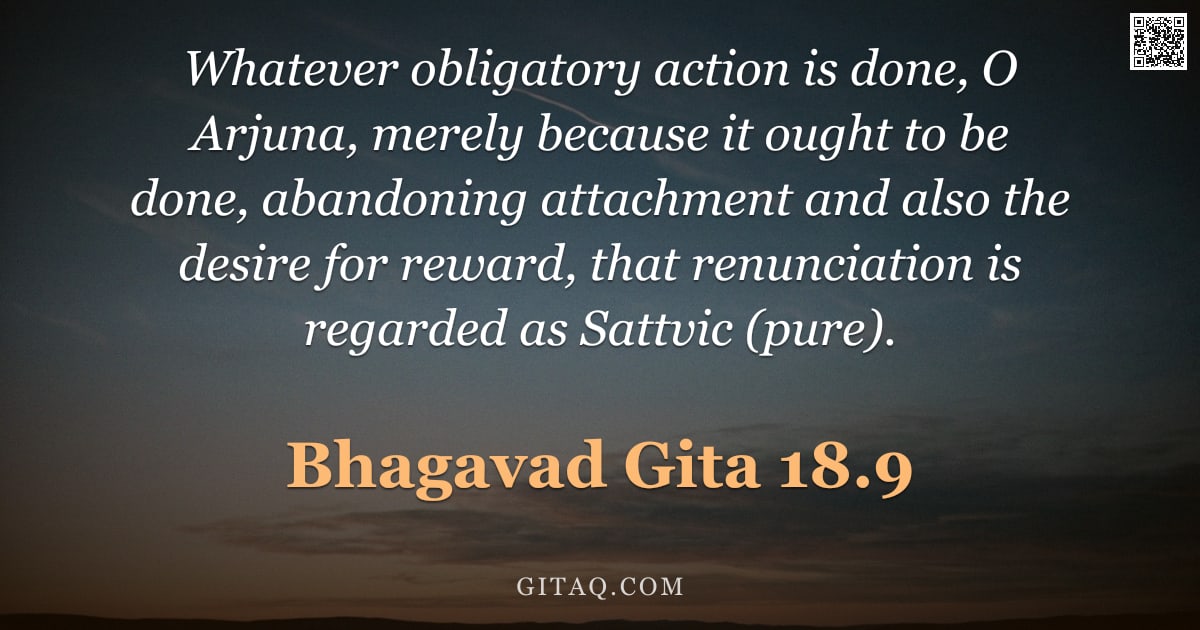
In this verse, Lord Krishna tells Arjuna that true pure renunciation involves performing one's necessary duties simply because they must be done, without any attachment to the action or desire for its results. This type of selfless duty is classified as 'Sattvic' (pure and balanced). The teaching emphasizes that doing what is right out of a sense of obligation, rather than for personal gain, leads to spiritual clarity.
The Teaching Behind It
This verse belongs primarily to Karma Yoga, the yoga of selfless action, which is further developed through the lens of Sattvic Guna (the mode of purity). It teaches that while renunciation often implies giving up actions, true spiritual freedom involves performing obligatory duties with a detached mind, effectively transforming work into worship.
Word by Word
Classical Commentary
Where This Happens
This verse appears in the final chapter of the Bhagavad Gita during the intense dialogue on the battlefield of Kurukshetra, where Lord Krishna is concluding his teachings to Prince Arjuna. Just before this, Arjuna had expressed confusion about whether total renunciation means giving up all action or just performing actions with a changed mindset. Krishna clarifies that true spiritual growth comes from fulfilling one's obligatory duties (Svadharma) without the mental burden of attachment.
Living It Out Today
Consider a manager who must deliver difficult feedback to an underperforming employee; instead of doing it to avoid conflict later or to look tough, they do it purely because it is their responsibility to ensure team success. They perform this necessary task with care but let go immediately after the conversation without obsessing over whether the employee will be angry or grateful. This approach reduces personal anxiety and allows them to act with clarity rather than emotional reactivity.
Explained for Children
Imagine you have homework to do because it's your job as a student. If you finish it quickly just because the teacher said so, without worrying about getting a gold star or being mad that you can't play outside yet, that is doing your duty well! Krishna says when we help others and follow rules just because they are right things to do—without wanting a reward—that makes our hearts happy and pure.
Daily Reflection
You often wait for the perfect moment where the work is exciting and the reward guaranteed before taking action, but true peace arrives when you act precisely because 'it must be done.' When you release the heavy grip on what might happen next, a lightness enters your spirit that no external success can provide. Today, try to find freedom not in changing your circumstances, but in freeing yourself from the need for them to change.
A Practice for Today
Pause and identify one task you are avoiding because it feels burdensome or unrewarding; commit to doing just that one thing simply because duty requires it, without attaching your worth to the outcome.
Key Teachings
- The Nature of Sattvic Renunciation
True renunciation is not merely giving up actions or fleeing responsibilities, but rather performing obligatory duties without mental bondage. It transforms work from a source of anxiety into an offering when done with purity and clarity. - Action Without Attachment to Results
The verse instructs us to separate the act itself from the desire for specific outcomes or rewards. By performing duties solely because they are right, we align our will with cosmic order rather than personal craving. - Duty as a Spiritual Discipline
Obligatory actions become spiritual practice when undertaken without hesitation and free from selfish motives. This approach cultivates the Sattvic quality of stability, leading the mind toward liberation through consistent selfless service.
Themes
Related Verses
Read This Next
- 2.47 — Establishes the foundational principle of acting without concern for results before defining Sattvic renunciation.
- 3.30 — Shows Krishna instructing Arjuna to dedicate all actions to Him, complementing the theme of abandoning personal reward.
- 12.15 — Describes how one who is free from such attachments becomes dear to Krishna.
Recommended Reading
GitaQ earns from qualifying purchases as an Amazon Associate.