Bhagavad Gita 13.9
Kshetra Kshetrajna Vibhaga Yoga · English Translation
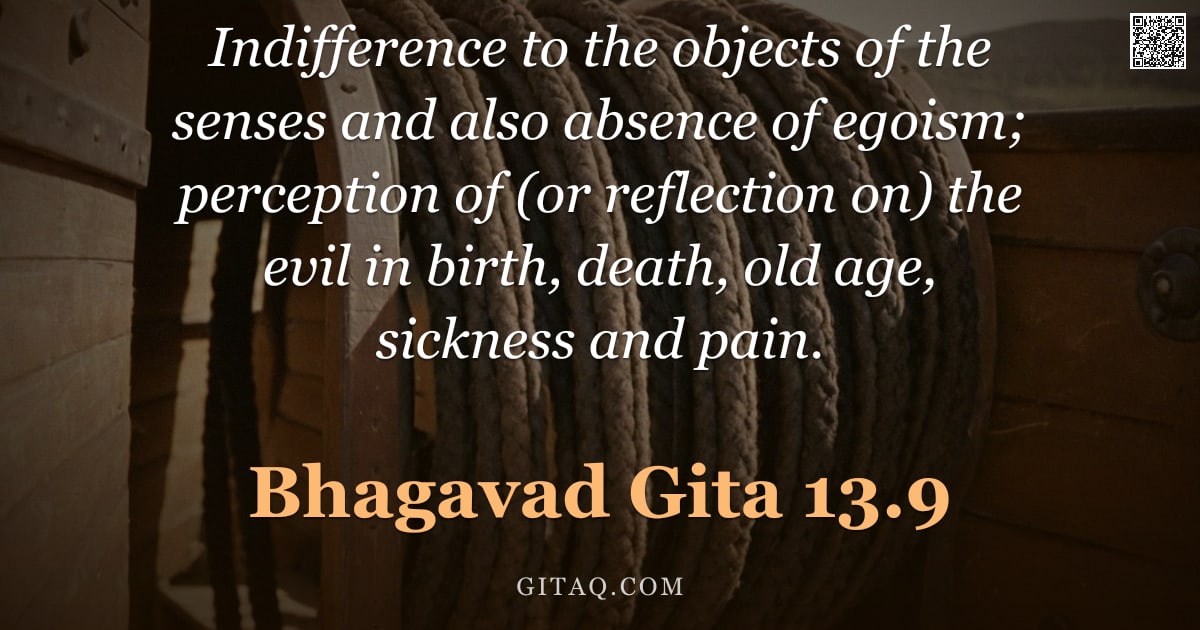
इन्द्रियार्थेषु वैराग्यमनहंकार एव च | जन्ममृत्युजराव्याधिदुःखदोषानुदर्शनम् ||१३-९||
indriyārtheṣu vairāgyamanahaṃkāra eva ca . janmamṛtyujarāvyādhiduḥkhadoṣānudarśanam ||13-9||
What Does This Verse Mean?
In this verse, Lord Krishna continues his teaching to Arjuna on the battlefield of Kurukshetra by defining the essential qualities needed for spiritual growth. He instructs that one must cultivate disinterest in sensory pleasures and abandon the false sense of ego as a doer or enjoyer. Furthermore, he emphasizes the importance of deeply reflecting on the inherent suffering found in birth, death, old age, sickness, and pain to realize they are temporary. This reflection serves as a catalyst for detachment from worldly illusions.
The Teaching Behind It
This verse is a cornerstone of Jnana Yoga (the path of knowledge) and Samkhya philosophy within the Gita's framework, focusing on Viveka or discrimination between the eternal Self and the temporary body. It develops the concept that true liberation requires intellectual and emotional detachment from the three gunas and the cycle of birth and death through clear perception of suffering.
Word by Word
Classical Commentary
Where This Happens
This verse appears in the thirteenth chapter of the Bhagavad Gita during a pivotal moment on the battlefield of Kurukshetra where Prince Arjuna is paralyzed by grief and moral confusion. Lord Krishna has just finished explaining that the physical body is like a field, while the soul (the knower) is distinct from it. Now, as part of his detailed instructions on how to perceive reality correctly, he outlines specific mental disciplines required for the seeker who wants to understand their true nature beyond these temporary bodily conditions.
Living It Out Today
Consider a professional facing burnout or a sudden career setback; instead of spiraling into ego-driven panic ('I am a failure') or seeking distraction through constant shopping and entertainment (sensory objects), they can pause. By consciously reflecting on the natural cycle of challenges—recognizing that stress, illness, or job loss are inevitable parts of human existence—they gain perspective. This realization reduces personal suffering and allows them to make clear-headed decisions rather than reactive ones driven by fear.
Explained for Children
Imagine you have a toy that breaks easily, or maybe your favorite ice cream melts away before you can finish it; Krishna is teaching us not to get too attached to these things because nothing in this world lasts forever. He says we should stop thinking 'I am the boss of everything' and instead realize that getting sick, growing old, or losing our toys is a natural part of life's ups and downs. Just like you wouldn't cry for hours when your toy breaks if you know it was going to happen anyway, understanding this helps us stay calm even when things get hard.
Daily Reflection
Today, I invite you to pause whenever an object of desire arises—perhaps a delicious treat or a comfortable chair—and simply observe it without the usual rush to possess it. By recognizing that even our pursuit of pleasure is often rooted in ego, we can gently step back and see birth, death, aging, sickness, and pain for what they truly are: inevitable aspects of material existence rather than personal tragedies.
A Practice for Today
Sit quietly and gently withdraw your attention from the five senses, observing how desire pulls you outward like a tide. Notice where 'I' or 'me' appears in your thoughts regarding what you see, hear, or feel today.
Key Teachings
- Detachment from Sensory Objects
True freedom begins when the mind no longer clamors after sensory pleasures as if they were sources of lasting happiness. This indifference is not a rejection of life, but a wisdom that sees through the fleeting nature of sense-gratification. - The Eradication of Egoism
By removing the false identification with the body and mind as 'I', we stop attributing our actions to a limited self. This absence of ego allows us to see reality clearly, unclouded by personal bias or selfish ambition. - Contemplation on Suffering
A clear understanding that birth, death, old age, sickness, and pain are inherent flaws in material existence acts as a powerful antidote to delusion. Reflecting on these realities shifts our focus from temporary physical comfort to eternal spiritual truth.
Themes
Related Verses
Read This Next
- 2.47 — This verse establishes your right to action without attachment to results, complementing today's theme of indifference to outcomes.
- 3.30 — Here Krishna instructs on offering all actions and ego to the Divine, deepening the practice of selfless living introduced in this verse.
- 12.15 — This passage describes the qualities of a devotee who is not agitated by pain or pleasure, embodying the state described in 13.9.
Recommended Reading
GitaQ earns from qualifying purchases as an Amazon Associate.