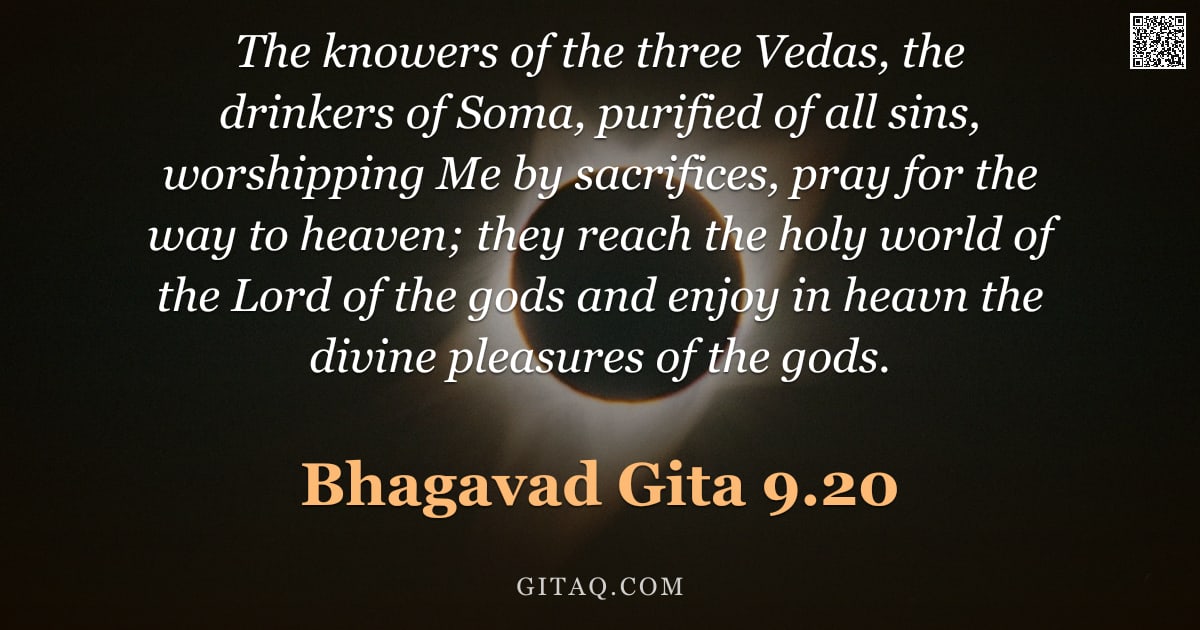
Bhagavad Gita 9.20
Raja Vidya Raja Guhya Yoga · English Translation
त्रैविद्या मां सोमपाः पूतपापा यज्ञैरिष्ट्वा स्वर्गतिं प्रार्थयन्ते | ते पुण्यमासाद्य सुरेन्द्रलोक- मश्नन्ति दिव्यान्दिवि देवभोगान् ||९-२०||
traividyā māṃ somapāḥ pūtapāpā yajñairiṣṭvā svargatiṃ prārthayante . te puṇyamāsādya surendralokaṃ aśnanti divyāndivi devabhogān ||9-20||
What Does This Verse Mean?
In this verse, Lord Krishna describes the cycle of devotion where people who study the Vedas and perform rituals to please God are rewarded with a temporary stay in heaven after they pass away from Earth. These individuals purify themselves through sacrifices and drink sacred offerings like Soma, but their ultimate goal remains focused on gaining entry into heavenly realms rather than returning to Krishna directly. The key teaching is that while such pious actions lead to beautiful rewards, these heavens are not permanent; once the merit of good deeds is exhausted, one must return to Earth.
The Teaching Behind It
This verse belongs primarily to the framework of Karma Yoga (the yoga of action) and Bhakti Yoga, illustrating how ritualistic worship with desire leads to Karmic rewards. It develops the concept that actions performed for material gain or heavenly enjoyment result in temporary fruits (Phala), distinguishing them from Nishkama Karma (action without desire) which leads to liberation.
Word by Word
Classical Commentary
Where This Happens
This verse appears in Chapter 9 of the Bhagavad Gita during the intense dialogue on the battlefield of Kurukshetra between Lord Krishna and Prince Arjuna. At this point, Krishna has already begun revealing his Universal Form (Vishvarupa) conceptually to explain that he is the source of all existence. He speaks these words while explaining how different types of devotees approach him based on their desires and knowledge levels, specifically addressing those who follow Vedic rituals for material rewards.
Living It Out Today
Consider a professional who works tirelessly not out of passion or duty, but solely to secure a promotion that will buy them a bigger house and social status. Like the seekers in this verse, they may achieve their goal temporarily—enjoying wealth and comfort—but often find themselves still anxious when those rewards fade or new challenges arise. The lesson is to shift focus from seeking external validation for temporary gains to finding inner stability through purposeful action without attachment to specific outcomes.
Explained for Children
Imagine you work very hard doing nice things and following rules to earn 'good deed' stars on your chart. Because you did so well, a special ticket takes you to a magical theme park called Heaven where you get unlimited ice cream and play with all the gods for as long as the tickets last. However, just like any vacation or holiday at a fun place eventually ends when the time is up, this heavenly stay isn't your forever home; once those good stars are used up, it's time to come back to Earth to start learning again.
Daily Reflection
Today you might find yourself working hard not because it brings joy, but because you expect a reward or approval to follow; this verse gently reminds us that even such noble efforts are part of a cycle if they remain transactional. When we shift our focus from enjoying the fruits of heaven to simply being in the presence of the Divine, our hearts find a peace no external pleasure can match. You do not need to abandon your duties today, but you can offer them as an act of love rather than a strategy for gain.
A Practice for Today
Sit quietly and visualize offering your own desires for recognition or reward to the Divine, just as those who seek heavenly pleasures offer their sacrifices. Let go of the need for a specific result from your actions, trusting that the One who witnesses all is present in every moment.
Key Teachings
- The Limits of Ritualistic Piety
This verse acknowledges that performing Vedic rituals and sacrifices can purify sins and lead to heavenly rewards, yet these are temporary destinations. The teaching highlights that even the highest spiritual efforts aimed at external gains cannot offer the permanent freedom found in direct devotion. - The Cycle of Desire and Return
Those who seek heaven for its divine pleasures inevitably return to earth once their merit is exhausted, remaining bound by desire. The verse suggests that true liberation requires moving beyond the exchange of worship for pleasure toward a selfless relationship with God. - From Transactional Worship to Devotion
The path described here serves as a stepping stone where worshippers are purified, preparing them to understand that Krishna Himself is the ultimate destination. It invites the seeker to transition from praying for rewards to realizing that the Divine is the source of all joy and fulfillment.
Themes
Related Verses
Read This Next
- 2.47 — Read this next to understand Krishna's instruction on performing duty without attachment to results, contrasting with seeking specific rewards.
- 3.30 — This verse offers the practical method of surrendering all actions and their fruits to God as a natural continuation of letting go of transactional worship.
- 12.15 — Read this final selection to discover how Krishna describes those who have transcended desire for heaven or hell, finding satisfaction in the Self alone.
Recommended Reading
GitaQ earns from qualifying purchases as an Amazon Associate.