Bhagavad Gita 9.21
Raja Vidya Raja Guhya Yoga · English Translation
ते तं भुक्त्वा स्वर्गलोकं विशालं क्षीणे पुण्ये मर्त्यलोकं विशन्ति | एवं त्रयीधर्ममनुप्रपन्ना गतागतं कामकामा लभन्ते ||९-२१||
te taṃ bhuktvā svargalokaṃ viśālaṃ kṣīṇe puṇye martyalokaṃ viśanti . evaṃ trayīdharmamanuprapannā gatāgataṃ kāmakāmā labhante ||9-21||
What Does This Verse Mean?
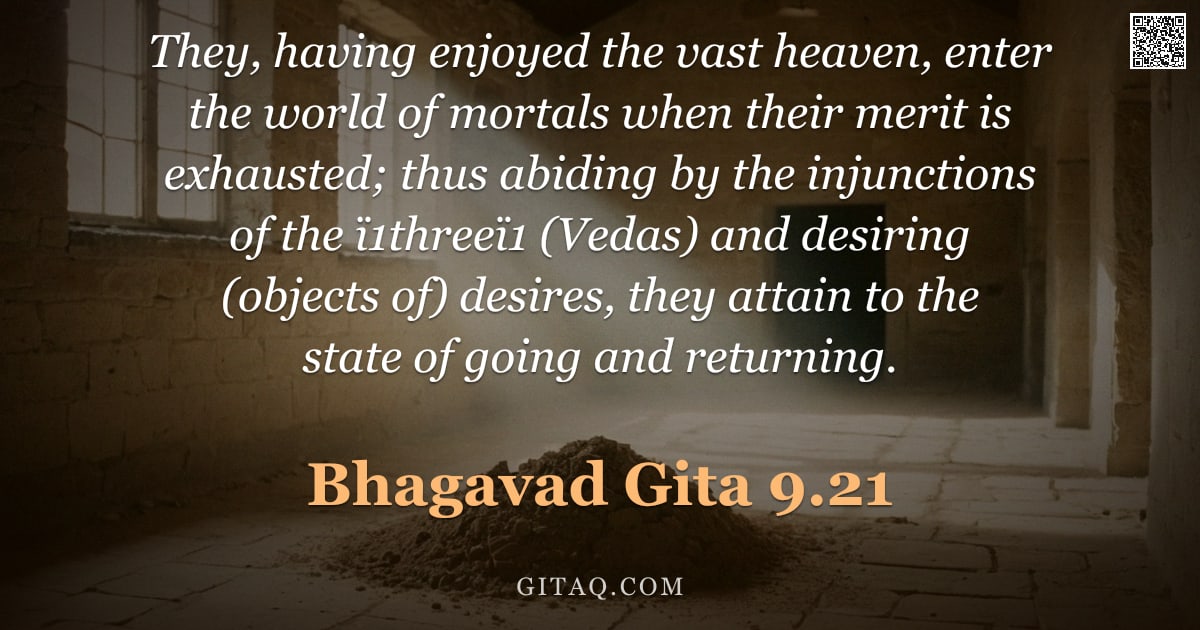
Lord Krishna explains to Arjuna that those who perform rituals solely for heavenly rewards enjoy a temporary stay in heaven until their good deeds are used up, after which they must return to Earth. The key teaching is that seeking material or celestial pleasures through duty-bound actions creates a cycle of birth and death rather than lasting freedom. While such efforts bring happiness, they do not lead to liberation because the desire for specific results keeps one bound to this world.
The Teaching Behind It
This teaching belongs primarily to the Karma Yoga strand of the Gita's philosophy but serves as a transition toward Jnana (knowledge) and Bhakti (devotion). It develops the concept that action performed with attachment to specific results (karma-phala-ashaya) binds the soul to the cycle of samsara, whereas selfless service or devotion leads beyond this cycle.
Word by Word
Classical Commentary
Where This Happens
This verse occurs in Chapter 9 of the Bhagavad Gita on the battlefield of Kurukshetra, during a conversation between Lord Krishna and Prince Arjuna. At this moment, Krishna is revealing 'Raja Vidya' (the Kingly Knowledge) to counteract Arjuna's confusion about different spiritual paths. The listener, Arjuna, has just been told that devotion yields the highest result; this verse clarifies why rituals focused only on material or heavenly rewards are considered inferior and temporary.
Living It Out Today
Consider a professional who works overtime for years solely to earn enough money to buy a luxury car and gain status at work. Once they achieve the goal, the excitement fades quickly, leading them to feel empty and pressured to seek the next promotion just to maintain that feeling of worthiness. This verse teaches us to shift our focus from short-term rewards like salary bumps or praise to finding joy in the act of doing good work itself, which brings lasting peace regardless of external outcomes.
Explained for Children
Imagine you get really good grades in school just so your parents will take you on a fun vacation to Disney World; once the trip is over and you've used up all your allowance, you have to go back home. The Gita teaches that doing good things only for rewards like fame or heaven is like playing a game where you keep starting over again because there's no finish line. True happiness comes from knowing who we are inside, not just waiting for the next prize.
Daily Reflection
You may find yourself chasing goals that feel like 'heavens'—promises of happiness through achievement or possession—but you notice they eventually fade. This verse gently reminds you that living only for desires keeps you trapped in a cycle of gaining and losing, never finding rest. Instead, invite the Divine to be your true home so you no longer need to return to the world of temporary gains.
A Practice for Today
Contemplate how even the most beautiful experiences are temporary and cannot satisfy the infinite longing of the soul. Rest your mind by realizing that true peace is not found in enjoying heavenly pleasures or returning to earth, but in finding a stable home within the Divine.
Key Teachings
- The Impermanence of Merit
Even actions driven by piety lead only to heavenly realms that are eventually exhausted, after which one must return. This teaches that no external reward, however glorious, can provide lasting liberation. - The Cycle of Desire
Those who follow religious duties solely for material or celestial rewards remain bound to the cycle of birth and death (samsara). True freedom requires transcending all desires rather than just fulfilling them through ritualistic means. - Beyond the Three Vedas
The verse critiques a limited understanding of dharma that stops at seeking results, urging seekers to look beyond mere transactional spirituality. It points toward a devotion where the goal is union with the Source, not just temporary enjoyment.
Themes
Related Verses
Read This Next
- 2.47 — Read this next to understand Krishna's instruction on performing duty without attachment to results, breaking the cycle mentioned here.
- 3.30 — This verse continues the theme of offering actions to God rather than seeking personal rewards or outcomes.
- 12.15 — Read this final selection to see how a devotee who has transcended desire becomes dear to Krishna and attains lasting peace.
Recommended Reading
GitaQ earns from qualifying purchases as an Amazon Associate.