Bhagavad Gita 5.10
Karma Sanyasa Yoga · English Translation
ब्रह्मण्याधाय कर्माणि सङ्गं त्यक्त्वा करोति यः | लिप्यते न स पापेन पद्मपत्रमिवाम्भसा ||५-१०||
brahmaṇyādhāya karmāṇi saṅgaṃ tyaktvā karoti yaḥ . lipyate na sa pāpena padmapatramivāmbhasā ||5-10||
What Does This Verse Mean?
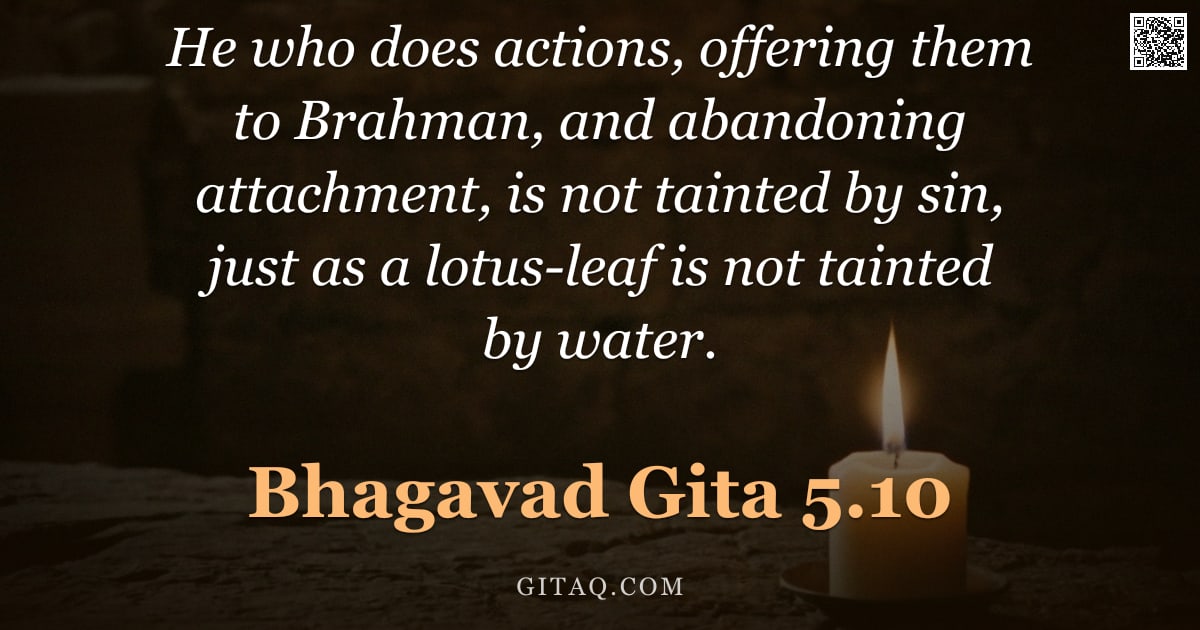
In this verse, Lord Krishna teaches Arjuna that performing one's duties without attachment to the results frees a person from negative karmic consequences. He uses the powerful analogy of a lotus leaf floating on water; just as the leaf remains dry despite being surrounded by moisture, an enlightened person remains untouched by sin while engaging in worldly actions. The core teaching is that offering all work to the Divine (Brahman) and letting go of personal desire transforms action into spiritual practice rather than bondage.
The Teaching Behind It
This verse is a cornerstone of Karma Yoga (the yoga of selfless action) which integrates elements of Jnana Yoga (knowledge). It develops the concept that the doer must realize their identity as distinct from the actions performed and offer those actions to the Supreme Reality. By dissolving the ego's attachment to results, one transcends the cycle of karma without physically withdrawing from society.
Word by Word
Classical Commentary
Where This Happens
This verse appears in Chapter 5 of the Bhagavad Gita during the intense dialogue between Lord Krishna and Prince Arjuna on the battlefield of Kurukshetra. Just prior to this exchange, Arjuna had expressed confusion about whether he should renounce all action (sannyasa) or continue fighting with his weapons (karma). He was overwhelmed by grief for killing his relatives and sought a clear path to liberation. Krishna clarifies that true renunciation is not abandoning work but changing one's mindset while working.
Living It Out Today
Consider a professional manager facing an impossible deadline where their team has made significant errors, creating high anxiety about the project failing. Instead of getting consumed by blame or fear of consequences (attachment to a specific outcome), they focus entirely on taking the necessary corrective actions and offering the effort as part of their duty. By detaching from the emotional weight of 'what if it fails' and trusting in the process, they remain calm and effective, ensuring the work is done without internal turmoil.
Explained for Children
Imagine you are playing a game with your friends. You play really hard, do your best, but if you win or lose doesn't make you sad or angry because you know the fun was in playing itself, right? That is what this verse teaches! When we help our family or do good things at school just to be kind and not to show off or get a prize, it's like a lotus flower leaf sitting on water. Even though the water touches the leaf all around, the leaf stays completely dry and clean inside.
Daily Reflection
Today, I invite you to look at your own burdens and imagine them resting lightly on a lotus leaf rather than weighing down your spirit. When you act without clinging to success or fearing failure, you discover that life's challenges cannot truly stain your inner peace. You are invited to try this simple shift: do the work fully, but let go of the need for it to define you.
A Practice for Today
Close your eyes and visualize water flowing over a lotus leaf, noticing how the moisture beads up without ever soaking through to the stem. Now, bring this image into your current day: as you perform your necessary tasks, silently offer each action to the Divine while maintaining an inner detachment from the results.
Key Teachings
- Surrender in Action
The verse teaches that true renunciation is not abandoning duties, but offering every action as a sacrifice to Brahman. By shifting the focus from 'I am doing this' to 'This is for God,' the egoic claim on the work dissolves. - Detachment as Protection
Just as water cannot stick to a lotus leaf, sin and karmic bondage do not adhere to one who acts without attachment. This detachment is not cold indifference but a spiritual immunity that keeps the soul pure amidst worldly engagement. - The Purity of Intent
The verse highlights that the quality of an action depends on the intention behind it rather than the external outcome. When actions are rooted in devotion and free from selfish desire, they naturally lead to liberation instead of further entanglement.
Themes
Related Verses
Read This Next
- 2.47 — Read this next for Krishna's foundational instruction on performing duty while relinquishing concern over results.
- 3.30 — This verse complements 5.10 by explicitly instructing the reader to surrender all actions and their fruits entirely to God.
- 12.15 — Read this final selection to see how a person who does not disturb others or seek disturbance is described as dear to Krishna, mirroring the purity of 5.10.
Recommended Reading
GitaQ earns from qualifying purchases as an Amazon Associate.