Bhagavad Gita 5.1
Karma Sanyasa Yoga · English Translation
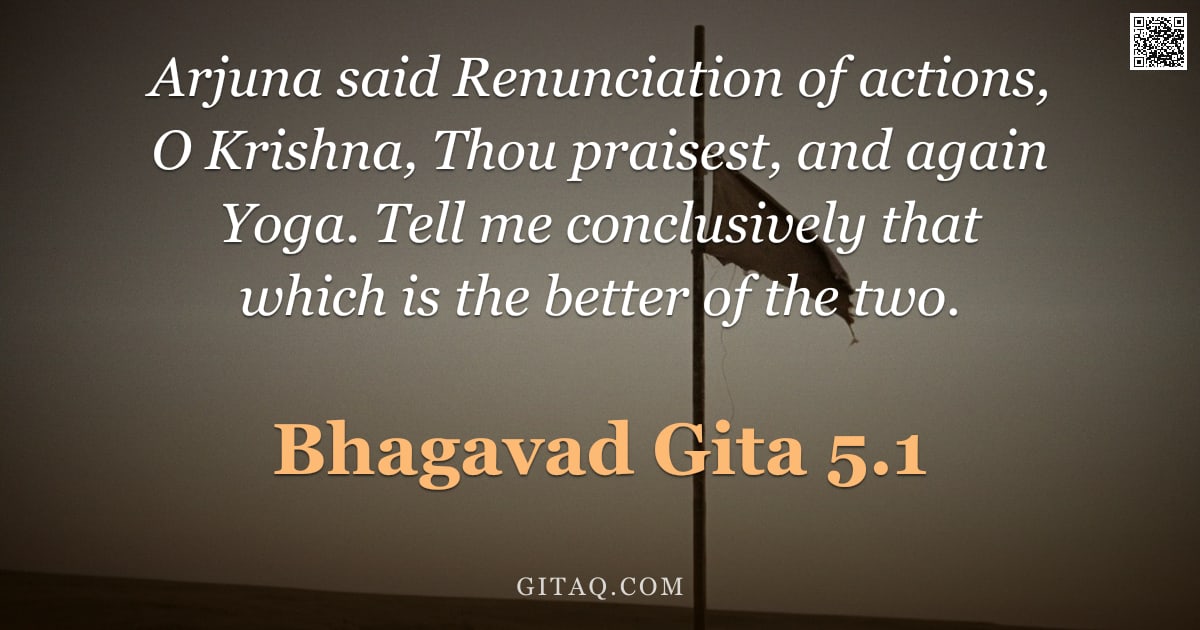
अर्जुन उवाच | संन्यासं कर्मणां कृष्ण पुनर्योगं च शंससि | यच्छ्रेय एतयोरेकं तन्मे ब्रूहि सुनिश्चितम् ||५-१||
arjuna uvāca . saṃnyāsaṃ karmaṇāṃ kṛṣṇa punaryogaṃ ca śaṃsasi . yacchreya etayorekaṃ tanme brūhi suniścitam ||5-1||
What Does This Verse Mean?
Arjuna asks Lord Krishna to clarify a confusion he feels after listening to the teachings so far. He notes that Krishna has praised both 'Sannyasa' (renouncing all actions) and 'Yoga' (performing actions with devotion), but Arjuna wants to know which of these two paths is truly superior for spiritual progress. Krishna's response will define that performing duty without attachment is the more practical and effective path than complete withdrawal from action.
The Teaching Behind It
This verse sits at the intersection of Karma Yoga (the yoga of action) and Jnana Yoga (the path of knowledge), specifically addressing the Sankhya school's distinction between renunciation and active duty. It develops the critical Vedantic concept that true 'Sannyasa' is not the physical abandonment of work, but the mental detachment from the fruits of actions while still performing them.
Word by Word
Classical Commentary
Where This Happens
This verse occurs at the beginning of Chapter 5 on the battlefield of Kurukshetra, immediately after Arjuna has heard Krishna's detailed explanation of 'Sankhya' (the path of knowledge) in previous chapters. Confused by what he perceives as contradictory instructions—where Krishna praises both giving up action and working through yoga—Arjuna seeks a definitive answer to resolve his mental turmoil. As the warrior prince facing an imminent family war, Arjuna is struggling to understand how one can attain peace while still engaged in the violent duties of life.
Living It Out Today
Consider a professional who feels overwhelmed by their job and considers quitting everything to live as a hermit to find inner peace, yet they have financial responsibilities. Instead of abandoning their career entirely (renunciation), this verse encourages them to view their work as an offering or duty performed without attachment to the results. By focusing on doing their best in meetings and projects while letting go of anxiety about promotions or failures, they can achieve spiritual clarity right within their demanding modern lifestyle.
Explained for Children
Imagine you are a kid who has been told it's great to either stop playing all games forever (renunciation) or keep playing but be very careful not to fight with others. Arjuna is asking, 'Which one should I do?' He wants to know if he should quit everything and sit quietly, or stay in the game but play nicely without getting angry. Krishna will later explain that staying active and doing your best while keeping a calm heart is often better than just running away from responsibilities.
Daily Reflection
You often find yourself torn between wanting to withdraw from life's chaos and needing to step into it with purpose. Krishna gently reminds us that true renunciation isn't about abandoning your responsibilities but transforming how you hold them within your heart. Today, try to act with the same intensity as a warrior or an artist, yet remain as detached as if watching a play unfold.
A Practice for Today
Sit quietly and acknowledge that you are not your actions, but the silent witness behind them. Ask yourself which brings more peace today: letting go of the results of what you do, or engaging fully in duty without attachment.
Key Teachings
- The Illusion of Choice
Arjuna's question reveals that renunciation and Karma Yoga are not two separate paths but different names for the same ultimate goal. The confusion lies in thinking one must abandon action to find peace, rather than finding peace within action. - Sincere Inquiry as Devotion
Arjuna does not hesitate to ask Krishna a difficult question because his desire for truth outweighs the fear of appearing unwise. This verse teaches that seeking clarity on spiritual confusion is itself an act of devotion and surrender. - Action as Worship
The Gita ultimately declares that performing action without attachment to results (Karma Yoga) is the superior path for most seekers. It transforms daily duty into a sacred offering, making renunciation not of work, but of ego.
Themes
Related Verses
Read This Next
- 2.47 — This verse defines the core of Karma Yoga, showing that one has a right to action but no claim over its results.
- 3.30 — Read this next for Krishna's instruction on surrendering all actions to Him as the ultimate method of renunciation.
- 12.15 — Discover how a devotee who is free from attachment and acts without ego becomes dear to Krishna, illustrating the fruit of this path.
Recommended Reading
GitaQ earns from qualifying purchases as an Amazon Associate.