Bhagavad Gita 18.76
Moksha Sanyasa Yoga · English Translation
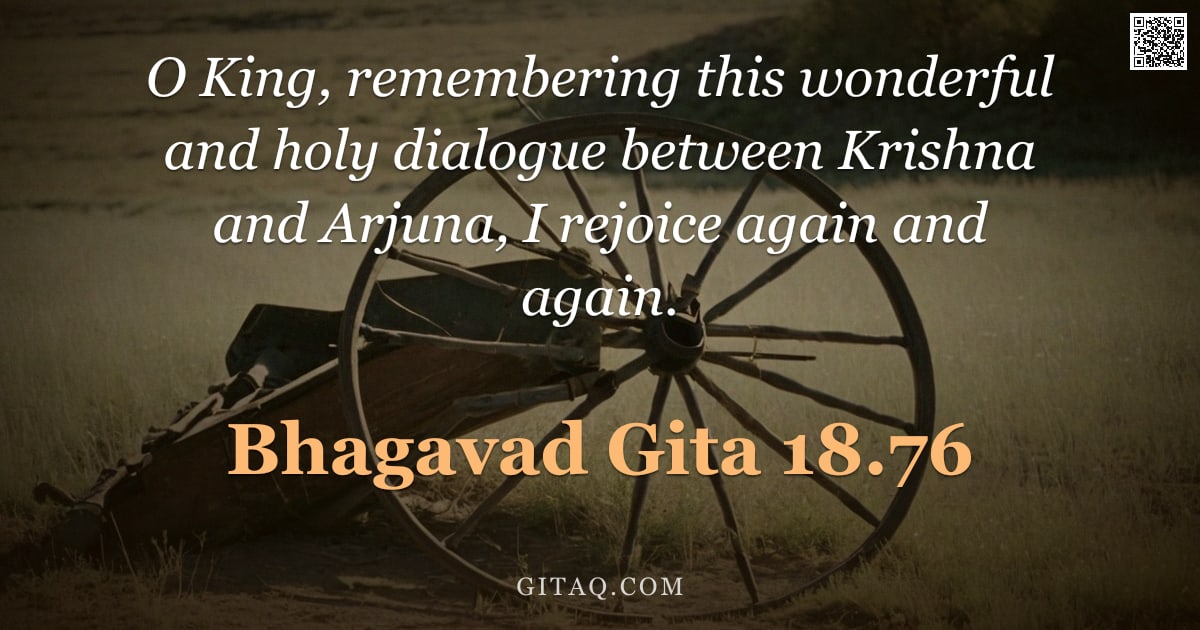
राजन्संस्मृत्य संस्मृत्य संवादमिममद्भुतम् | केशवार्जुनयोः पुण्यं हृष्यामि च मुहुर्मुहुः ||१८-७६||
rājansaṃsmṛtya saṃsmṛtya saṃvādamimamadbhutam . keśavārjunayoḥ puṇyaṃ hṛṣyāmi ca muhurmuhuḥ ||18-76||
What Does This Verse Mean?
This verse is spoken by the blind king Dhritarashtra, who has just heard his wise counselor Sanjaya describe the profound conversation between Krishna and Arjuna on the battlefield of Kurukshetra. He expresses that every time he recalls this holy dialogue about duty, devotion, and liberation, he feels a deep sense of joy and wonder. The key teaching is that engaging with spiritual wisdom repeatedly brings lasting happiness and inner peace to anyone who listens or remembers it.
The Teaching Behind It
This verse sits at the intersection of Jnana Yoga (the path of knowledge) and Bhakti Yoga (the path of devotion), emphasizing that intellectual understanding must be internalized through emotional resonance to yield true bliss. It highlights the concept of 'Smriti' or remembrance, teaching that spiritual wisdom is not merely information but a living experience that regenerates joy when recalled.
Word by Word
Classical Commentary
Where This Happens
This final verse concludes Chapter 18 as King Dhritarashtra speaks to his minister Sanjaya, who possesses a divine vision allowing him to see the distant battlefield. Throughout this chapter, Sanjaya has been narrating Krishna's teachings on renunciation (Sanyasa) and liberation (Moksha), which have just concluded Arjuna's decision to fight for righteousness. Dhritarashtra is overcome with emotion because he realizes that despite his family's tragic fate due to their greed, the divine wisdom shared in this dialogue offers a path of salvation.
Living It Out Today
When you face a difficult work project or a personal conflict and feel overwhelmed by anxiety, take time at the end of each day to mentally review any wise advice or principles that helped you navigate it. Just as Dhritarashtra rejoices upon recalling the divine dialogue, repeatedly reflecting on these positive insights can transform your stress into clarity and motivation. This practice turns a one-time solution into a lasting inner resource for future challenges.
Explained for Children
Imagine you just heard an amazing story from your favorite teacher about how to be brave when things are scary. Even though the day has passed, whenever you remember those words in your head, you feel a warm smile come back on your face and feel stronger inside. This verse is like that feeling of joy that comes over and over again every time we remember something wonderful and good.
Daily Reflection
Arjuna's trembling lips were replaced by tears of wonder because he remembered the grace of Krishna's words; you too can find this same renewal whenever life feels heavy. When you pause to remember moments where truth touched your soul, do not let those memories fade into the past but invite them back as living sources of strength today. This verse reminds us that joy is often hidden in our ability to revisit and honor what we have learned from higher wisdom.
A Practice for Today
Close your eyes and gently recall a moment of profound clarity or divine conversation you have experienced, whether with the Divine or within yourself. Allow that memory to rise like a fresh fragrance in your heart, stirring a quiet joy that does not depend on external circumstances.
Key Teachings
- The Power of Remembrance
True devotion grows not just through hearing the teachings once, but by repeatedly recalling them with fresh attention. This act of 'smriti' transforms intellectual knowledge into a living emotional experience that sustains us. - The Holiness of Dialogue
A conversation between the Divine and the devoted is described as 'punya,' or holy, because it bridges the gap between human limitation and infinite wisdom. Engaging with such sacred exchange purifies the mind and heart. - Dynamic Rejoicing
The joy of realization is not a one-time event but something that recurs 'muhurmuhuḥ,' or again and again, in every new moment. This cyclical rejoicing keeps the spiritual heart vibrant against the weariness of daily life.
Themes
Related Verses
Read This Next
- 2.47 — To understand the duty of action without attachment that sets the stage for this transformative conversation.
- 3.30 — To learn how to surrender all actions to Krishna, deepening the relationship described in verse 18.76.
- 12.15 — To see the qualities of a devotee who is dear to Krishna and finds constant joy in His presence.
Recommended Reading
GitaQ earns from qualifying purchases as an Amazon Associate.