Bhagavad Gita 18.43
Moksha Sanyasa Yoga · English Translation
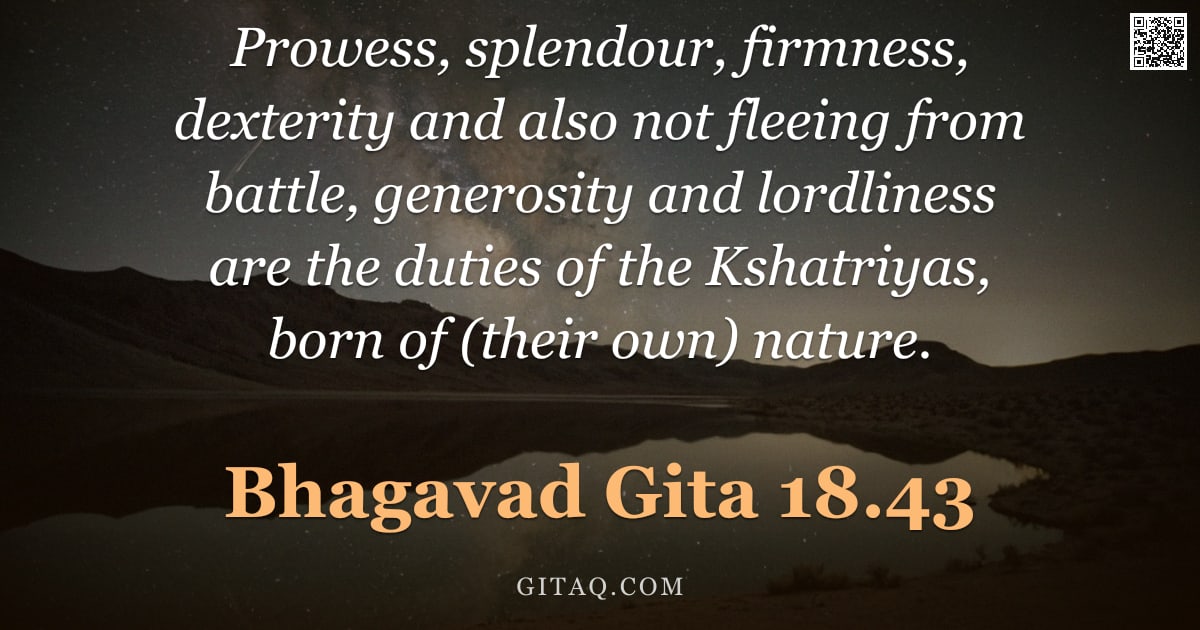
शौर्यं तेजो धृतिर्दाक्ष्यं युद्धे चाप्यपलायनम् | दानमीश्वरभावश्च क्षात्रं कर्म स्वभावजम् ||१८-४३||
śauryaṃ tejo dhṛtirdākṣyaṃ yuddhe cāpyapalāyanam . dānamīśvarabhāvaśca kṣātraṃ karma svabhāvajam ||18-43||
What Does This Verse Mean?
In this verse, Lord Krishna describes the natural duties specific to a warrior or leader (Kshatriya). He lists qualities like courage, strength of character, skill in combat without running away from danger, and generosity as essential traits. The core teaching is that everyone has inherent talents based on their nature, and fulfilling these innate roles leads to spiritual progress.
The Teaching Behind It
This verse is a cornerstone of Karma Yoga, specifically focusing on Svadharma or one's inherent duty based on one's nature (Svabhava). It teaches that spiritual liberation comes not from rejecting action, but from performing the actions naturally suited to an individual with detachment and excellence.
Word by Word
Classical Commentary
Where This Happens
This verse appears in the final chapter of the Bhagavad Gita during the war at Kurukshetra, where Krishna is concluding his teachings to Prince Arjuna. After describing the duties of all social classes and stages of life, Krishna specifically details what a warrior's nature entails right before urging Arjuna to rise for battle. The listener, Arjuna, has just overcome his paralyzing confusion about killing relatives; this specific instruction reinforces that fighting with courage is not violence but fulfilling one's divine duty.
Living It Out Today
Consider a manager in crisis who must make an unpopular decision during a company restructuring. Instead of avoiding the difficult conversation or fleeing from responsibility to keep everyone happy, they demonstrate 'lordliness' by calmly facing the issue and offering support (generosity) while staying firm on necessary changes. This application shows that true leadership isn't about being liked; it's about possessing the strength and dexterity to navigate hard times without retreating.
Explained for Children
Imagine a team where every player has a special job: the goalkeeper must be brave and fast, while the coach needs to be kind and fair. Krishna says people are like players with different natural skills; for some, that means being strong leaders who protect others and stand firm when things get tough. Just as you shouldn't pretend to play someone else's position on a sports team, we grow best by using our own unique strengths.
Daily Reflection
Today, you are invited to look at your own nature not as a limitation, but as a sacred map for how you serve. Whether it is the strength required to lead in difficult moments or the generosity needed to share what you have, these qualities arise from who you truly are. Instead of wishing to be someone else, try to embody the excellence inherent in your current role with full presence and joy.
A Practice for Today
Close your eyes and visualize the quality of 'dharma' within you as a bright, steady light that does not waver when challenged. Ask yourself: In my current responsibilities, am I acting with the courage to stand firm in truth rather than fleeing from difficulty? Let this moment be a quiet commitment to embrace your natural duties with dignity and grace.
Key Teachings
- The Courage of Steadfastness
True heroism is not just physical strength but the mental resolve to face challenges without fleeing from duty. This verse teaches that spiritual growth often requires standing firm in difficult situations rather than avoiding them. - Natural Dharma and Excellence
Our specific duties are designed around our innate nature, meaning we find the most fulfillment when acting in alignment with who we truly are. When one performs their natural role with dexterity and spirit, it becomes a form of worship. - The Duty of Leadership
Leadership is defined by generosity and a sense of responsibility towards others, not just authority or power over them. A true leader cultivates the qualities of giving and maintaining order as their primary obligation to society.
Themes
Related Verses
Read This Next
- 2.47 — To understand how performing duty without attachment creates peace while facing difficult actions.
- 3.30 — To learn the method of surrendering all works to the Divine as a means of perfect action.
- 12.15 — To discover how one who does not cause distress and is content with their nature pleases Krishna deeply.
Recommended Reading
GitaQ earns from qualifying purchases as an Amazon Associate.