Bhagavad Gita 18.37
Moksha Sanyasa Yoga · English Translation
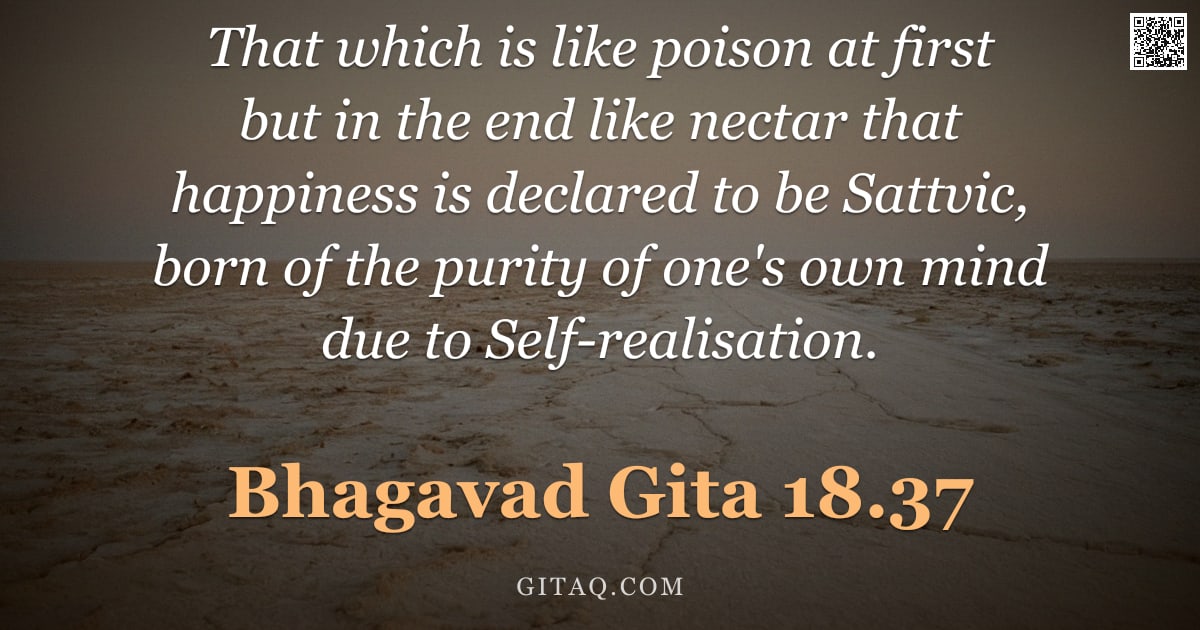
यत्तदग्रे विषमिव परिणामेऽमृतोपमम् | तत्सुखं सात्त्विकं प्रोक्तमात्मबुद्धिप्रसादजम् ||१८-३७||
yattadagre viṣamiva pariṇāme.amṛtopamam . tatsukhaṃ sāttvikaṃ proktamātmabuddhiprasādajam ||18-37||
What Does This Verse Mean?
In this verse, Lord Krishna describes a specific type of happiness known as 'sattvic' to Arjuna. He explains that true spiritual joy often feels difficult or bitter at the beginning, like poison, but yields profound peace and sweetness in the end, much like nectar. This kind of happiness arises from purifying one's own mind and realizing the true nature of the Self through disciplined effort.
The Teaching Behind It
This verse belongs to the synthesis of Jnana Yoga (the yoga of knowledge) and Sankhya philosophy, which distinguishes between the three modes of material nature (gunas). It specifically develops the concept that 'sattvic' happiness is superior because it is rooted in self-discipline and mental purity rather than sensory gratification.
Word by Word
Classical Commentary
Where This Happens
This verse appears in Chapter 18, the final chapter of the Bhagavad Gita, where Krishna is concluding his teachings on Arjuna during a pause before their return to the battlefield. Having just explained that true duty involves acting without attachment and surrendering one's ego, Krishna now categorizes different types of happiness to guide Arjuna toward spiritual maturity. The listener, Prince Arjuna, who was previously overwhelmed by grief and confusion about fighting his relatives, is being shown how to find lasting peace through the discipline required for self-realization.
Living It Out Today
Consider a professional facing a difficult career pivot or starting a rigorous fitness routine that requires giving up immediate comfort. The initial phase often feels like 'poison' due to fatigue, uncertainty, and sacrifice, tempting you to quit at any moment. However, if you persist through this discomfort by focusing on your long-term goals rather than short-term ease, the resulting confidence and stability feel like pure nectar. This teaches us that enduring temporary struggle for a meaningful purpose is the only path to genuine, lasting fulfillment.
Explained for Children
Imagine eating a very bitter vegetable that tastes bad when you first put it in your mouth, but makes you strong and healthy so you can play all day without getting sick. That is what this verse calls 'true happiness.' Sometimes doing good things like studying hard or cleaning up feels tough at the start, just like biting into something sour. But if you keep going, you feel amazing inside afterward because you know you did the right thing.
Daily Reflection
You may feel resistance when facing difficult truths or necessary disciplines in your life right now, mistaking this friction for suffering rather than purification. This verse invites you to look past the initial sting of self-improvement and recognize it as a sacred process born from the clarity of your own mind. When you persist through that 'poisonous' phase with steady awareness, you will discover a deep, lasting joy that no external circumstance can disturb.
A Practice for Today
Begin by acknowledging that true happiness often requires sitting with discomfort, just as bitter medicine leads to health. Close your eyes and visualize a task you have been avoiding; offer it patience today, trusting that the peace on the other side is nectar.
Key Teachings
- The Paradox of Growth
Genuine spiritual progress often begins as an unpleasant challenge to the ego before it transforms into supreme bliss. We must reframe our immediate discomfort not as a barrier, but as the necessary fertilizer for enduring happiness. - The Source of Sattvic Joy
Unlike fleeting pleasures that rely on external objects, this highest form of joy arises internally from 'Atma-buddhi-prasada,' or the clarity and purity of one's own intellect. It is a state where the mind becomes so still and pure that it reflects the light of the Self. - Transformation Through Renunciation
This verse defines 'Sattvic' happiness as something achieved by renouncing immediate gratification for long-term spiritual gain. It teaches us to endure short-term pain with a steady resolve, knowing it yields the nectar of liberation.
Themes
Related Verses
Read This Next
- 2.47 — This verse establishes the foundation for enduring difficult actions without attachment to results, which is essential for experiencing Sattvic happiness.
- 3.30 — It expands on the practice of renouncing selfish motives in action, deepening the understanding of how pure intent leads to clarity.
- 12.15 — This verse describes the qualities of a devotee who is dear to Krishna, highlighting the peace and equanimity that result from such self-purification.
Recommended Reading
GitaQ earns from qualifying purchases as an Amazon Associate.