Bhagavad Gita 18.38
Moksha Sanyasa Yoga · English Translation
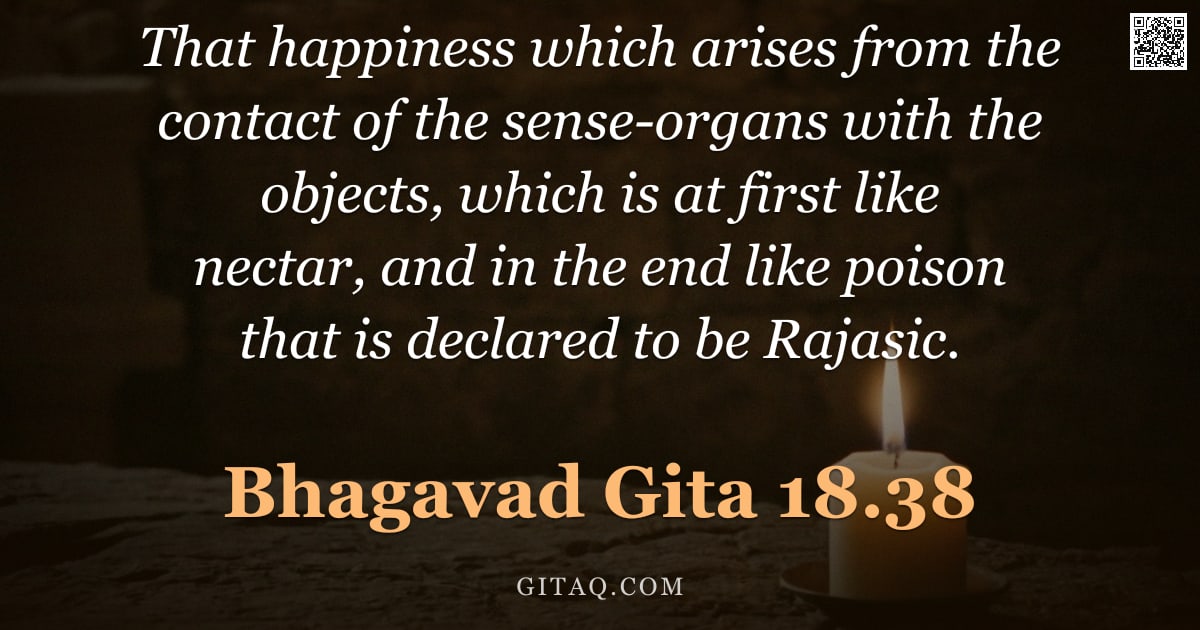
विषयेन्द्रियसंयोगाद्यत्तदग्रेऽमृतोपमम् | परिणामे विषमिव तत्सुखं राजसं स्मृतम् ||१८-३८||
viṣayendriyasaṃyogādyattadagre.amṛtopamam . pariṇāme viṣamiva tatsukhaṃ rājasaṃ smṛtam ||18-38||
What Does This Verse Mean?
In this verse, Lord Krishna describes the nature of happiness derived from sensory pleasure as 'Rajasic.' He explains that while such pleasures feel incredibly sweet and intoxicating at first when our senses meet their objects, they eventually turn bitter and painful like poison. This teaching is addressed to Arjuna to help him distinguish between fleeting emotional highs and lasting spiritual peace.
The Teaching Behind It
This verse belongs to the Sankhya philosophy embedded within the Gita, specifically regarding the classification of Gunas (modes of material nature). It develops the concept that sensory-based happiness is inherently unstable because it relies on external objects and inevitably leads to suffering once the stimulus fades or becomes excessive.
Word by Word
Classical Commentary
Where This Happens
This verse appears near the conclusion of the Bhagavad Gita, during a time when Lord Krishna is systematically categorizing different types of knowledge, action, and happiness for Arjuna. Having just described how Sattvic (pure) pleasure leads to liberation, Krishna now explains Rajasic (passionate) joy to provide a complete contrast. The listener, Arjuna, is in the process of resolving his deep confusion about duty versus emotion on the battlefield of Kurukshetra.
Living It Out Today
Consider the scenario of scrolling through social media or binge-watching streaming shows late at night for instant dopamine hits; it feels like a perfect escape and 'nectar' while you are doing it. However, by morning, this leads to brain fog, regret, missed work deadlines, and increased anxiety, proving that the initial pleasure was actually toxic in disguise.
Explained for Children
Imagine eating a super-sweet candy for the very first bite; it tastes amazing! But if you keep eating too much of that same candy, your teeth start hurting and you feel sick. This verse teaches us that things which seem fun at the beginning but make us feel bad later are like that sugary treat—they look sweet now but turn out to be harmful in the end.
Daily Reflection
You have likely experienced moments when something felt like pure nectar in the beginning—perhaps a delicious meal, a thrilling achievement, or an intoxicating conversation. Yet, if you look closely at how those experiences eventually turn into craving, fatigue, or regret, you will see the hidden poison of Rajas that Krishna warns about today. This is not a call to reject joy, but an invitation to recognize which happiness serves your long-term peace and which merely fuels endless desire.
A Practice for Today
Sit quietly and observe how your mind clings to the initial rush of pleasure from a desired object, treating that fleeting sweetness as permanent safety. Then, gently shift your awareness to trace where that same satisfaction leads after it fades, noticing the subtle sting of dissatisfaction or emptiness that follows.
Key Teachings
- The Illusion of Sweetness
Rajasic pleasure tricks the mind by presenting itself as nectar at the start, masking its true nature through immediate sensory gratification. This initial sweetness creates a false sense of security that blinds us to future consequences. - The Poison of Attachment
As soon as the object changes or the mind becomes satiated, the same experience transforms into poison by generating restlessness and dissatisfaction. This shift reveals how Rajas binds us through a cycle of craving that never leads to lasting fulfillment. - Discernment in Joy
True wisdom requires observing not just the beginning, but the end result of any experience to determine its spiritual value. By distinguishing between temporary sensory highs and enduring peace, we begin to transcend the Rajasic mode.
Themes
Related Verses
Read This Next
- 2.47 — This verse follows naturally by clarifying that our duty should be performed without attachment to the results, preventing the Rajasic cycle of craving and disappointment.
- 3.30 — Reading this next offers a practical method for surrendering actions to the Divine, which helps dissolve the ego-driven desires characteristic of the Rajas mode.
- 12.15 — This verse concludes by describing the qualities of those who are dear to Krishna—those free from envy and established in equanimity—which is the natural antidote to Rajasic turbulence.
Recommended Reading
GitaQ earns from qualifying purchases as an Amazon Associate.