Bhagavad Gita 17.23
Shraddhatraya Vibhaga Yoga · English Translation
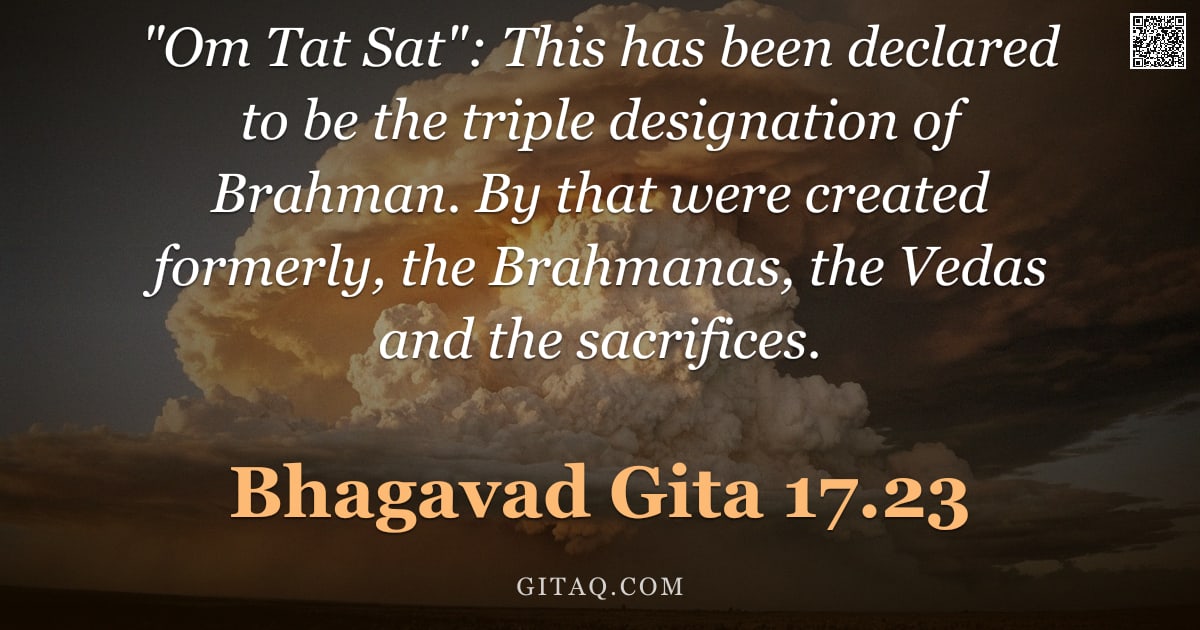
ॐतत्सदिति निर्देशो ब्रह्मणस्त्रिविधः स्मृतः | ब्राह्मणास्तेन वेदाश्च यज्ञाश्च विहिताः पुरा ||१७-२३||
OMtatsaditi nirdeśo brahmaṇastrividhaḥ smṛtaḥ . brāhmaṇāstena vedāśca yajñāśca vihitāḥ purā ||17-23||
What Does This Verse Mean?
In this verse, Lord Krishna concludes his teaching on faith by introducing the sacred syllables 'Om Tat Sat' as a threefold name for the ultimate reality, Brahman. He explains that these sounds were not merely invented but are the very essence through which the sages (Brahmanas), the holy scriptures (Vedas), and all sacrificial rituals were established in ancient times. The key teaching is that every spiritual action should begin with or end with this affirmation of truth, reality, and existence to ensure it aligns with divine will.
The Teaching Behind It
This verse sits at the intersection of Jnana Yoga (the path of knowledge) and Bhakti Yoga (the path of devotion), serving as a bridge between them. It develops the concept that true spiritual practice requires an alignment with 'Sat' (absolute truth/reality) while using 'Om Tat Sat' as a mantra to purify the mind before any action, ensuring that even ritualistic duties become acts of liberation.
Word by Word
Classical Commentary
Where This Happens
This verse appears at the very end of Chapter 17 in the Bhagavad Gita, which is part of the epic Mahabharata. It occurs on the battlefield of Kurukshetra where Lord Krishna has just finished explaining how faith influences our food, charity, and austerities to Arjuna. Having listened to these detailed instructions on distinguishing between good (sattvic), mixed (rajasic), and dark (tamasic) qualities in daily life, Arjuna is now receiving the final summary that ties all spiritual practices together under one sacred truth.
Living It Out Today
Before starting a difficult work project or making a significant family decision today, take a moment to pause and mentally recite 'Om Tat Sat' to anchor yourself. This practice acts as an internal checkpoint: does this action align with the ultimate good (Sat), is it rooted in divine will rather than ego (Tat), and do I offer my effort without attachment to the result? By doing so, you transform a stressful task into a conscious act of integrity, reducing anxiety and clarifying your focus on what truly matters.
Explained for Children
Imagine you are building a strong tower out of blocks; 'Om Tat Sat' is like the special glue that makes sure all your blocks stay together perfectly. Just as builders use specific tools to build houses, ancient wise people used these three magic words to connect their good actions and prayers to something greater than themselves. When we say these words with kindness or do a good deed thinking of them, it helps our hearts feel safe and connected to the universe.
Daily Reflection
Today, consider how the ancient sounds 'Om Tat Sat' serve as an invisible bridge connecting your daily struggles to something eternal and unchanging. When you face confusion or doubt about whether your efforts matter, remember that these three syllables declare Brahman's nature as Truth itself, inviting you to act with total surrender rather than attachment to results.
A Practice for Today
Begin by silently chanting 'Om Tat Sat,' allowing the sound to dissolve your mental chatter and anchor you in the presence of the Divine. Visualize this sacred triad not as distant words, but as the very fabric of creation that holds your actions and intentions within a field of purity.
Key Teachings
- The Sacred Triad of Existence
Brahman is not merely an abstract concept but a dynamic reality accessed through the three sounds: Om (the source), Tat (that/otherness), and Sat (truth/existence). Together, they form the essential vibration that underpins all spiritual practice. - The Origin of Sacred Duty
The verse establishes that the very institutions of dharma—Brahmanas, Vedas, and Yajnas (sacrifices)—are rooted in this divine designation. It teaches us that true spiritual authority comes not from human invention but from alignment with these eternal truths. - Purification through Invocation
By invoking 'Om Tat Sat,' the practitioner purifies their intention, transforming ordinary actions into acts of worship. This practice ensures that even the most mundane tasks are elevated when performed in conscious remembrance of Brahman.
Themes
Related Verses
Read This Next
- 2.47 — Read this next for the practical application of performing duty without attachment, a key outcome of understanding the 'Sat' (truth) aspect.
- 3.30 — This verse complements the theme by instructing to dedicate all actions to Krishna, deepening the concept of sacrifice mentioned in 17.23.
- 12.15 — Read this to understand how a devotee who is pleasing to Brahman (Sat) manifests the qualities described as being created through that designation.
Recommended Reading
GitaQ earns from qualifying purchases as an Amazon Associate.