Bhagavad Gita 17.19
Shraddhatraya Vibhaga Yoga · English Translation
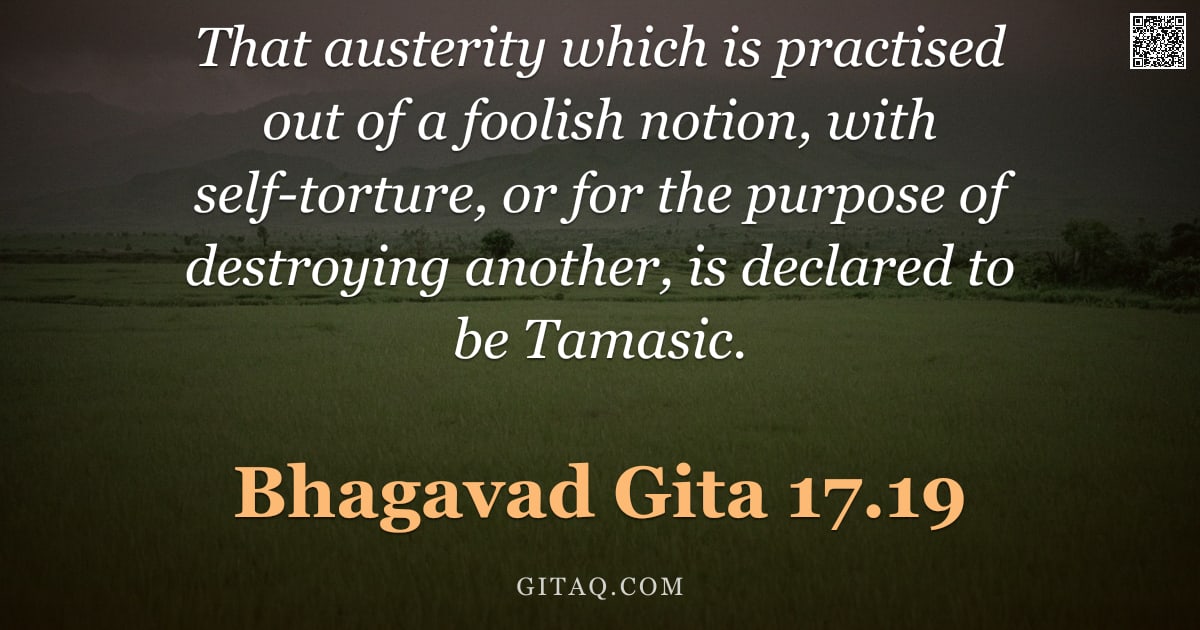
मूढग्राहेणात्मनो यत्पीडया क्रियते तपः | परस्योत्सादनार्थं वा तत्तामसमुदाहृतम् ||१७-१९||
mūḍhagrāheṇātmano yatpīḍayā kriyate tapaḥ . parasyotsādanārthaṃ vā tattāmasamudāhṛtam ||17-19||
What Does This Verse Mean?
In this verse, Lord Krishna warns Arjuna against performing acts of self-discipline or austerity that stem from ignorance and delusion. He explains that if one tortures their own body out of foolish pride, or attempts to harm others under the guise of spiritual practice, such actions are classified as 'Tamasic' (darkness-driven). The core teaching is that true spiritual effort must be rooted in wisdom and compassion, never in self-destruction or malice.
The Teaching Behind It
This verse belongs to the framework of Sattva-Rajas-Tamas (the three gunas) and supports Karma Yoga by defining which motivations render action spiritually binding rather than liberating. It develops the concept that the quality of an action is determined not just by the act itself, but by the underlying state of mind—specifically how ignorance (Tamas) distorts even disciplined efforts into suffering.
Word by Word
Classical Commentary
Where This Happens
This verse appears in Chapter 17 during a conversation between Lord Krishna and Arjuna on the battlefield of Kurukshetra, following discussions on faith and food. Just prior to this shloka, Krishna has been categorizing human nature into three modes (Sattva, Rajas, Tamas) as they apply to fasting and charity. At this moment, Arjuna is confused about how to distinguish between genuine spiritual discipline and harmful fanaticism that might be prevalent in the society he is fighting against.
Living It Out Today
Consider a workplace scenario where an employee works 16-hour days not because it benefits the project or their well-being, but out of a desperate need for validation from a critical boss. If this person skips meals and sleep to such an extent that they become irritable and start sabotaging a colleague's work to feel superior, this is modern 'Tamasic' austerity driven by foolish notions. The application here is recognizing when the drive for success turns into self-torture or aggression against others.
Explained for Children
Imagine you decide not to eat dinner because your friend told you a lie about how healthy it would make you; that's acting on a silly idea. This verse says if we hurt ourselves or try to scare other kids just to show off, our actions are like wearing dark glasses—we can't see the light of goodness anymore. Real bravery and good habits come from knowing what is truly right for your heart and body, not from being mean or hurting yourself.
Daily Reflection
You may find yourself pushing too hard today, driven by an intense need for control rather than inner peace. True discipline is not about punishing the body to force the mind into submission; it is a gentle cultivation of strength rooted in wisdom and compassion. When you notice your efforts are fueled by anger or foolishness, gently shift your focus back to balance and self-respect.
A Practice for Today
Before undertaking any act of discipline, pause to examine the root motivation within your heart. Ask yourself if this practice arises from a place of foolish attachment or genuine clarity, and release those actions that stem from self-torture or harm.
Key Teachings
- The Trap of Self-Torture
Austerity performed as a form of punishment stems from ignorance rather than spiritual growth. When we harm our own bodies or minds unnecessarily, we cloud the very consciousness needed for liberation. - Motivation Defines Quality
The value of any practice is determined by its underlying intention, not just the external action itself. Austerity aimed at destroying others transforms a spiritual discipline into an act of violence and darkness. - Wisdom Over Blind Faith
True devotion requires clear understanding rather than foolish fixation on rigid outcomes or extreme behaviors. Without the light of knowledge, even intense effort becomes Tamasic, binding us further to ignorance instead of freeing us.
Themes
Related Verses
Read This Next
- 2.47 — To understand the proper attitude of action without attachment to results, countering the obsession with outcomes seen in Tamasic austerity.
- 3.30 — This verse teaches surrendering all actions to the Divine, shifting focus from self-torture and ego-driven motives to divine will.
- 12.15 — To learn how a devotee who is not distressed by others' suffering embodies the Sattvic qualities that replace Tamasic destruction with compassion.
Recommended Reading
GitaQ earns from qualifying purchases as an Amazon Associate.