Bhagavad Gita 16.11
Daivasura Sampad Vibhaga Yoga · English Translation
चिन्तामपरिमेयां च प्रलयान्तामुपाश्रिताः | कामोपभोगपरमा एतावदिति निश्चिताः ||१६-११||
cintāmaparimeyāṃ ca pralayāntāmupāśritāḥ . kāmopabhogaparamā etāvaditi niścitāḥ ||16-11||
What Does This Verse Mean?
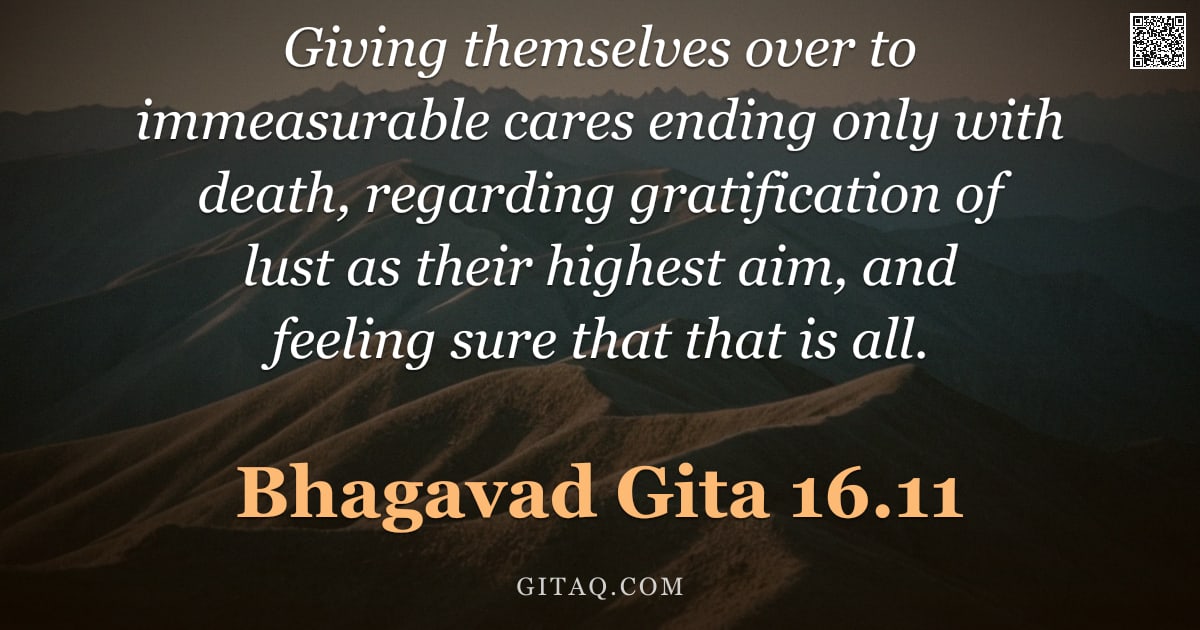
In this verse, Lord Krishna describes the mindset of those dominated by demonic nature as people consumed by endless, anxiety-ridden thoughts that only end with their death. They believe their sole purpose in life is to satisfy their insatiable desires and material cravings, convinced that there is nothing beyond physical gratification. This narrow perspective traps them in a cycle of worry and temporary pleasure, preventing any spiritual growth or lasting peace.
The Teaching Behind It
This teaching belongs to the Sankhya philosophy within the Gita, which distinguishes between spiritual reality (the Self) and material existence. It develops the concept that attachment to sensory pleasure creates a false consciousness where one mistakes temporary gratification for ultimate truth, leading to bondage rather than liberation.
Word by Word
Classical Commentary
Where This Happens
This verse appears in Chapter 16 during Lord Krishna's dialogue with Arjuna on the battlefield of Kurukshetra. Just before this, Krishna has been explaining how to recognize divine qualities versus demonic ones within oneself and others. He is addressing Arjuna's confusion about why his relatives are fighting him despite their lineage; Krishna uses this verse to describe the specific mental state of those who have abandoned spiritual duty for selfish ambition.
Living It Out Today
Consider a professional in a high-pressure corporate job who constantly worries about their next bonus, promotion, or status symbol, feeling that if they stop striving, everything will collapse. They might skip time with family and ignore their own health because they are convinced that 'making it' financially is the only definition of success. This verse invites them to pause and ask: Is this endless loop of anxiety actually leading me to peace, or am I just postponing happiness until death?
Explained for Children
Imagine someone who spends all day worrying about what they can eat next or the newest toy to buy, thinking those are the most important things in the world until their last breath. Krishna explains that these people get so caught up in wanting more and more stuff that they forget there is a bigger picture of kindness and being good inside us too. It's like running on a hamster wheel where you never stop because you think getting another treat will make you happy forever, but it just makes the worry grow.
Daily Reflection
Have you ever found yourself consumed by endless worries that only seem to vanish with your final breath? It is easy to get trapped believing that chasing every desire is all there is, but this verse invites you to see beyond the temporary. You are not defined by these fleeting cravings or the anxiety they generate; true freedom lies in realizing a purpose greater than sensory gratification.
A Practice for Today
Sit quietly and observe how your mind chases immediate sensory pleasures, mistaking them for lasting happiness. Notice the heavy weight of anxiety that arises when these desires are unmet or end at death. Release the belief that gratification is the sole purpose of life, allowing space for a deeper peace to settle in.
Key Teachings
- The Trap of Immeasurable Cares
This verse describes how demonic nature binds one to endless, futile anxieties that persist until death. These cares are 'immeasureable' because they never reach a satisfying conclusion while the ego remains attached to worldly objects. - Lust as the Supreme Aim
The demonically inclined person places gratification of lust and desire above all other spiritual or moral goals. This narrowing of vision reduces life's vast potential to a single, repetitive cycle of craving and temporary satisfaction. - The Certainty of Materialism
Those trapped in this nature feel absolutely sure that 'this is all there is,' rejecting the possibility of anything beyond physical existence. This rigid conviction prevents spiritual growth, as they believe death is merely an end rather than a transition.
Themes
Related Verses
Read This Next
- 2.47 — This verse provides the antidote by teaching you to focus on action without attachment to results or rewards.
- 3.30 — Read this next to learn how to surrender all actions and their fruits to the Divine, breaking the cycle of selfish desire.
- 12.15 — Contrast the demonic nature with the qualities of a divine person who is not disturbed by others' suffering or joys.
Recommended Reading
GitaQ earns from qualifying purchases as an Amazon Associate.