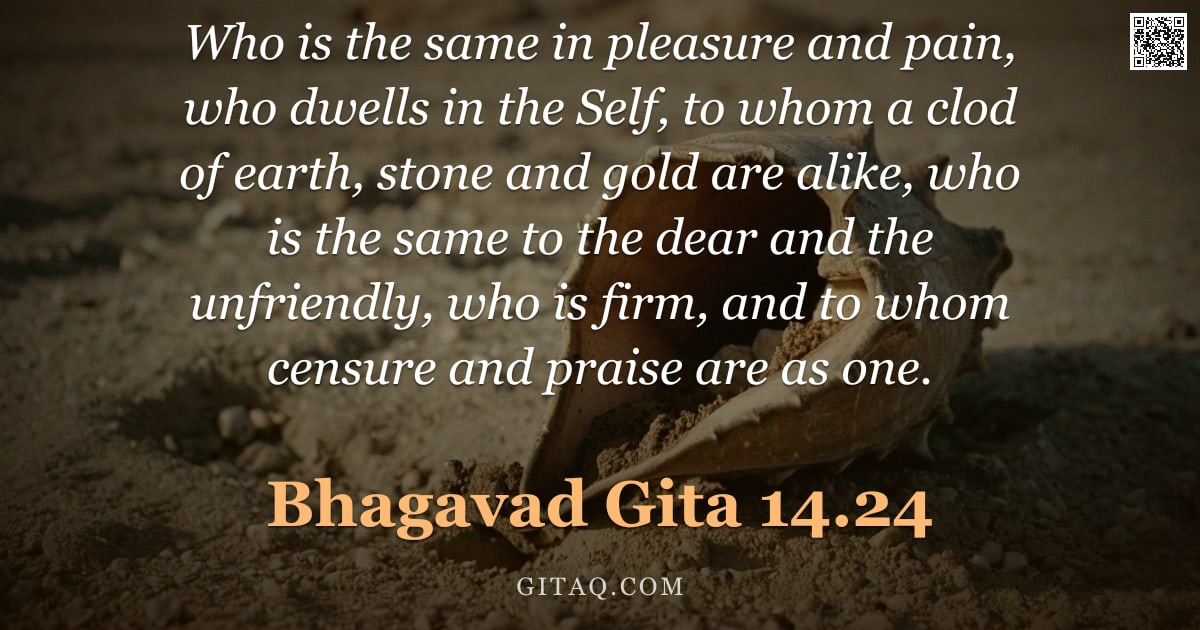
Bhagavad Gita 14.24
Gunatraya Vibhaga Yoga · English Translation
समदुःखसुखः स्वस्थः समलोष्टाश्मकाञ्चनः | तुल्यप्रियाप्रियो धीरस्तुल्यनिन्दात्मसंस्तुतिः ||१४-२४||
samaduḥkhasukhaḥ svasthaḥ samaloṣṭāśmakāñcanaḥ . tulyapriyāpriyo dhīrastulyanindātmasaṃstutiḥ ||14-24||
What Does This Verse Mean?
Lord Krishna describes the qualities of a person who has transcended the three modes of material nature (goodness, passion, and ignorance). This individual remains balanced in both happiness and distress, viewing all objects from worthless stones to valuable gold with equal vision. They are steady-minded, unaffected by praise or criticism, and treat friends and enemies alike because they dwell firmly within their true Self.
The Teaching Behind It
This verse is central to Jnana Yoga (the path of knowledge) as it defines the mental state required for Self-realization through discrimination between the eternal Soul and transient matter. It develops the concept of 'Samatvam' or equanimity, which Krishna identifies in Chapter 2 as true yoga.
Word by Word
Classical Commentary
Where This Happens
This verse appears in the fourteenth chapter of the Bhagavad Gita during the dialogue on the battlefield of Kurukshetra. Lord Krishna has been explaining how all beings are bound by three modes (gunas) and is now describing the characteristics of one who rises above them to attain liberation. Arjuna, having just heard this description, stands as a listener seeking clarity on what such a liberated person looks like in daily life.
Living It Out Today
Consider a professional facing a sudden layoff or a harsh public critique; instead of spiraling into self-doubt or anger, they maintain inner stability by separating their core identity from the external event. Similarly, when receiving unexpected praise for a project, they acknowledge it without becoming arrogant, understanding that success and failure are temporary fluctuations in nature.
Explained for Children
Imagine you have a magical pair of glasses that let you see the world without judgment. If someone gives you your favorite candy (praise) or accidentally spills milk on your shirt (blame), these special people stay calm inside, just like a still lake. They don't get too happy about gold coins and not sad about rocks because they know both are just materials; what matters most is being kind to everyone, whether they play with you or ignore you.
Daily Reflection
Today I invite you to pause whenever praise or criticism comes your way, noticing that neither changes who you truly are at the core. When life brings pain or pleasure with equal intensity, remember that your true Self is like a vast sky that holds all weather without being disturbed by it. By resting in this inner stability, you find freedom from the endless cycle of seeking approval and avoiding disapproval.
A Practice for Today
Sit quietly and visualize holding a stone, then gold, feeling the weight of each without judging one as better than the other; simply observe how your inner stillness remains unchanged by the object in your hand.
Key Teachings
- The Equilibrium of Sensation
This teaching reveals that true happiness is not found in chasing pleasure or fleeing pain, but in maintaining a steady mind regardless of external circumstances. Like the clod of earth and gold being equal to the wise person, we learn to see beyond superficial value judgments. - Self-Abiding Identity
The verse describes one who 'dwells in the Self,' meaning their identity is rooted in consciousness rather than transient roles or relationships. This stability allows them to remain firm and undisturbed even when surrounded by friends or enemies. - Transcending Dualities
True wisdom sees censure and praise as identical because both are merely sounds that touch the ears but not the inner truth of the soul. By standing firm in this realization, one rises above the emotional pendulum swing caused by human validation.
Themes
Related Verses
Read This Next
- 2.47 — This verse establishes the foundational discipline of performing duty without attachment, which prepares the mind for the equanimity described in this chapter.
- 3.30 — It offers a practical method of offering all actions to the Divine, helping you maintain that 'same in praise and blame' attitude through surrender.
- 12.15 — This verse describes the qualities of those dear to Krishna, specifically highlighting how they are not disturbed by pain or joy, mirroring the state described here.
Recommended Reading
GitaQ earns from qualifying purchases as an Amazon Associate.