Bhagavad Gita 13.28
Kshetra Kshetrajna Vibhaga Yoga · English Translation
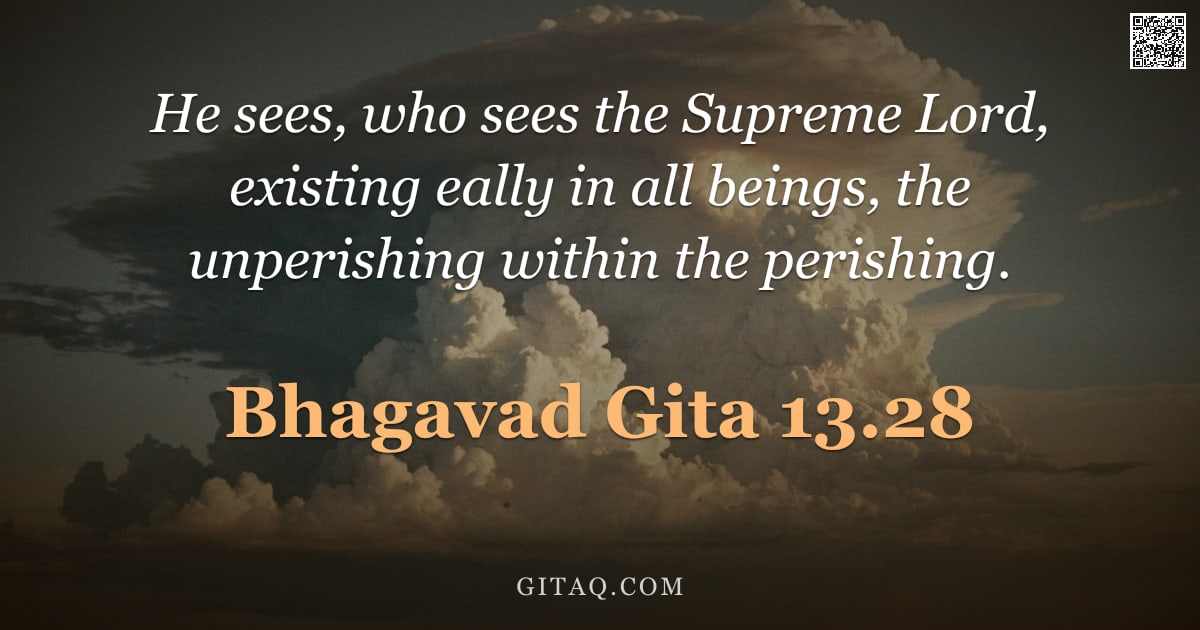
समं सर्वेषु भूतेषु तिष्ठन्तं परमेश्वरम् | विनश्यत्स्वविनश्यन्तं यः पश्यति स पश्यति ||१३-२८||
samaṃ sarveṣu bhūteṣu tiṣṭhantaṃ parameśvaram . vinaśyatsvavinaśyantaṃ yaḥ paśyati sa paśyati ||13-28||
What Does This Verse Mean?
In this verse, Lord Krishna tells Arjuna that true vision comes from seeing the same Supreme Soul residing within every living being. He teaches that when we perceive the eternal, unchanging Spirit hidden inside those who are born and die, we finally understand reality correctly. This perspective shifts our focus from temporary physical forms to the timeless essence behind them.
The Teaching Behind It
This verse is a cornerstone of Jnana Yoga (the path of knowledge) and Sankhya philosophy, focusing on the distinction between the changing physical world and the eternal Atman. It develops the concept of 'Sama Drishti' or equal vision, where one perceives the non-dual Supreme Lord residing equally in all beings.
Word by Word
Classical Commentary
Where This Happens
This teaching occurs on the battlefield of Kurukshetra, where Arjuna has just expressed deep confusion about fighting his own relatives and facing death. Krishna has spent several chapters explaining the nature of matter (Kshetra) versus consciousness (Kshetrajna). Now, as a climactic moment in Chapter 13, he guides the grieving warrior to see beyond the immediate tragedy of war by recognizing the immortal Self within both friends and foes.
Living It Out Today
When you are dealing with an employee who made a costly mistake at work or a family member acting out due to stress, try to pause and look past their current behavior. Instead of reacting only to the temporary 'perishing' emotions or actions, recognize that they still hold the same unchanging potential for good within them as anyone else. This shift in perception allows you to respond with patience and wisdom rather than anger, helping resolve conflicts more effectively.
Explained for Children
Imagine you have a box of different toys: some are old and broken, while others look brand new. Even though they all eventually get thrown away or wear out, inside every single toy is the same invisible 'spirit' that makes it alive in your eyes. Krishna says that when we can see this special spark inside everyone—whether they seem strong or weak right now—we truly understand how amazing life really is.
Daily Reflection
Today, try to look at someone who frustrates you as a vessel for that same unchanging divine presence rather than just an obstacle in your path. When you see the imperishable spirit dwelling within them, your judgment softens into compassion and understanding. This shift transforms every interaction from a conflict of egos into a sacred recognition of unity.
A Practice for Today
Close your eyes and visualize the Supreme Lord standing silently within every living being around you, from the bird outside to the person across the room. Notice how the eternal consciousness remains untouched by the changing forms or temporary struggles of these beings.
Key Teachings
- The Indwelling Lord
Krishna reveals that the Supreme Controller resides equally in all creatures, serving as the silent witness to their actions. This presence is not distant or separate but intimately close, sustaining life even when the physical body appears to be fading. - The Paradox of Permanence
True spiritual vision sees the unperishing soul within bodies that are inevitably subject to decay and death. While matter is transient and constantly changing, the divine consciousness remains eternal and unaffected by these cycles of destruction. - The Vision of Unity
One who perceives this equality in all beings truly sees reality as it is, beyond superficial differences of status or form. This vision dissolves ignorance and leads to liberation, as the seer recognizes that there is no other but God.
Themes
Related Verses
Read This Next
- 2.47 — Read this next to understand how detachment from results prepares the mind for the vision of unity described in verse 13.28.
- 3.30 — This verse complements the teaching by showing how offering all actions to Krishna helps one perceive Him as the doer within everyone.
- 12.15 — Explore this chapter on devotion to see how loving service is the natural outcome of realizing that God dwells in every heart equally.
Recommended Reading
GitaQ earns from qualifying purchases as an Amazon Associate.