Bhagavad Gita 12.13
Bhakti Yoga · English Translation
अद्वेष्टा सर्वभूतानां मैत्रः करुण एव च | निर्ममो निरहङ्कारः समदुःखसुखः क्षमी ||१२-१३||
adveṣṭā sarvabhūtānāṃ maitraḥ karuṇa eva ca . nirmamo nirahaṅkāraḥ samaduḥkhasukhaḥ kṣamī ||12-13||
What Does This Verse Mean?
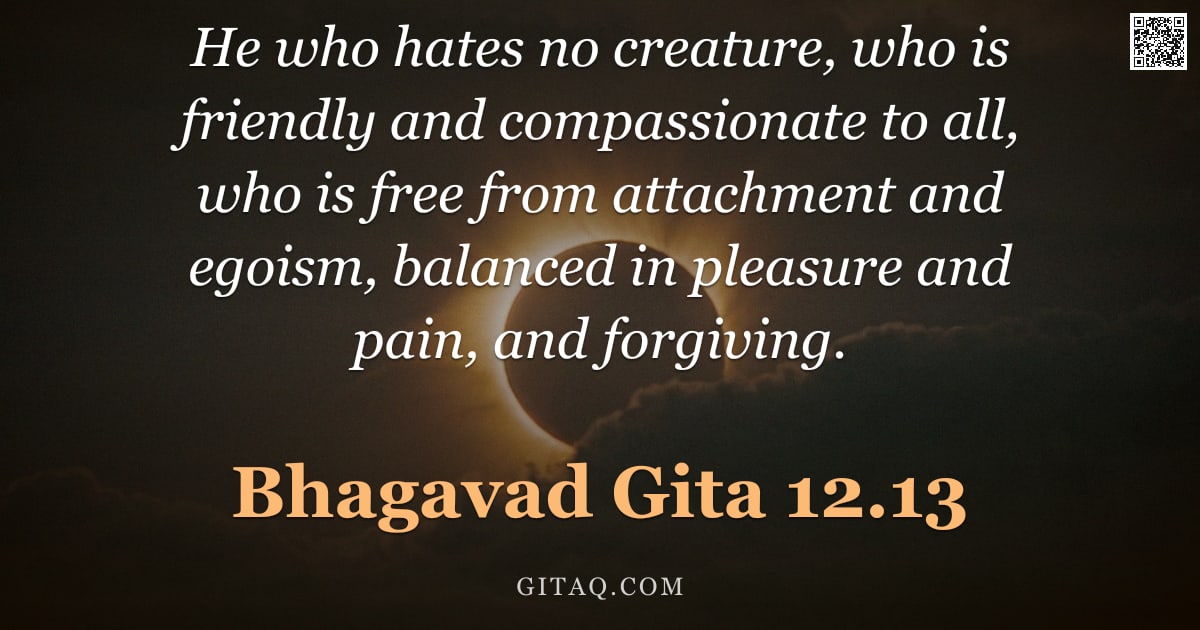
In this verse, Lord Krishna describes the essential qualities of a true devotee to Arjuna. He teaches that one who hates no living being and treats everyone with friendliness and compassion is deeply aligned with divine consciousness. Such a person remains free from selfish ownership and ego, maintaining perfect balance whether facing joy or sorrow. Ultimately, this verse outlines how inner peace and forgiveness are the hallmarks of spiritual maturity.
The Teaching Behind It
This teaching belongs primarily to Bhakti Yoga (the path of devotion) but is deeply rooted in Jnana Yoga concepts like detachment from the ego. It develops the idea that true spiritual realization transforms one's relationship with all beings, turning abstract knowledge into active compassion and emotional equanimity.
Word by Word
Classical Commentary
Where This Happens
This verse occurs in Chapter 12 of the Bhagavad Gita during the intense conversation between Lord Krishna and Prince Arjuna on the battlefield of Kurukshetra. Having described the difficulties of worshipping the formless Absolute, Krishna is now detailing the characteristics of a devotee who practices loving devotion (Bhakti). Arjuna, overwhelmed by his duty to fight kin but seeking spiritual guidance, listens as Krishna defines the ideal state of mind required for liberation.
Living It Out Today
Imagine you are in a high-stress meeting where a colleague makes a mistake that threatens your project's deadline. Instead of reacting with anger or blame (which fuels ego and hate), apply this verse by remaining calm and offering to help them fix it, viewing the situation without attachment to personal reputation. By staying balanced between the stress of potential failure and the relief of finding a solution, you cultivate forgiveness and reduce collective anxiety in the team.
Explained for Children
Imagine you have a superpower that makes everyone feel loved and safe around you. Krishna says being like this means never getting angry at anyone, sharing your toys without feeling possessive, and staying calm even when things go wrong or great fun happens. It's about having a big heart where no one is left out, just like how the sun shines on everything equally without choosing favorites.
Daily Reflection
Today, I invite you to notice where your mind judges or resists another person; this resistance is often rooted in a hidden desire for separation. True freedom arrives when you realize that holding onto 'my' happiness or 'my' pain creates boundaries around the infinite love that already surrounds you. By choosing forgiveness and seeing yourself in others, you transform every interaction into an act of devotion.
A Practice for Today
Begin by closing your eyes and silently wishing for every being you know to be free from suffering, cultivating a heart that holds no enmity toward anyone. As you breathe, visualize the heavy cloak of ego lifting away, replaced by a sense of shared joy and sorrow with all living creatures.
Key Teachings
- The Essence of Non-Enmity
To be free from hatred toward any creature is not merely passive tolerance but the active cultivation of universal friendship. This quality dissolves the barriers that separate us, allowing compassion to flow naturally as a state of being rather than an effort. - Freedom from Ego and Ownership
The verse highlights 'nirmamo' (free from attachment) and 'nirahaṅkāraḥ' (without egoism) as the prerequisites for genuine compassion. When one stops viewing life through the lens of possession or self-importance, they become a clear vessel for divine love. - Equanimity in Dualities
A devotee remains balanced amidst pleasure and pain, understanding that both are transient states affecting only the body. This steadiness of mind allows one to serve others without being overwhelmed by their own emotional fluctuations.
Themes
Related Verses
Read This Next
- 2.47 — This foundational verse on performing duty without attachment to results provides the practical framework for living out the balance described here.
- 3.30 — It reinforces the concept of surrendering all actions and fruits to Krishna, which naturally leads to a state free from egoism and personal ownership.
- 12.15 — Following this directly, it describes how such a devotee becomes dear to God because they do not cause distress to others through their conduct.
Recommended Reading
GitaQ earns from qualifying purchases as an Amazon Associate.