Bhagavad Gita 8.28
Akshara Brahma Yoga · English Translation
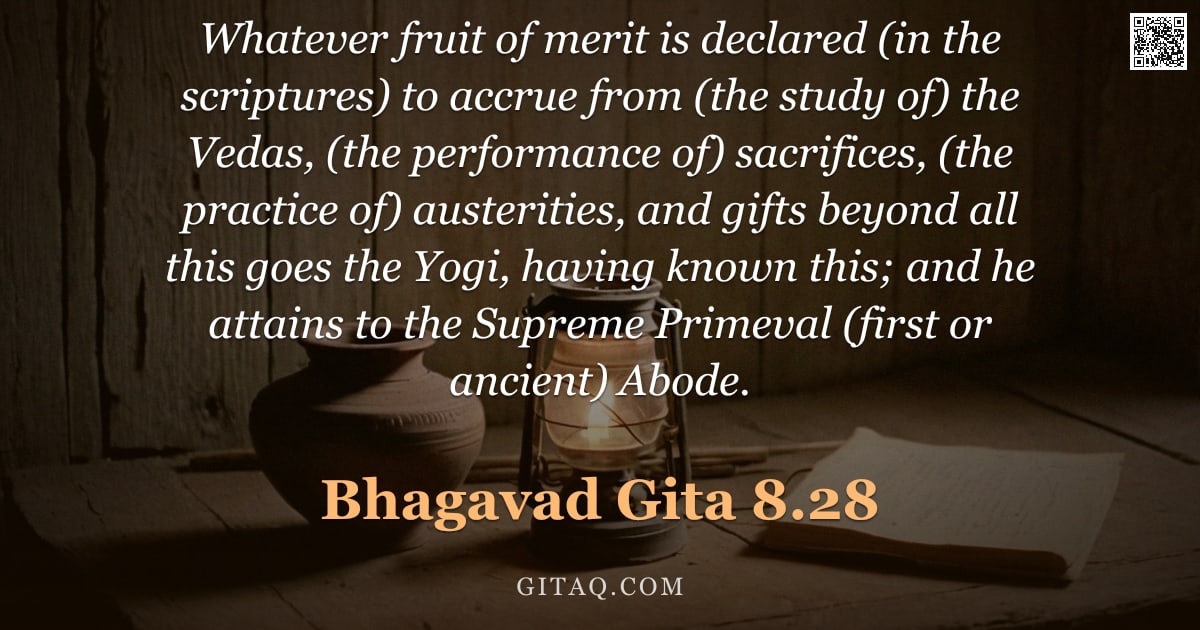
वेदेषु यज्ञेषु तपःसु चैव दानेषु यत्पुण्यफलं प्रदिष्टम् | अत्येति तत्सर्वमिदं विदित्वा योगी परं स्थानमुपैति चाद्यम् ||८-२८||
vedeṣu yajñeṣu tapaḥsu caiva dāneṣu yatpuṇyaphalaṃ pradiṣṭam . atyeti tatsarvamidaṃ viditvā yogī paraṃ sthānamupaiti cādyam ||8-28||
What Does This Verse Mean?
Lord Krishna tells Arjuna that a wise yogi who understands the true purpose of spiritual practices goes beyond temporary rewards like heaven or material gain obtained through Vedic rituals, sacrifices, and charity. Instead of stopping at these limited results, such a person transcends them to reach the eternal Supreme Abode. The core teaching is that intellectual understanding of this truth allows one to break free from the cycle of seeking finite merits for infinite desires.
The Teaching Behind It
This verse synthesizes Karma Yoga (action) and Jnana Yoga (knowledge), teaching that while performing duties like sacrifice and charity is necessary, one must not be attached to their results. It develops the concept of 'transcendence,' where spiritual practice leads beyond the temporary laws of cause and effect (karma) toward the eternal reality of Brahman.
Word by Word
Classical Commentary
Where This Happens
This verse concludes Chapter 8 of the Bhagavad Gita, which takes place on the battlefield of Kurukshetra just before the great war begins. Lord Krishna has been guiding Arjuna through various paths to understand death, life, and duty, culminating in this summary of spiritual progress. Having heard these profound teachings about the imperishable Brahman, Arjuna is ready to set aside his confusion and grief to fight with a mind focused on the eternal.
Living It Out Today
Consider a professional who works tirelessly for years hoping to earn enough money to finally 'retire' into happiness or buy a specific luxury item. This verse teaches that while achieving financial goals (the fruit of merit) is good, one should not let those achievements become the ultimate goal of their life's purpose. By realizing that true fulfillment comes from inner peace and self-realization rather than external validation, you can work with detachment, reducing anxiety about outcomes and finding stability regardless of career ups or downs.
Explained for Children
Imagine you study hard or do nice things and get gold stars or treats; those are wonderful, but they don't last forever. Krishna explains that if you truly understand how special your soul is, you stop just looking for small rewards like toys or praise. Instead, you aim for the biggest treasure of all: a place where there is perfect peace and love that never ends.
Daily Reflection
You may have spent years believing that accumulating merit through specific actions or rituals was the ultimate goal, but this verse invites you to see those fruits as stepping stones rather than destinations. When you truly understand that these good deeds lead somewhere higher, a heavy weight lifts from your shoulders because you realize perfection is not just about doing more, but knowing where it all leads. Today, let go of the need to keep score and rest in the assurance that your sincere efforts are guiding you toward an ancient, unshakeable home.
A Practice for Today
Close your eyes and visualize all good deeds you have performed—your study, sacrifices, austerities, and gifts—as a collection of bright lights rising from the earth. Gently release these lights into the vast sky, acknowledging that while they are beautiful, there is a deeper, primeval light beyond them where true peace resides.
Key Teachings
- The Transcendence of Rituals
While Vedic study, sacrifices, austerities, and charity yield genuine merit, they remain within the realm of cause and effect. The verse teaches that these are not ends in themselves but preparatory stages for a seeker who aims higher. - The Power of True Knowledge
It is specifically 'knowing' this truth about the relative nature of merit that allows the yogi to transcend it. This wisdom acts as the key that unlocks the door from temporary rewards to eternal abodes. - The Primeval Destination
Beyond all accumulated goodness lies a 'Supreme Primeval Abode' known only to those who have gone beyond attachment to results. This destination is not created by action but realized through the clarity of knowledge, representing the original state of being.
Themes
Related Verses
Read This Next
- 2.47 — Read this next to understand Krishna's instruction on performing duty without attachment to results, which complements the idea of transcending fruits.
- 3.30 — This verse follows by instructing to dedicate all actions and their fruits to the Divine, deepening the practice mentioned in 8.28.
- 12.15 — Read this final selection to see how a devotee who is free from personal desire becomes dear to Krishna, illustrating the state of one attaining the Supreme Abode.
Recommended Reading
GitaQ earns from qualifying purchases as an Amazon Associate.