Bhagavad Gita 7.23
Jnana Vijnana Yoga · English Translation
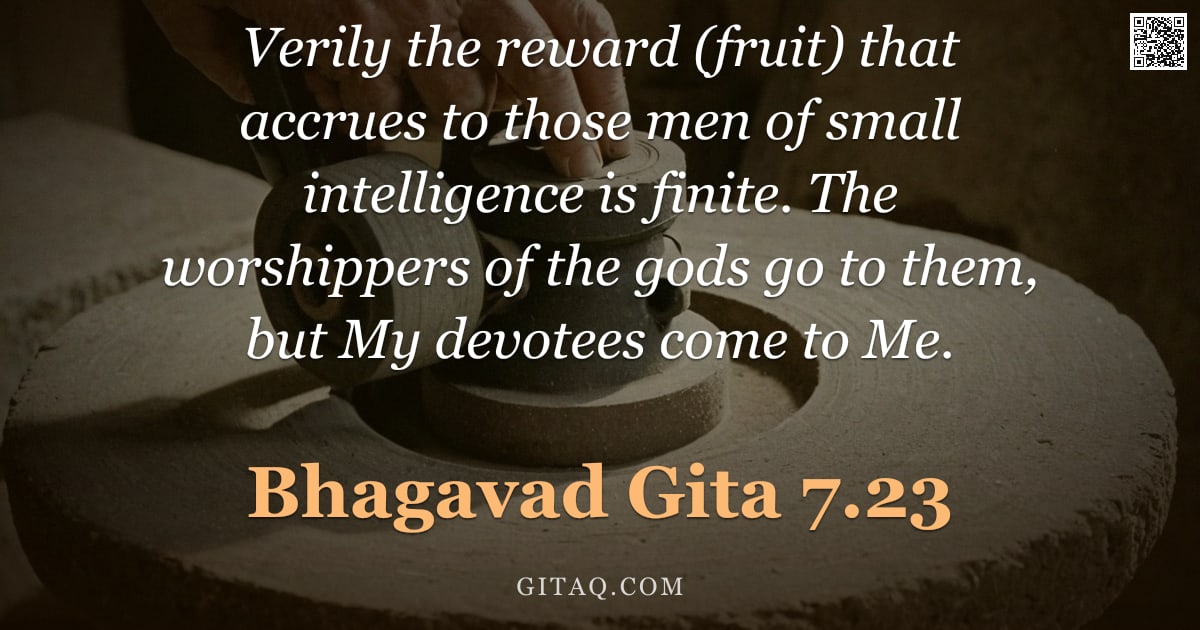
अन्तवत्तु फलं तेषां तद्भवत्यल्पमेधसाम् | देवान्देवयजो यान्ति मद्भक्ता यान्ति मामपि ||७-२३||
antavattu phalaṃ teṣāṃ tadbhavatyalpamedhasām . devāndevayajo yānti madbhaktā yānti māmapi ||7-23||
What Does This Verse Mean?
Lord Krishna explains to Arjuna that the rewards given by demigods are temporary and limited, suitable only for those with a narrow perspective focused on immediate results. In contrast, devotees who worship him directly attain an eternal connection with the Supreme Source rather than just passing benefits. The verse highlights a fundamental difference between seeking finite worldly gains through intermediaries versus pursuing infinite spiritual growth through direct devotion.
The Teaching Behind It
This teaching belongs primarily to Bhakti Yoga (the yoga of devotion) but integrates the wisdom of Jnana Yoga regarding the nature of reality. It develops the concept of 'antavattva' (finitude), distinguishing between transient material rewards and eternal spiritual liberation, asserting that direct surrender leads to the Supreme rather than fragmented divine aspects.
Word by Word
Classical Commentary
Where This Happens
This verse appears in Chapter 7 of the Bhagavad Gita during Krishna's discourse to Arjuna on the battlefield of Kurukshetra. Just prior, Krishna has been explaining his divine nature (Vibhuti) and how he is the source of all gods and material elements. Arjuna, overwhelmed by confusion about who to worship and why, seeks clarity; Krishna uses this verse to correct a common misconception that worshipping lesser deities yields equal or permanent results.
Living It Out Today
Consider someone facing a career crisis who tries every shortcut, network connection, or quick fix to get a job immediately without building their actual skills. They might find temporary work like the 'finite fruit' mentioned in the verse, but will likely face repeated stress and insecurity when that short-term solution fails. Instead, by focusing on cultivating genuine expertise and integrity (devotion to one's true path), they build an enduring career foundation that offers lasting security regardless of market changes.
Explained for Children
Imagine you have two types of allowance: one from your parents for doing chores, which runs out quickly and needs to be earned every week, and another gift card that gives you unlimited access to everything forever. People who ask the gods (like intermediaries) are like those getting small allowances; they get what they want now but it ends soon. But if you build a direct friendship with God, like your parents giving you their full love, you receive something much bigger and lasting that never runs out.
Daily Reflection
You may often find yourself chasing goals or seeking approval that feels substantial only for a moment before fading away again. This verse invites you to pause and ask if there is a deeper purpose beyond these temporary fruits of action. When your heart turns toward the Eternal, even small efforts become part of an everlasting journey rather than just fleeting moments.
A Practice for Today
Close your eyes and visualize the fleeting nature of temporary rewards, recognizing them as leaves that fall from a tree once their season ends. Shift your awareness to the eternal source within you, resting in the silence where devotion transforms finite desires into infinite connection with the Divine.
Key Teachings
- The Nature of Finite Rewards
Temporary goals and material gains are limited by time and space, appealing only to those who have not yet awakened to the infinite. The verse warns that seeking satisfaction solely in transient outcomes restricts spiritual growth to a cycle of constant craving. - The Path of the God-Worshippers
Those who worship celestial deities achieve results, but they remain bound within the realm of those specific gods and their limited spheres. Their destination is shared with other worshippers of that deity, meaning they do not reach the ultimate source. - The Devotee's Direct Union
True devotees bypass intermediate stages to go directly to the Supreme Self, achieving a union that no finite reward can ever provide. This direct path transforms worship from seeking something external into becoming one with the source of all existence.
Themes
Related Verses
Read This Next
- 2.47 — To understand how focusing on duty without attachment naturally reduces the desire for finite results mentioned in this verse.
- 3.30 — This verse expands on the concept of offering all actions to Krishna, which is the practical application of becoming a devotee rather than seeking gods.
- 12.15 — To see how the qualities of a pure devotee are described and why they naturally transcend limited worship in favor of direct connection with Krishna.
Recommended Reading
GitaQ earns from qualifying purchases as an Amazon Associate.