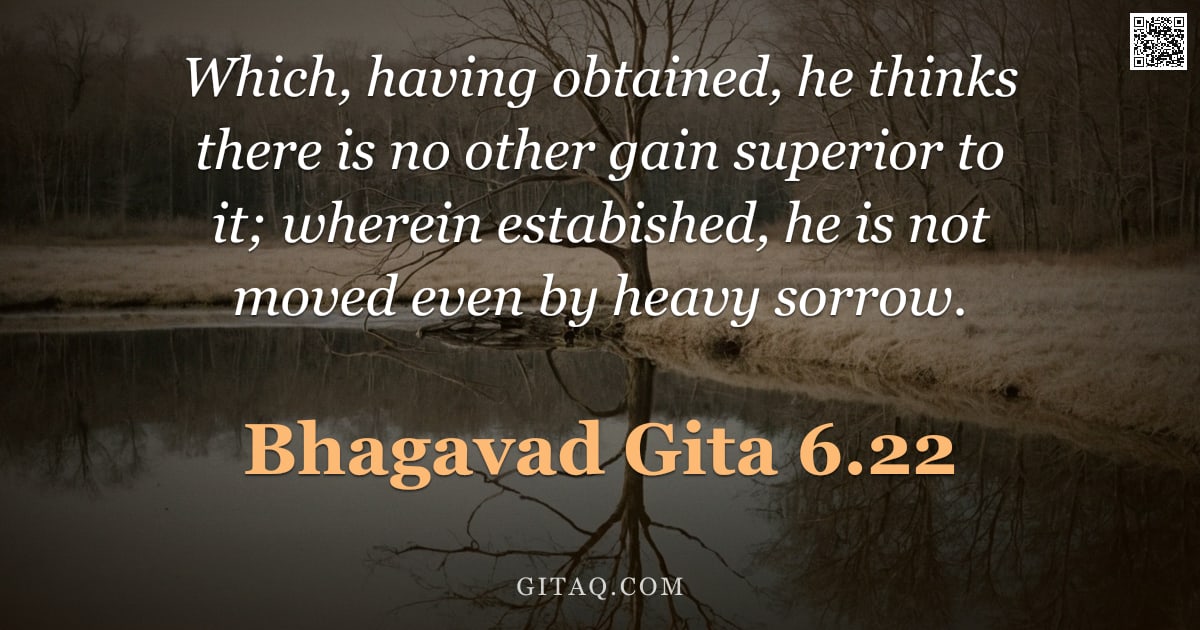
Bhagavad Gita 6.22
Dhyana Yoga · English Translation
यं लब्ध्वा चापरं लाभं मन्यते नाधिकं ततः | यस्मिन्स्थितो न दुःखेन गुरुणापि विचाल्यते ||६-२२||
yaṃ labdhvā cāparaṃ lābhaṃ manyate nādhikaṃ tataḥ . yasminsthito na duḥkhena guruṇāpi vicālyate ||6-22||
What Does This Verse Mean?
In this verse, Lord Krishna describes the ultimate state of a yogi who has attained spiritual realization through meditation. He explains that once a person truly experiences this inner bliss and connection with the Divine, they consider it the highest possible achievement in life. Furthermore, such a person becomes so firmly established in this truth that even intense grief or hardship cannot shake their peace or move them from their equanimity.
The Teaching Behind It
This verse is central to Dhyana Yoga (the path of meditation) and reflects the Sankhya philosophy's goal of distinguishing between the changing material world and the unchanging Self. It develops the concept that true knowledge leads to a state where the soul becomes immune to dualities like pleasure and pain, achieving absolute stability in consciousness.
Word by Word
Classical Commentary
Where This Happens
This verse occurs within Chapter 6 of the Bhagavad Gita during Krishna's discourse with Arjuna on the battlefield of Kurukshetra. At this point in the conversation, Krishna has already instructed Arjuna to perform his duty without attachment and is now explaining the specific benefits and signs of mastering the path of meditation (Dhyana Yoga). The listener, Prince Arjuna, is overwhelmed by confusion and sorrow over fighting his relatives, seeking a way to transcend these heavy emotions through spiritual practice.
Living It Out Today
Consider a professional who faces sudden layoffs or a major project failure; instead of spiraling into anxiety or despair as usual, they draw upon their inner sense of purpose and self-worth. Because this person has cultivated deep meditation and detachment from external outcomes, the setback feels like a temporary wave rather than an existential threat. They remain focused on constructive next steps without being paralyzed by the heaviness of the situation.
Explained for Children
Imagine you have been searching for your favorite toy all day and finally find it; suddenly, every other toy looks less exciting because the one you found is perfect. That feeling of pure happiness is like what Krishna describes in this verse: when someone finds true inner peace through meditation, they feel so complete that nothing else matters more. Even if something sad happens later, their heart stays steady and calm, just like a strong tree whose roots go deep into the ground.
Daily Reflection
You often chase new achievements thinking they will finally bring you peace, but today Krishna invites you to recognize the infinite value already present within. When you truly realize what is enough, external circumstances lose their power to shake you from your center of gravity. Imagine standing firmly in that realization; no matter how heavy life's sorrows become, your inner foundation remains unshaken and complete.
A Practice for Today
Take a moment to recall an achievement or state of being where you felt complete, with no need for anything more; anchor your attention there as the source of true gain. Visualize yourself rooted in this fullness, imagining that even if heavy sorrow were to approach like a storm, it would slide off without disturbing your inner stillness.
Key Teachings
- The Paradox of Ultimate Gain
This verse defines the supreme achievement not as acquiring something new, but realizing that nothing else compares to this state of spiritual fulfillment. It shifts our focus from endless accumulation to the recognition of an inherent perfection already available. - The Immovability of Realization
Once established in this supreme knowledge, a practitioner becomes impervious even to 'heavy sorrow' or extreme duress. This stability is not born of suppression but from the overwhelming weight and satisfaction of higher truth. - The End of Comparative Desire
By stating that there is no other gain superior, Krishna teaches us to transcend the endless cycle of comparison with past or future states. This cessation of desire for 'more' creates a space where sorrow cannot find a foothold.
Themes
Related Verses
Read This Next
- 2.47 — This verse introduces the foundational concept of performing duty without attachment, preparing the mind for the stability described in Chapter 6.
- 3.30 — Continuing with surrendering actions to the Divine helps deepen the internal stillness required to remain unmoved by sorrow.
- 12.15 — This verse describes the qualities of a devotee who is dear to Krishna, including being free from agitation and envy, mirroring the state achieved in 6.22.
Recommended Reading
GitaQ earns from qualifying purchases as an Amazon Associate.