Bhagavad Gita 6.11
Dhyana Yoga · English Translation
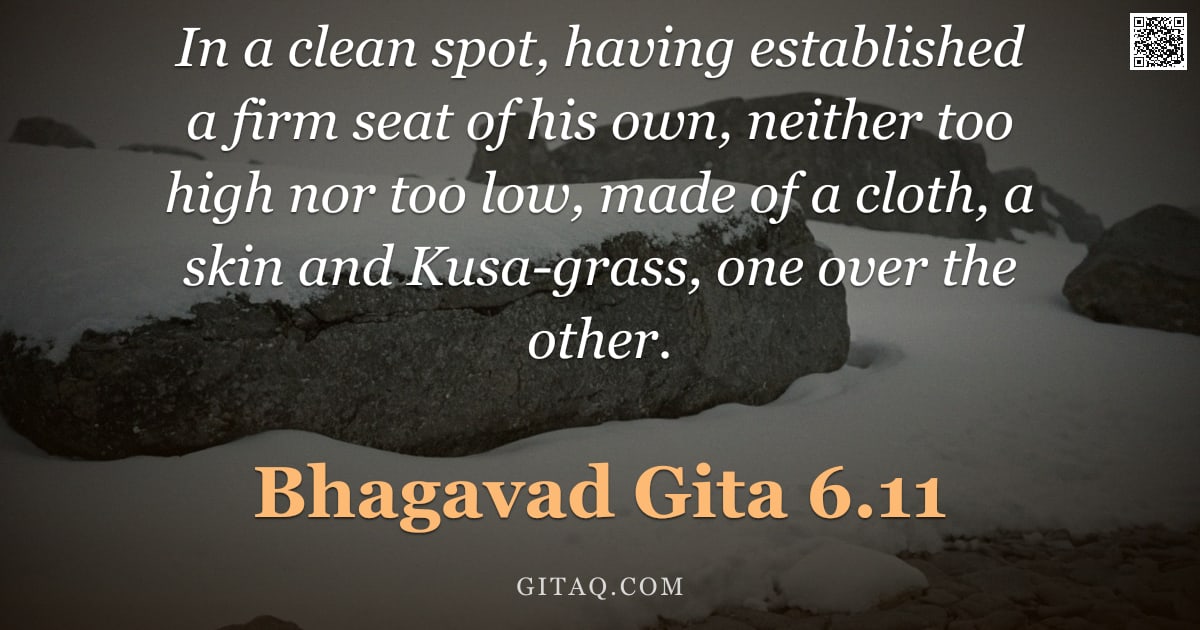
शुचौ देशे प्रतिष्ठाप्य स्थिरमासनमात्मनः | नात्युच्छ्रितं नातिनीचं चैलाजिनकुशोत्तरम् ||६-११||
śucau deśe pratiṣṭhāpya sthiramāsanamātmanaḥ . nātyucchritaṃ nātinīcaṃ cailājinakuśottaram ||6-11||
What Does This Verse Mean?
Lord Krishna is instructing Prince Arjuna on the physical preparation required before beginning meditation. He advises finding a clean, quiet place and setting up a firm seat that is neither too high nor too low to ensure stability during practice. The verse emphasizes using layers of cloth, animal skin, or sacred grass (Kusa) as a comfortable base for concentration. This instruction highlights the importance of physical comfort and environmental purity as the foundation for mental stillness.
The Teaching Behind It
This verse is a foundational instruction within Dhyana Yoga (the yoga of meditation), which bridges Sankhya philosophy's understanding of the self with practical spiritual discipline. It develops the concept that external conditions, specifically physical comfort and environmental purity, are prerequisites for internalizing the mind to realize the true Self.
Word by Word
Classical Commentary
Where This Happens
This verse occurs in Chapter 6 of the Bhagavad Gita during the Kurukshetra war, where Lord Krishna is guiding his friend and devotee Arjuna on the path of meditation. Prior to this instruction, Krishna has explained that controlling the mind is difficult but possible through practice and detachment. Arjuna, overwhelmed by the duty of fighting kin, was seeking a way to transcend sorrow; now Krishna details the practical steps for Dhyana Yoga (the yoga of meditation) as a method to gain inner peace amidst external chaos.
Living It Out Today
If you are feeling anxious about a high-stakes presentation or a difficult family discussion, do not try to solve it while rushing around in a chaotic environment. Instead, take five minutes to find a quiet corner, clear your desk of distractions, and sit on a comfortable chair with good posture before taking action. By creating this small 'clean spot' for yourself first, you establish the stability needed to think clearly and respond rather than react impulsively.
Explained for Children
Imagine you want to build a strong tower with your blocks; if your table is wobbly or covered in sticky toys, it will fall down! Krishna tells us that before we sit quietly to think or pray, we need a special spot that is clean and has a comfortable seat. It shouldn't be too high like a mountain top where you feel cold, or too low on the dirt; just right so our body feels safe and steady. Just like getting ready for bed makes sleep easier, having a calm place helps our minds relax.
Daily Reflection
You do not need perfect conditions or grand surroundings to begin connecting with the divine; all that is required is a clean spot and a firm resolve. By arranging a simple seat made of cloth or grass, you are honoring the sacredness of your practice without attachment to luxury or status. This act of preparation teaches us that clarity begins when we create order in our immediate environment.
A Practice for Today
Begin by finding a quiet, clean corner where you can sit undisturbed for your practice today. Take a moment to adjust your seat so it is neither too high nor too low, establishing a sense of grounded stability in your own space.
Key Teachings
- The Sanctity of Preparation
Before attempting meditation, one must purify the external space and mind by choosing a clean spot. This physical act of cleaning signifies an inner readiness to let go of distractions. - Balanced Stability in Posture
The seat should be neither too high nor too low, symbolizing the Middle Path between austerity and indulgence. True meditation requires a physical foundation that is firm yet comfortable enough to sustain long periods of stillness. - Simplicity as Devotion
The instruction for layers of cloth, skin, or Kusa grass emphasizes humility and the use of natural materials. This simplicity removes ego from the practice, focusing entirely on the connection with the Self rather than material display.
Themes
Related Verses
Read This Next
Recommended Reading
GitaQ earns from qualifying purchases as an Amazon Associate.