Bhagavad Gita 2.43
Sankhya Yoga · English Translation
कामात्मानः स्वर्गपरा जन्मकर्मफलप्रदाम् | क्रियाविशेषबहुलां भोगैश्वर्यगतिं प्रति ||२-४३||
kāmātmānaḥ svargaparā janmakarmaphalapradām . kriyāviśeṣabahulāṃ bhogaiśvaryagatiṃ prati ||2-43||
What Does This Verse Mean?
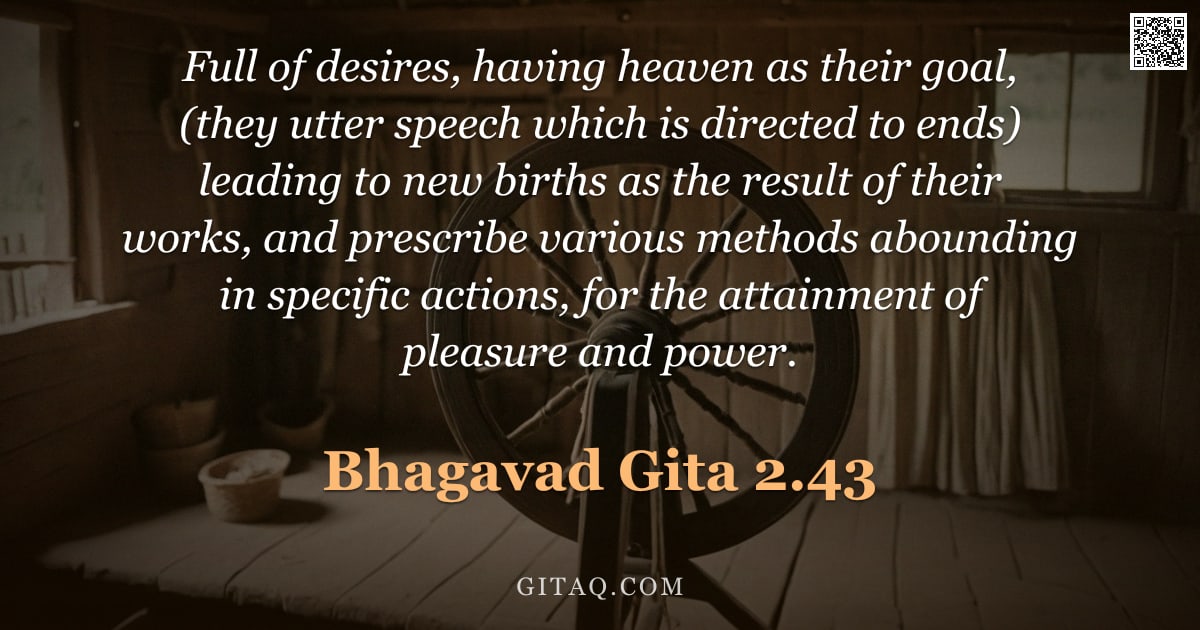
In this verse, Lord Krishna describes people who are driven entirely by their personal desires and seek only material rewards or heavenly pleasures as the ultimate goal of life. He explains that such individuals often follow complex rituals and specific actions without understanding higher spiritual truths, believing these will bring them happiness and power in this life or the next. The core teaching is a warning against limiting one's vision to temporary gains through self-centered action rather than seeking lasting inner peace.
The Teaching Behind It
This teaching belongs primarily to the Sankhya Yoga strand, which focuses on discriminative knowledge (viveka) between the eternal soul and temporary matter. It introduces the concept of distinguishing 'karmaphala' (fruitive results driven by desire) from selfless action, laying the groundwork for Karma Yoga where one acts without attachment to specific outcomes.
Word by Word
Where This Happens
This conversation takes place on the battlefield of Kurukshetra within the epic Mahabharata, where Prince Arjuna has laid down his weapons in confusion and despair about fighting his own relatives. Lord Krishna is acting as his charioteer and spiritual guide, responding to Arjuna's hesitation by beginning to teach him about the eternal nature of the soul. In this specific verse, Krishna contrasts the deep, analytical wisdom he is imparting with the Vedic rituals taught previously that focus only on material rewards and heavenly births for those who are still attached to desire.
Living It Out Today
Consider a professional facing a difficult career pivot where they must choose between staying in a high-paying but unfulfilling job versus starting their own business. A person driven by the mindset described here might obsess over the immediate salary increase or title as the 'heaven' of success, avoiding risks that could lead to long-term growth. The verse encourages making decisions based on duty and inner conviction rather than just chasing short-term financial gain or status symbols.
Explained for Children
Imagine you are playing a game where everyone else keeps saying, 'If I do exactly what they tell me, I will get a shiny toy or become the boss!' Krishna tells Arjuna that some people only play games for those toys and fame. They follow lots of rules to win prizes like candy or extra time in their favorite video games, but they forget that there are bigger things than just winning every round. This verse reminds us not to get stuck wanting small treats forever, because true happiness comes from something deeper.
Daily Reflection
In our daily lives, we often find ourselves crafting elaborate plans not just to serve others, but specifically because they promise us a better status or comfort in return. This verse invites you to pause before making such transactions: ask yourself if your current action is rooted in genuine duty or merely a calculated exchange for future gain. When you shift your motivation from seeking heavenly rewards to acting out of pure devotion and duty, the heavy burden of expectation begins to lift.
A Practice for Today
Pause and observe any thoughts that arise which are driven solely by the desire for a specific future reward or heavenly state. Notice how these desires often lead to complex mental planning focused on pleasure rather than inner stillness, and gently return your focus to the simplicity of acting without attachment to results.
Key Teachings
- The Trap of Transactional Spirituality
Krishna identifies that many spiritual seekers operate on a transactional mindset, viewing prayer or rituals as purchases for heaven rather than acts of surrender. This approach binds the soul to the cycle of birth and death because every action performed with an eye toward future reward generates new karmic impressions. - The Limitation of Desire-Driven Action
When one is 'full of desires' (kāmātmānaḥ), their speech and actions become fragmented into specific, specialized rituals designed only for material enjoyment or power. These methods may yield temporary results but ultimately keep the practitioner focused on external achievements rather than internal liberation. - The Path Beyond Merit
True spiritual progress requires moving beyond the 'various methods' that promise specific fruits like pleasure or power, toward a state of selfless action. By detaching from the results and viewing all outcomes as belonging to the Divine, one transcends the endless cycle driven by desire.
Themes
Related Verses
Read This Next
- 2.47 — This famous verse provides the direct solution to the problem in 2.43 by instructing us on how to act without attachment to results.
- 3.30 — Read this next to understand Krishna's instruction to dedicate all actions and their fruits to Him, effectively neutralizing the desire for personal gain mentioned in 2.43.
- 12.15 — This verse describes the qualities of a devotee who is not disturbed by worldly desires or power struggles, offering a portrait of someone beyond the limitations described here.
Recommended Reading
GitaQ earns from qualifying purchases as an Amazon Associate.