Bhagavad Gita 17.10
Shraddhatraya Vibhaga Yoga · English Translation
यातयामं गतरसं पूति पर्युषितं च यत् | उच्छिष्टमपि चामेध्यं भोजनं तामसप्रियम् ||१७-१०||
yātayāmaṃ gatarasaṃ pūti paryuṣitaṃ ca yat . ucchiṣṭamapi cāmedhyaṃ bhojanaṃ tāmasapriyam ||17-10||
What Does This Verse Mean?
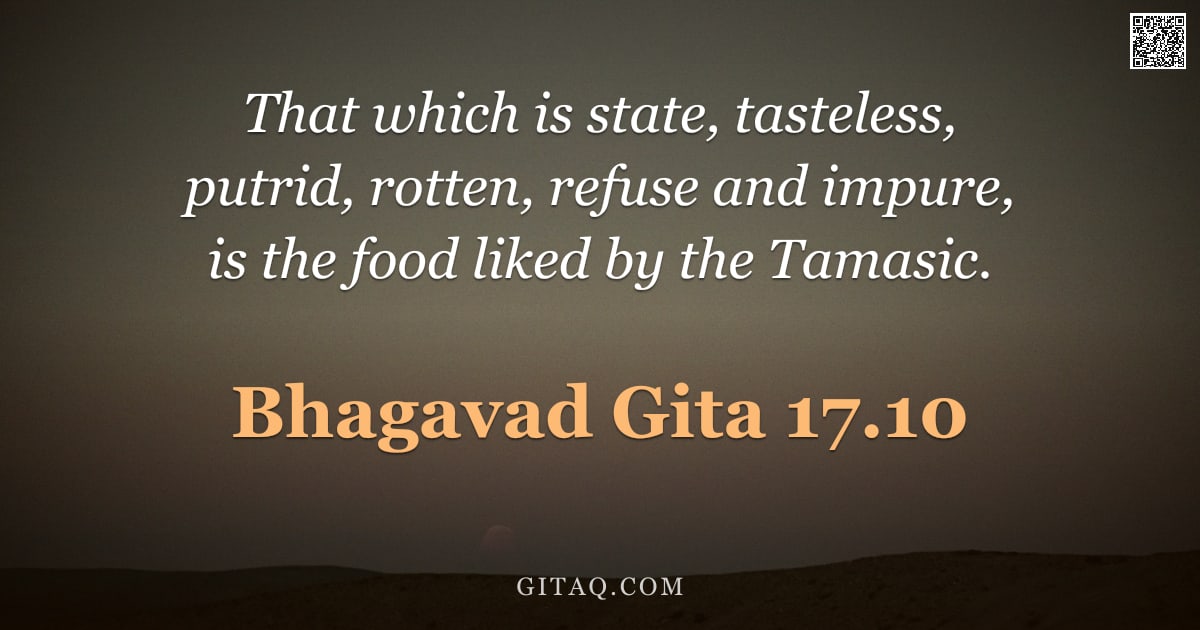
In this verse, Lord Krishna describes the type of food that appeals to people dominated by ignorance and inertia (Tamasic nature). He lists characteristics such as being tasteless, putrid, rotten, leftover refuse, or impure. The core teaching is that consuming such foods deepens one's spiritual stagnation, leading to confusion and a lack of vitality.
The Teaching Behind It
This verse belongs to the Sankhya-Yoga strand of the Gita's teaching, which analyzes human psychology through the three Gunas (qualities) of nature. It develops the concept that physical intake directly influences mental states and spiritual evolution, asserting that a Tamasic diet reinforces inertia and ignorance.
Word by Word
Classical Commentary
Where This Happens
This teaching occurs on the battlefield of Kurukshetra within Chapter 17, where Lord Krishna is guiding Arjuna through a detailed classification of faith, food, sacrifice, and charity. Just before this verse, Krishna has finished explaining how different types of people eat based on their inner nature (Sattvic, Rajasic, Tamasic). Arjuna is listening intently as he seeks to understand the subtle psychological patterns that influence human behavior in such a high-stakes moment.
Living It Out Today
When you are facing burnout at work or deep stress, your body might crave processed snacks like stale chips or sugary drinks because they offer a quick, numb relief. However, giving in to this 'Tamas' impulse often leads to an energy crash and mental fog later on. Instead of reaching for the comfort food that feels easy but is unfulfilling, choose a fresh meal or a healthy snack to fuel your brain with clarity and resilience.
Explained for Children
Imagine you have two choices for lunch: fresh, crunchy apples and yogurt, versus something old, smelly, and moldy from the back of the fridge. A person who feels very sleepy or grumpy might actually crave that bad food because their body isn't sensing what is truly good for them. This verse teaches us to choose healthy, clean, and tasty foods so our minds stay bright and happy.
Daily Reflection
Today, consider how often we feed our minds and bodies with things that are 'tasteless' or emotionally rotting from over-indulgence in negative thoughts. When you choose quality over quantity in what you consume—whether food, information, or company—you invite a lighter, more vibrant state of being into your life.
A Practice for Today
Begin by observing your own nourishment today, asking if you are consuming out of genuine need or merely to numb the senses with that which is stale and heavy. Take a moment to silence the inner noise caused by impure intake, allowing your mind to settle into clarity rather than stagnation.
Key Teachings
- The Nature of Tamasic Intake
This verse defines the diet of inertia as that which is stale, tasteless, and impure. It teaches us that consuming such things directly reinforces a state of ignorance and lethargy. - Food Shapes Consciousness
The Gita posits a direct link between what we eat and the quality of our mind; rotting food leads to a clouded, dull intellect. True spiritual progress requires purifying not just actions, but also our sustenance. - Overcoming Stagnation
By identifying 'refuse' as the favorite of Tamasic beings, we learn that clinging to old habits and stale patterns is a form of spiritual decay. The path forward involves consciously rejecting what no longer serves our growth.
Themes
Related Verses
Read This Next
- 17.8 — Read this immediately before to understand what foods are considered Sattvic (pure) for balance.
- 3.25 — This verse explains how the wise should perform duties without attachment, avoiding the inertia described in 17.10 while engaging with others.
- 6.17 — Here Krishna outlines a balanced diet and lifestyle essential for controlling the mind, providing practical steps to counteract Tamasic tendencies.
Recommended Reading
GitaQ earns from qualifying purchases as an Amazon Associate.