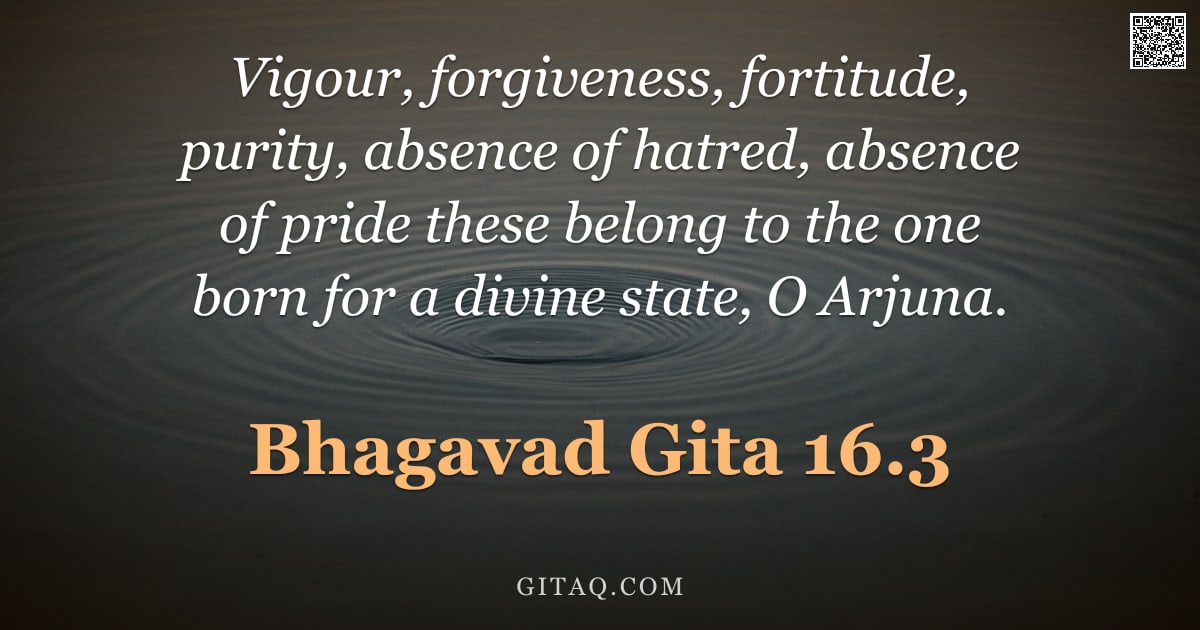
Bhagavad Gita 16.3
Daivasura Sampad Vibhaga Yoga · English Translation
तेजः क्षमा धृतिः शौचमद्रोहो नातिमानिता | भवन्ति सम्पदं दैवीमभिजातस्य भारत ||१६-३||
tejaḥ kṣamā dhṛtiḥ śaucamadroho nātimānitā . bhavanti sampadaṃ daivīmabhijātasya bhārata ||16-3||
What Does This Verse Mean?
In this verse, Lord Krishna lists the specific inner qualities that define a person with divine nature while speaking to Arjuna on the battlefield of Kurukshetra. He identifies six key virtues: energy (tejas), patience and forgiveness (kṣamā), perseverance in difficult times (dhṛti), physical and mental purity, freedom from hatred, and humility without arrogance. The core teaching is that these traits are not just moral rules but the natural characteristics of a soul aligned with higher consciousness. When one cultivates these qualities, they move toward a state of peace and divine fulfillment.
The Teaching Behind It
This verse is a cornerstone of Sankhya philosophy within the Gita, specifically addressing 'Prakriti' (nature) and how different gunas manifest in human behavior. It develops the concept that one's inherent nature determines their destiny, suggesting that divine qualities are not acquired artificially but realized through self-purification and alignment with cosmic order.
Word by Word
Classical Commentary
Where This Happens
This verse occurs in Chapter 16 during the intense dialogue on the battlefield of Kurukshetra, where Arjuna is paralyzed by grief and confusion about fighting his own relatives. Krishna has just finished describing the 'demonic' nature that leads to destruction and fear, creating a sharp contrast for the confused warrior. The listener, Arjuna, is seeking clarity on how to distinguish between destructive behavior and noble conduct as he prepares for war. This specific verse serves as the positive counterpart to the earlier description of negative traits, offering a roadmap for divine character.
Living It Out Today
Consider a workplace scenario where you receive harsh criticism from a manager during a high-stress project deadline; applying this verse means responding with 'vigour' by immediately focusing on solutions rather than panic. Instead of harboring resentment or feeling superior to the critic, one practices 'forgiveness' and 'absence of pride,' acknowledging that everyone makes mistakes while maintaining personal integrity ('purity'). This approach allows you to maintain mental fortitude through the crisis without succumbing to hatred or ego-driven conflicts.
Explained for Children
Imagine your heart is like a garden; some plants make it dark and scary, while others make it bright and happy. Krishna tells us that having energy to do good things, being patient when someone makes a mistake, not giving up even when things are hard, keeping our bodies clean, not feeling angry at friends, and staying humble are the seeds of 'divine' goodness. Just like a sunflower turns toward the light, doing these right things helps your heart grow strong and happy inside.
Daily Reflection
Today, consider how easily we mistake agitation for vigor and stubbornness for fortitude; true divine strength is quiet yet unshakable. When the world demands reaction, practice the gentle power of forgiveness that dissolves anger rather than suppressing it. You possess an innate capacity to act without hatred or pride, simply by remembering your connection to a higher nature.
A Practice for Today
Close your eyes and take three deep breaths, visualizing the inner fire of Teja (vigor) igniting a calm space within you. As you exhale, silently offer forgiveness to anyone holding a grudge in your heart, allowing purity to wash away any lingering resentment or pride.
Key Teachings
- The Nature of True Vigor
Teja is not aggressive energy but the luminous clarity that arises when the mind is free from confusion. It empowers us to act with precision and purpose, rooted in self-awareness rather than egoic impulse. - Forgiveness as Fortitude
Kṣamā (forgiveness) requires immense inner strength; it is the active choice not to retaliate when provoked. This quality protects the soul from the corrosive effects of hatred and preserves one's spiritual integrity. - The Foundation of Purity
Shauca (purity) extends beyond physical cleanliness to encompass a mind free from malice, greed, and arrogance. Without this internal clarity, other virtues cannot take root in the soil of one's character.
Themes
Related Verses
Read This Next
- 2.47 — Connects the divine virtues to performing duty without attachment to results.
- 3.30 — Expands on dedicating all actions and their fruits to the Divine as a practice of purity.
- 12.15 — Describes how one who is free from anger and full of peace becomes dear to Krishna, echoing these divine qualities.
Recommended Reading
GitaQ earns from qualifying purchases as an Amazon Associate.