Bhagavad Gita 14.16
Gunatraya Vibhaga Yoga · English Translation
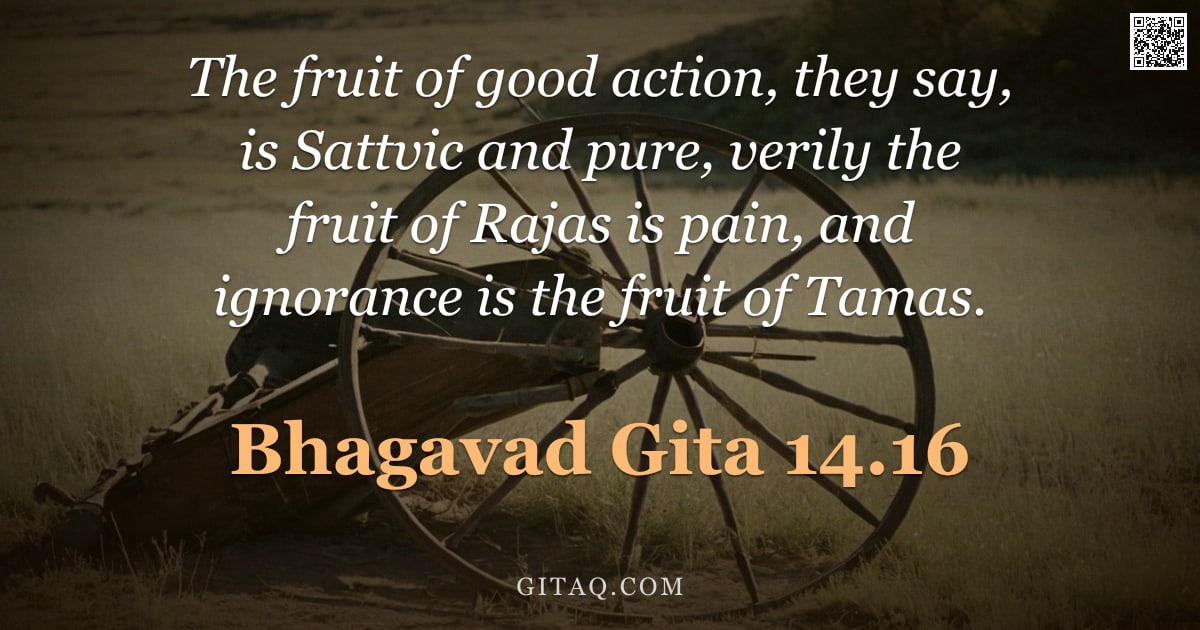
कर्मणः सुकृतस्याहुः सात्त्विकं निर्मलं फलम् | रजसस्तु फलं दुःखमज्ञानं तमसः फलम् ||१४-१६||
karmaṇaḥ sukṛtasyāhuḥ sāttvikaṃ nirmalaṃ phalam . rajasastu phalaṃ duḥkhamajñānaṃ tamasaḥ phalam ||14-16||
What Does This Verse Mean?
In this verse, Lord Krishna explains the direct results of actions driven by different qualities of nature to Arjuna. He teaches that good deeds performed with purity lead to a bright and peaceful outcome, while selfish or passionate actions inevitably bring pain. Conversely, acts born from ignorance and laziness result in darkness and confusion rather than clarity. This distinction helps us understand why our current circumstances feel like rewards or punishments based on the intent behind them.
The Teaching Behind It
This verse belongs to the core of Sankhya philosophy integrated into Karma Yoga, focusing on how action binds consciousness through the three gunas. It develops the concept of 'phala' or result as an intrinsic quality determined by the nature (guna) of the actor's mind at the time of action, rather than just external circumstances.
Word by Word
Classical Commentary
Where This Happens
This teaching occurs on the battlefield of Kurukshetra during the Mahabharata epic, specifically within Chapter 14. Lord Krishna is speaking to his friend and devotee Arjuna, who has just fallen into deep despair over fighting his own relatives. After explaining that the soul is eternal, Krishna now delves into how the three modes of material nature (goodness, passion, and ignorance) bind us to this world through our actions. He uses this verse to help Arjuna analyze his current state of mind and understand why he feels so confused before making a clear decision about duty.
Living It Out Today
Consider a professional facing a critical deadline where they must choose between cutting corners for quick profit or working late with full integrity. If the employee chooses greed (Rajas), the immediate gain will eventually lead to stress, legal trouble, and sleepless nights of regret. However, if they focus on duty with honesty (Sattva), even though it is harder now, the result will be a reputation for trustworthiness and inner peace. Conversely, procrastinating due to fear or laziness (Tamas) leads to a project failure that causes unnecessary panic and self-blame.
Explained for Children
Imagine your mind is like a garden that grows different kinds of flowers depending on what you plant inside it. If you water it with kindness, honesty, and hard work (like Sattva), beautiful and sweet fruits grow for everyone to enjoy. But if you fill it with anger or greed (Rajas), the plants become prickly and cause pain when you touch them. Finally, if you ignore the garden completely and let weeds take over because you don't care (Tamas), nothing grows but a dark, messy place where you can't see anything clearly.
Daily Reflection
Today, notice how often you chase results that bring temporary joy but leave behind inner turmoil later on. When you feel frustrated by an outcome, pause to see if your action was driven by the restless energy of Rajas rather than pure intention. True peace begins when we realize that a Sattvic result is not just about success, but about a mind free from future sorrow.
A Practice for Today
Sit quietly and observe your current motivation for any action you are undertaking; ask yourself if it arises from a place of clarity or agitation. As you breathe, visualize the outcome not as immediate gratification but as a seed that will either purify your mind or cloud it with pain.
Key Teachings
- The Nature of Pure Action
Actions performed with clarity and selflessness yield results that are pure and enlightening. This Sattvic fruit strengthens the soul rather than binding it further to worldly desires. - The Cost of Restless Activity
Rajas, driven by intense desire and attachment, inevitably leads to suffering when expectations clash with reality. The pain is not a punishment but the natural consequence of acting from an agitated state. - The Darkness of Ignorance
Tamasic actions stem from delusion and inertia, resulting in confusion that obscures our true nature. This fruit keeps one trapped in a cycle of darkness where the distinction between right and wrong becomes blurred.
Themes
Related Verses
Read This Next
- 2.47 — This verse establishes the foundation for performing Sattvic actions without attachment to results.
- 3.30 — It expands on dedicating all works to the Divine, a key method for transforming Rajas and Tamas into purity.
- 12.15 — This verse describes the qualities of one who has transcended these modes through devotion and equanimity.
Recommended Reading
GitaQ earns from qualifying purchases as an Amazon Associate.