Bhagavad Gita 12.20
Bhakti Yoga · English Translation
ये तु धर्म्यामृतमिदं यथोक्तं पर्युपासते | श्रद्दधाना मत्परमा भक्तास्तेऽतीव मे प्रियाः ||१२-२०||
ye tu dharmyāmṛtamidaṃ yathoktaṃ paryupāsate . śraddadhānā matparamā bhaktāste.atīva me priyāḥ ||12-20||
What Does This Verse Mean?
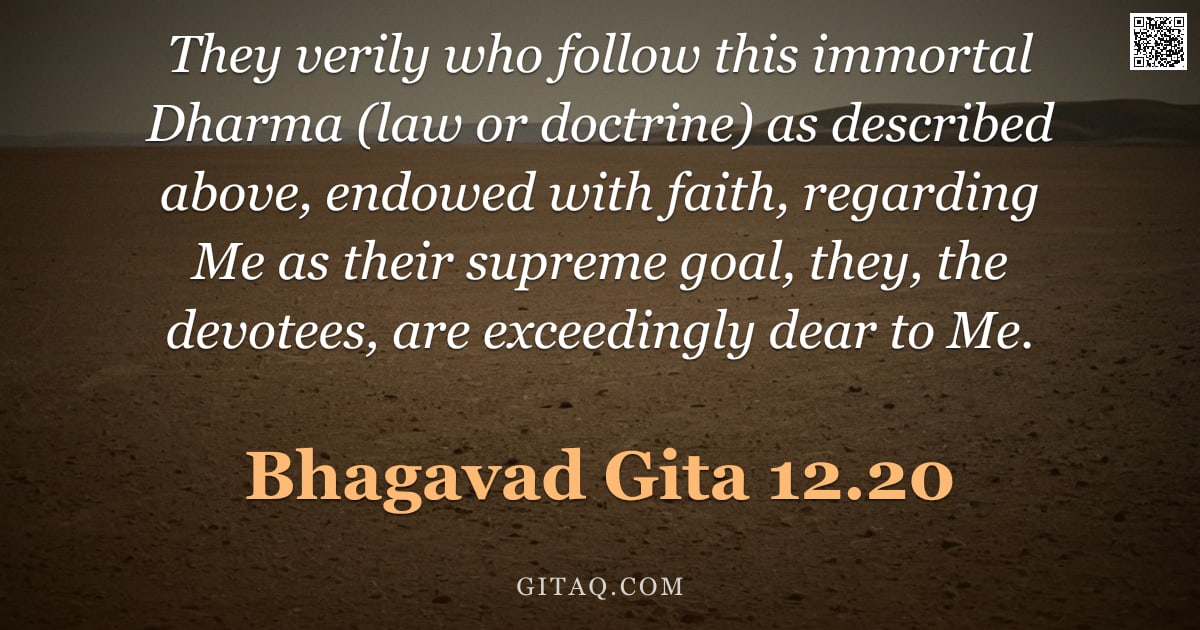
In this concluding verse of Chapter 12, Lord Krishna speaks to Arjuna about the highest form of spiritual practice. He declares that those who faithfully follow the path of devotion described in previous verses—keeping Him as their ultimate goal—are most dear to God. The core teaching is that sincere faith and consistent adherence to righteous principles create a profound bond between the devotee and the Divine.
The Teaching Behind It
This verse solidifies the teachings of Bhakti Yoga (the path of devotion) as presented throughout Chapter 12. It emphasizes that while intellectual knowledge is valuable, the combination of faith ('shraddha') and surrendering to the Divine will leads to the closest union with God.
Word by Word
Classical Commentary
Where This Happens
This verse appears at the conclusion of Chapter 12 on Bhakti Yoga within the epic Mahabharata, set just before the great battle begins. Lord Krishna has been answering Arjuna's question about which type of devotee is more perfect: those who worship His personal form or those who meditate on the Formless Absolute. After clarifying that both paths lead to Him but the path of devotion with a personal focus is easier for embodied beings, He concludes by affirming the special status of these sincere followers.
Living It Out Today
When facing a high-stakes career decision where you must choose between an easy profit and doing what feels ethically right, apply this verse by trusting your conscience as 'Dharma'. Instead of fearing failure or seeking external validation, follow that inner law with faith in the larger order of things. This approach transforms anxiety into purposeful action, making you feel deeply connected to a supportive force regardless of the outcome.
Explained for Children
Imagine you have a special rule for being good, like always telling the truth or helping others without expecting anything back. If you follow these rules because you love your teacher and trust them completely, they will be very proud of you and consider you their favorite student. Lord Krishna is saying that anyone who follows this 'holy way' with total trust in Him becomes his most beloved friend.
Daily Reflection
Today, notice how often you seek validation from others before feeling worthy, and contrast that with Krishna's promise that He holds His devotees as 'exceedingly dear' simply because they trust Him. You do not need to be perfect in your practice or flawless in your understanding; the divine heart beats closer for those who approach with faith and a surrendered focus on the Supreme. Let this truth soften your internal critic, reminding you that your journey is defined by devotion rather than perfection.
A Practice for Today
Close your eyes and gently recall a moment when you felt fully supported by something greater than yourself, letting that feeling of trust expand to fill the room. Visualize this verse not as a rule to follow, but as an invitation to rest in the certainty that those who hold faith with sincerity are already held dear. Breathe into this sense of being beloved, allowing your worries about perfection or performance to dissolve into simple, trusting presence.
Key Teachings
- The Nature of Immortal Dharma
Krishna identifies His path not as a rigid set of rules but as 'amrita,' or nectar, which grants life and vitality to the seeker. This immortal law is dynamic and sustaining, designed to transform the mortal mind into something eternal through consistent practice. - Faith as the Gateway
The verse emphasizes 'shraddhān', or faith, as the essential prerequisite for truly engaging with this spiritual path. It is not blind belief but a deep, intuitive conviction that anchors the seeker and allows them to navigate life's uncertainties. - Surrender of Supreme Goal
To become 'priya' or dear to Krishna, one must adopt an attitude where He is seen as the ultimate destination above all else. This total prioritization transforms every action into an act of devotion, aligning the individual will with the divine purpose.
Themes
Related Verses
Read This Next
- 2.47 — Read this next to understand how Krishna defines action without attachment as a precursor to true devotion.
- 3.30 — This verse expands on the concept of surrendering all actions and fruits, deepening your understanding of 'Mat-parama' (regarding Me as supreme).
- 12.15 — Reading this immediately after 12.20 will show you how a devotee who is dear to Krishna behaves towards the world, creating a complete picture of Bhakti.
Recommended Reading
GitaQ earns from qualifying purchases as an Amazon Associate.