Bhagavad Gita 12.11
Bhakti Yoga · English Translation
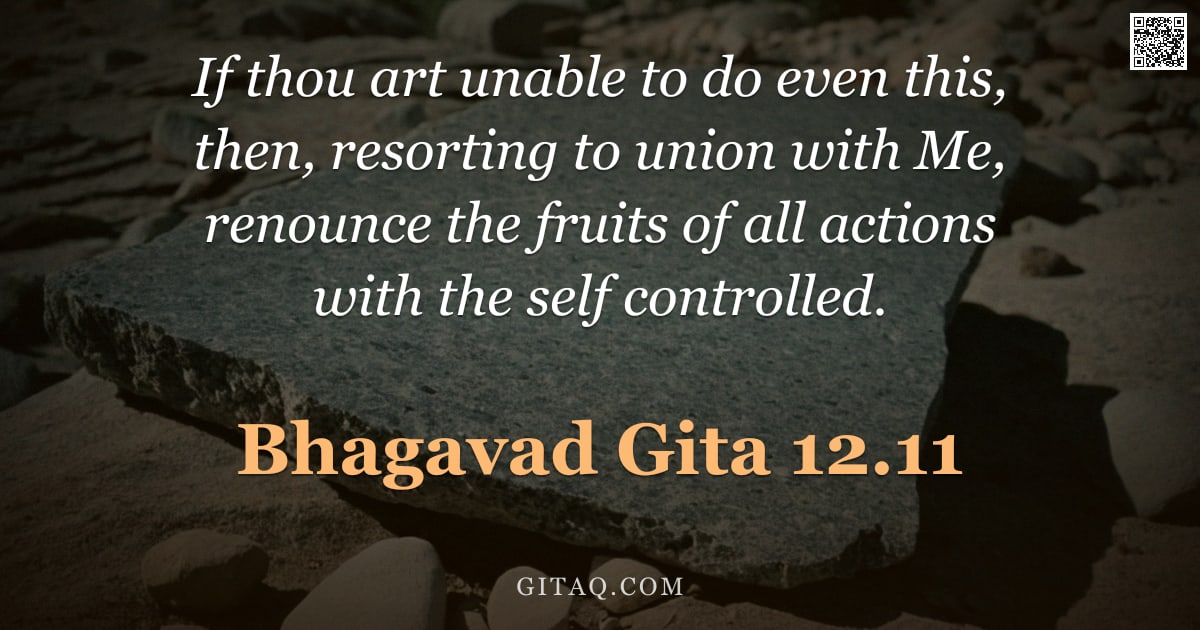
अथैतदप्यशक्तोऽसि कर्तुं मद्योगमाश्रितः | सर्वकर्मफलत्यागं ततः कुरु यतात्मवान् ||१२-११||
athaitadapyaśakto.asi kartuṃ madyogamāśritaḥ . sarvakarmaphalatyāgaṃ tataḥ kuru yatātmavān ||12-11||
What Does This Verse Mean?
In this verse, Lord Krishna addresses Arjuna, acknowledging that if he finds it too difficult to maintain a constant meditative focus on the Divine (the previous step), there is an alternative path available. Krishna instructs him to instead fully surrender all actions and their results to God while maintaining self-control over his mind and senses. This teaches that sincere effort combined with detachment from outcomes is a valid way to spiritual progress, even when deep meditation feels out of reach.
The Teaching Behind It
This verse bridges Karma Yoga (the yoga of action) and Bhakti Yoga (the path of devotion), introducing the specific practice of 'Karma Phala Tyaga' or renunciation of fruits. It develops the concept that surrendering the results to the Divine is a practical substitute for advanced meditation, making spiritual growth accessible even when one lacks deep concentration.
Word by Word
Classical Commentary
Where This Happens
This verse occurs in Chapter 12 during the intense dialogue between Lord Krishna and Arjuna on the battlefield of Kurukshetra, following a discussion on the superior path of devotion (Bhakti Yoga). After outlining the highest form of worship as constant meditation on the Divine Formless or Personal God, Krishna realizes that Arjuna might feel overwhelmed by such high spiritual demands. Consequently, he offers this compassionate fallback option to ensure Arjuna does not abandon his practice out of a sense of inadequacy.
Living It Out Today
Consider a professional facing a critical project deadline where they are paralyzed by the fear of failure or an unfavorable outcome from their boss. Instead of trying to force themselves into a state of perfect, detached meditation which feels impossible in that moment, they can apply this teaching by doing their absolute best work and consciously releasing attachment to whether they get promoted or criticized. By trusting that the result is no longer entirely within their control after giving it effort, they reduce anxiety and perform with greater clarity.
Explained for Children
Imagine you are trying very hard to solve a difficult math problem or play a new video game level, but your brain just gets too tired and frustrated. Krishna says it's okay! Instead of forcing yourself to stare at the answer for hours, try doing your best work and then giving the result over to someone trustworthy who will take care of everything afterwards. You just need to focus on trying hard today without worrying about winning or losing tomorrow.
Daily Reflection
Today, perhaps you find yourself too tired or distracted to perform complex rituals or intense meditation; know that this state does not disqualify you from the path. The Lord gently offers an alternative: if your hands cannot grasp the highest discipline, let them at least release their grip on the results of what you do accomplish. By surrendering even a small action without attachment while maintaining self-control, you align with divine will and find peace in simplicity.
A Practice for Today
Close your eyes and gently acknowledge any inability you feel to engage deeply with spiritual practices right now, offering that limitation as an act of surrender rather than frustration. Visualize placing the heavy burden of outcomes from your day's actions into a vast ocean of grace, trusting that simply holding onto devotion is sufficient.
Key Teachings
- Grace for Limitation
The Lord recognizes that spiritual capacity varies among seekers; if the highest yoga of devotion is too difficult at this moment, there is a lower rung available. This teaching ensures no one feels abandoned due to their current limitations or struggles. - Renunciation as Action
When full union with the Divine is not yet possible, giving up attachment to the fruits of action becomes the primary spiritual practice. This transforms ordinary work into a sacred offering by detaching the ego from success or failure. - The Power of Self-Control
Surrender must be accompanied by 'yatātmavān,' meaning one who has control over their own mind and senses. Without internal discipline, external renunciation is empty; true progress requires both letting go of results and mastering the self.
Themes
Related Verses
Read This Next
- 2.47 — This verse establishes the foundational principle of acting without attachment to results that Krishna expands upon in this chapter.
- 3.30 — Read next for a practical instruction on how to dedicate all actions and their fruits directly to the Divine as an offering.
- 12.15 — Continue in Chapter 12 to see Krishna describing the qualities of those who have successfully mastered this renunciation and devotion.
Recommended Reading
GitaQ earns from qualifying purchases as an Amazon Associate.