Bhagavad Gita 17.21
Shraddhatraya Vibhaga Yoga · English Translation
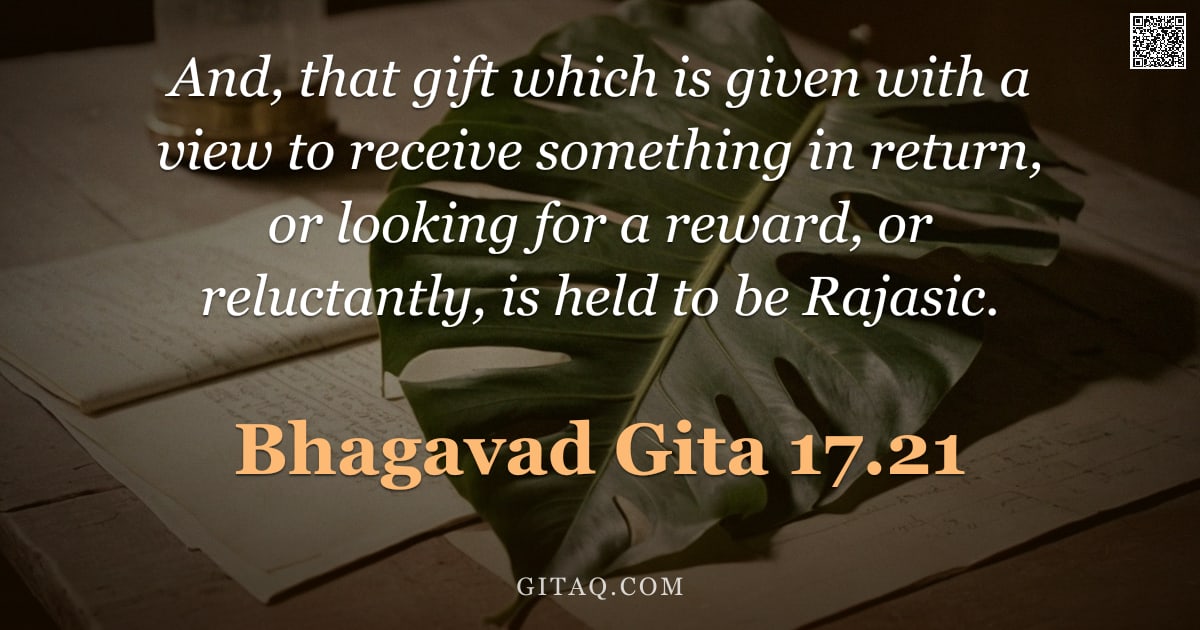
यत्तु प्रत्युपकारार्थं फलमुद्दिश्य वा पुनः | दीयते च परिक्लिष्टं तद्दानं राजसं स्मृतम् ||१७-२१||
yattu pratyupakārārthaṃ phalamuddiśya vā punaḥ . dīyate ca parikliṣṭaṃ taddānaṃ rājasaṃ smṛtam ||17-21||
What Does This Verse Mean?
In this verse, Lord Krishna is explaining the nature of a 'Rajasic' gift to Prince Arjuna on the battlefield of Kurukshetra. He describes charity given with three specific flaws: expecting something back in exchange, seeking a future reward or fame, or being forced out by reluctance and pain. The key teaching is that true generosity comes from the heart without any calculation of gain or loss; when giving becomes a transactional burden rather than an act of love, it loses its spiritual purity.
The Teaching Behind It
This verse is central to the Gita's teaching on Karma Yoga (the yoga of action), specifically addressing the purification of motivation through detachment from results. It develops the concept that actions driven by Rajas (the mode of passion) are inherently binding because they create a cycle of expectation, debt, and eventual dissatisfaction. True spiritual progress requires transcending this transactional mindset to act with purity, where giving is an end in itself rather than a means to an external gain.
Word by Word
Classical Commentary
Where This Happens
This verse occurs in Chapter 17 of the Bhagavad Gita during the dialogue between Lord Krishna and Arjuna on the battlefield of Kurukshetra, moments after they have discussed the three types of food, sacrifice, and austerities. Having just established that human nature is influenced by the three gunas (modes of material energy), Krishna now categorizes charitable giving to complete his analysis of 'Shraddhatraya' or the threefold division of faith. Arjuna, confused about how to perform duty in this chaotic war and life generally, listens as Krishna dissects the motivations behind human actions to help him refine his own consciousness.
Living It Out Today
Consider a manager at work who agrees to mentor an intern solely because they expect it will boost their performance review or secure a promotion later. This transactional approach creates resentment if the reward doesn't materialize and turns mentorship into a burden rather than genuine support for growth. Instead, apply this teaching by offering help to colleagues without keeping score; give your time freely when you see someone struggling, not because of what they can do for you in return. When actions are performed with willingness and joy, the stress of 'giving' disappears, replaced by a sense of fulfillment.
Explained for Children
Imagine you give your friend a candy bar just because you want them to give you their toy truck later, or if you are so grumpy that you don't even want to hand over the treat but feel forced. That is like giving with an 'expectation' or without wanting to do it at all. Krishna tells us that when we help others only to get something back for ourselves, or when we make a face while helping because we don't really want to, our good deed isn't as special as it could be. True kindness happens when you give with a happy heart just because the other person needs it.
Daily Reflection
Today, pause to check the hidden motives behind your kindness; often we give not out of love but to secure a debt paid later by another. When you notice this transactional pattern in yourself, gently release the expectation and offer that energy as pure service instead. This shift transforms a heavy burden into a lightness of spirit, freeing you from the endless cycle of giving for gain.
A Practice for Today
Sit with your next act of giving and observe if you are counting the cost or anticipating a return before the gift is even offered. Let go of the mental ledger that tracks favors, allowing the action to become its own complete reward.
Key Teachings
- The Trap of Transactional Giving
This verse identifies 'Rajasic' gifts as those given with an eye toward future compensation or a specific return. Such actions are bound by the ego's desire for control and recognition rather than genuine compassion. - The Burden of Reluctance
True generosity is crushed when performed under duress or with deep reluctance, as the giver feels robbed even while giving. This internal resistance taints the act, making it a source of spiritual friction rather than liberation. - Purity Beyond Expectation
A Rajasic gift is defined by its attachment to results and timing, standing in contrast to the selfless purity required for higher consciousness. To transcend this mode, one must learn to give without a thought of what comes back.
Themes
Related Verses
Read This Next
- 2.47 — Read this next to understand the foundational instruction to perform duty without attachment to results.
- 3.30 — This verse complements the topic by teaching how to surrender all actions and their fruits to the Divine.
- 12.15 — Read this next to see how a person who is not distressed by others' gains or losses embodies true non-attachment in relationships.
Recommended Reading
GitaQ earns from qualifying purchases as an Amazon Associate.