Bhagavad Gita 6.37
Dhyana Yoga · English Translation
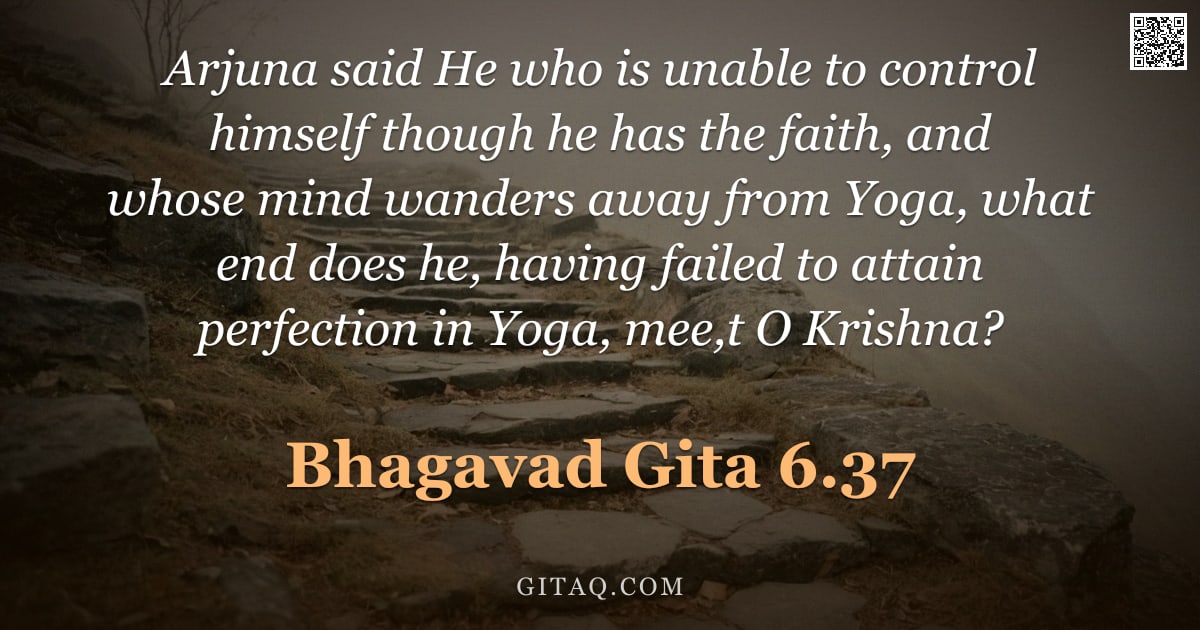
अर्जुन उवाच | अयतिः श्रद्धयोपेतो योगाच्चलितमानसः | अप्राप्य योगसंसिद्धिं कां गतिं कृष्ण गच्छति ||६-३७||
arjuna uvāca . ayatiḥ śraddhayopeto yogāccalitamānasaḥ . aprāpya yogasaṃsiddhiṃ kāṃ gatiṃ kṛṣṇa gacchati ||6-37||
What Does This Verse Mean?
Arjuna asks Krishna a difficult question about the fate of someone who tries to follow the path of meditation and has faith, but fails because their mind is too restless or uncontrolled. He wonders if such a person falls back into darkness or loses everything after starting on this noble journey. The key teaching here is that Arjuna fears spiritual failure might be permanent for those with good intentions but weak discipline.
The Teaching Behind It
This verse falls under Dhyana Yoga (the path of meditation) but deeply intertwines with Karma Yoga and Sankhya philosophy. It develops the concept that spiritual effort is cumulative and never wasted; it introduces the idea that even partial success in yoga creates an eternal seed for future growth, ensuring no one who strives sincerely is truly lost.
Word by Word
Classical Commentary
Where This Happens
This verse occurs in Chapter 6 of the Bhagavad Gita, set on the battlefield of Kurukshetra just before the great war begins. Arjuna has been listening to Krishna's teachings on meditation (Dhyana Yoga) and self-discipline for several verses. Feeling overwhelmed by the difficulty of controlling a restless mind as described in previous chapters, Arjuna pauses his own doubts about fighting to ask a theological question: Is there no hope for someone who starts well but fails halfway?
Living It Out Today
Consider a professional who begins an intense meditation or mindfulness practice with great enthusiasm and faith but finds their anxiety too strong to focus after just three weeks. They might feel like they have wasted their time or that the effort was pointless because they didn't achieve 'perfection' in calmness. This verse teaches us that even if we stop our practice early due to lack of control, the spiritual progress made is never lost; it carries forward into future lives, offering a safety net for those who struggle with consistency.
Explained for Children
Imagine you are trying to learn how to ride a bike, and you really want to do it well because your teacher told you it's important. But sometimes, when you try to balance, you get scared or distracted by the birds flying around, so you fall off before you can master it. Arjuna is asking: If someone tries their best but falls down while learning a hard skill like this, are they left with nothing? Or will they still be safe and do better next time?
Daily Reflection
You might feel discouraged if you believe your meditation must be perfect to count, but Arjuna reminds us that the struggle itself is part of the path. Even with a wandering mind and moments of doubt, your sincere effort keeps the flame of yoga alive within you. Do not let the fear of falling short stop you from beginning again tomorrow.
A Practice for Today
Sit quietly and acknowledge any wandering thoughts not as failures, but as the mind's natural rhythm returning to stillness. Offer a gentle smile of compassion for your own imperfection today, recognizing that faith persists even when focus wavers.
Key Teachings
- The Reality of Spiritual Stumbling
Krishna acknowledges that even with faith, a practitioner may struggle to control their mind and fall away from steady practice. This verse validates the human experience of imperfection rather than expecting immediate mastery. - Faith as the Unbreakable Anchor
The distinction made is between one who has faith (śraddhayopeto) and a skeptic; even if they fail, their spiritual foundation remains intact. This inherent belief ensures that no effort on this path is ever truly wasted or lost. - Divine Protection for the Striver
Arjuna's question implies fear of ruin, yet Krishna later assures us that such a soul never meets destruction but continues their journey. The divine does not abandon those who strive with genuine devotion despite temporary setbacks.
Themes
Related Verses
Read This Next
- 2.40 — To understand how even a little progress in yoga protects one from fear, countering the anxiety about failure raised here.
- 3.30 — To learn that surrendering all actions to God is the means by which one overcomes the inability to control the mind alone.
- 12.15 — To be reminded of the qualities of a beloved devotee, finding comfort in Krishna's assurance regarding those who strive with faith.
Recommended Reading
GitaQ earns from qualifying purchases as an Amazon Associate.